
The Number That Built the West
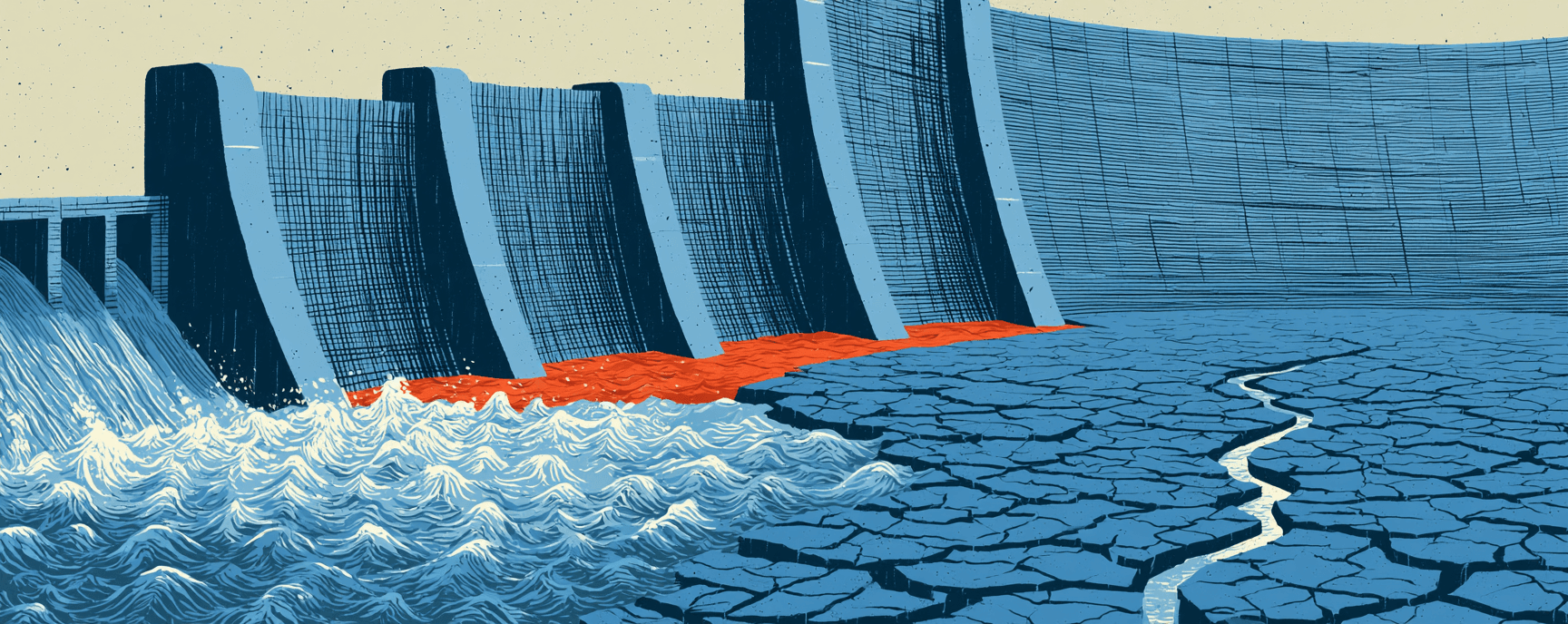
In November 1922, seven state commissioners met at a remote lodge outside Santa Fe to divide the Colorado River among themselves. They had reason to believe their estimate of the river's annual flow was too high. A government hydrologist with better data wrote directly to the chairman and received a thank-you note in return. They signed anyway, because the only number that could hold a seven-state deal together was one generous enough that nobody had to accept less. Then they poured that number into concrete — 726 feet of it at Hoover Dam, and everything that followed. The river they allocated has never existed.
The Number That Built the West
In November 1922, seven state commissioners met at a remote lodge outside Santa Fe to divide the Colorado River among themselves. They had reason to believe their estimate of the river's annual flow was too high. A government hydrologist with better data wrote directly to the chairman and received a thank-you note in return. They signed anyway, because the only number that could hold a seven-state deal together was one generous enough that nobody had to accept less. Then they poured that number into concrete — 726 feet of it at Hoover Dam, and everything that followed. The river they allocated has never existed.
The Protective Clause

Herbert Hoover changed one word. Four days before the seven states signed the Colorado River Compact on November 24, 1922, he revised the draft clause on Indian water rights. "Rights" became "obligations." Wyoming's commissioner, who had balked at the original phrasing, relaxed.
The final Article VII: "Nothing in this compact shall be construed as affecting the obligations of the United States of America to Indian tribes."
No tribal representative sat at the table. No allocation followed. The sentence preserved a legal abstraction while the compact divided every acre-foot among seven states.

The Man Three Miles from the Table Who Knew the River Was Smaller
CONTINUE READINGFight or Leave

The Port That Dissolved
Indianola was the second-largest port in Texas. Thousands of immigrants entered the state through its harbor. The refrigerated meat industry began on its docks. Then two hurricanes, eleven years apart, ended it. A granite marker on the shore of Matagorda Bay now points toward a courthouse that sits underwater. The storms are well documented. The decision to abandon the city, if it was a decision at all, barely exists in the record.
Futile Dream or Workable Plan
In 1936, Congress voted not just to defund FDR's plan to plant a wall of trees across the Dust Bowl, but to liquidate it. The program survived anyway — rerouted through WPA funds, rebuilt as a cooperative venture with private landowners, stripped of the grand federal vision that inspired it. By 1942, over 190 million trees stood on 33,000 farms in six states. The program that survived bore little resemblance to the one Congress tried to bury.
Further Reading