The End of the Overnight

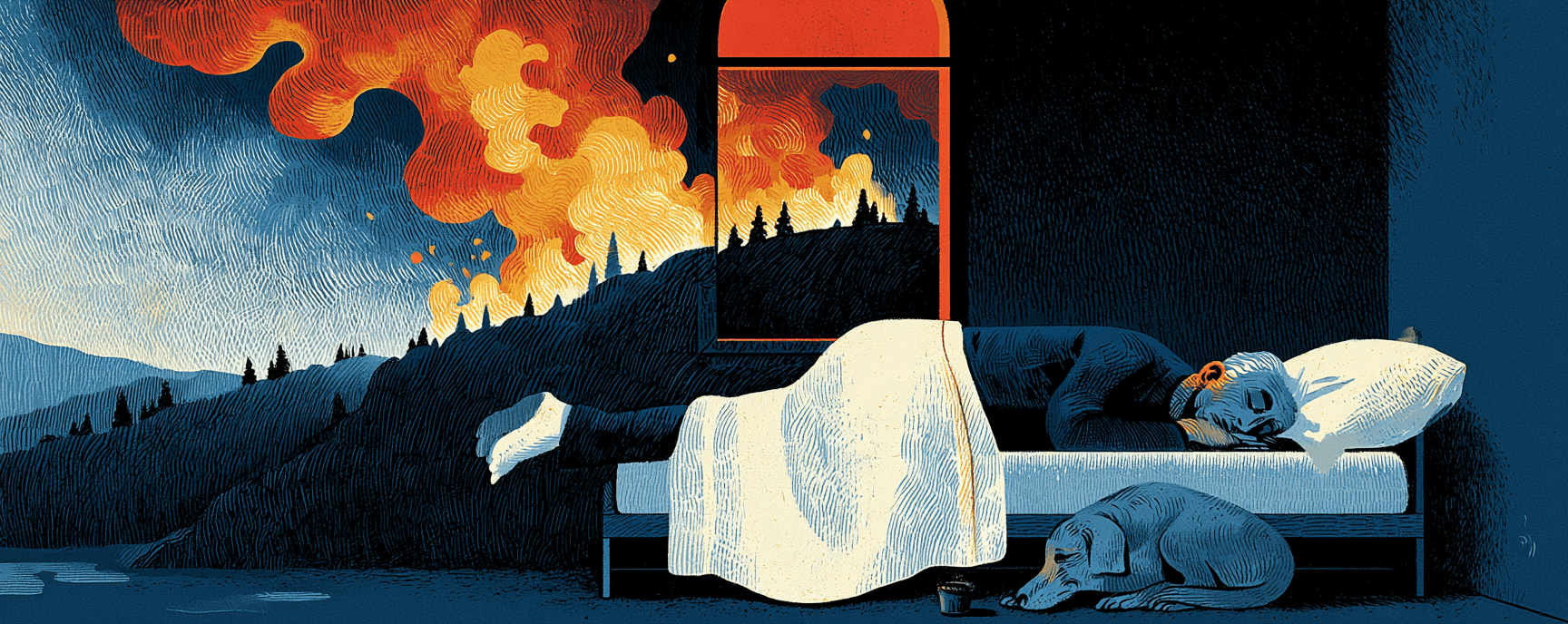
Firefighting shifts, evacuation plans, and the basic act of going to bed in a fire-prone community all rest on the same assumption: fire slows down at night. A 2026 study in Science Advances traces the erosion of that nighttime pause across fifty years, documenting a 36 percent rise in potential burning hours since 1975. On January 8, 2025, the Eaton Fire grew from 2,227 to 10,600 acres between 1 a.m. and sunrise. The clock that safety systems were built around is losing time. The systems haven't been rebuilt.
The End of the Overnight
Firefighting shifts, evacuation plans, and the basic act of going to bed in a fire-prone community all rest on the same assumption: fire slows down at night. A 2026 study in Science Advances traces the erosion of that nighttime pause across fifty years, documenting a 36 percent rise in potential burning hours since 1975. On January 8, 2025, the Eaton Fire grew from 2,227 to 10,600 acres between 1 a.m. and sunrise. The clock that safety systems were built around is losing time. The systems haven't been rebuilt.
The Research Base
A weakened diurnal weather constraint leads to longer burning hours in North America
Fourteen percent of active fire days now peak at night, collapsing the overnight lull that firefighting crews and evacuation plans depend on.
Extreme burning days of twelve-plus hours surged 81 to 233% across fire-prone regions, with the steepest gains in spring and fall shoulder seasons.
The Research Base
Wildfire smoke PM2.5 and mortality rate in the contiguous United States
The health damage from smoke does not level off at low concentrations, undermining any regulatory assumption of a harmless baseline.
Coroners record the disease that killed someone, not the years of smoke exposure that accelerated it. The toll stays invisible.
The Research Base
Long-term exposure to wildfire smoke particulate matter and incident stroke
It captures the cumulative burden of living through repeated smoke seasons, not just surviving a single bad week.
Medicare enrollees face stroke risk from chronic smoke at concentrations well below what triggers air quality alerts or keeps people indoors.
The Research Base
Fires reverse progress toward ozone air quality standards in the United States
Wildfire-driven ozone exceeded federal standards for 148 million Americans in 2023, many of them nowhere near a fire.
When wildfire ozone exceedances recur annually, the regulatory framework built around rare spikes stops making sense.
Who Controls the Air Inside
The advice during smoke events is always the same: stay indoors, close your windows. Good advice if you control the building and can afford a filter. Most people breathing wildfire smoke have neither.
Han et al. (2025) found over a billion people globally face substantial indoor wildfire-PM2.5 days each year. Air purifiers reduce concentrations. Meeting WHO guidelines would cost an estimated $69 billion annually. But in rental units, aging schools, and care facilities, the person breathing the air almost never decides what happens to it. A teacher can smell something wrong in the classroom. Whether the filters get changed is somebody else's call, in some other office, on some other budget line.
The engineering exists. The question of who pays, and who decides, doesn't show up in any filtration study.