

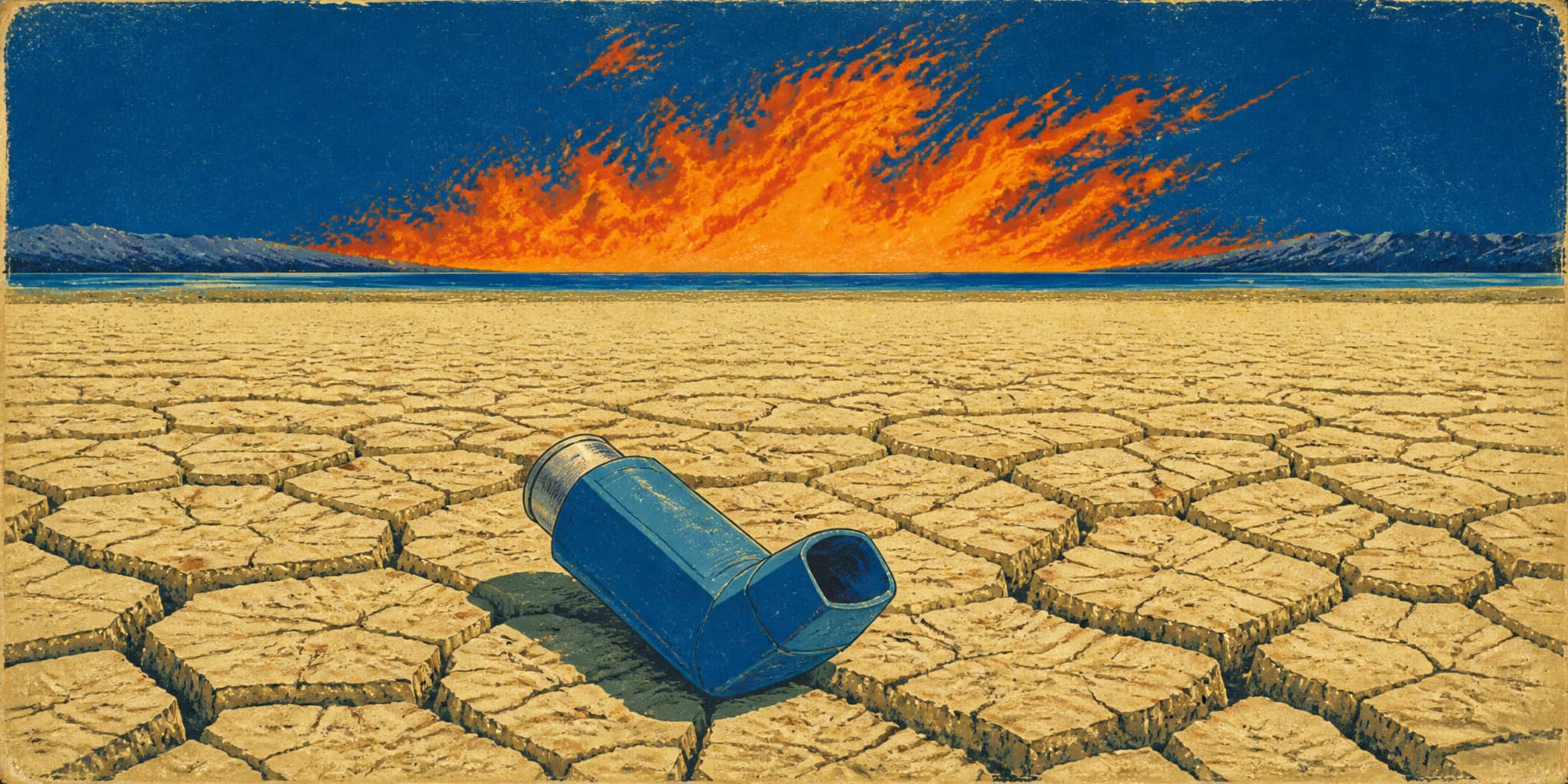
The Salton Sea exists because of an engineering failure. In 1905, a breached irrigation canal sent the Colorado River flooding into the Salton Sink for two years. The lake that formed should have evaporated back to nothing. It didn't, because agricultural drainage from the Imperial Valley kept feeding it. Roughly 80 percent of inflow was farm runoff. By mid-century the Salton Sea was California's largest lake by surface area. Communities grew along its shores. The Pacific Flyway, squeezed by wetland loss across the West, rerouted itself through this accidental body of water. More than 450 bird species and subspecies used the region. The lake wintered at least half a million waterbirds. None of this was designed. It happened, and because it happened, people and birds built lives around it the way you build around anything that shows up and stays long enough to seem permanent.
The turning point happened in boardrooms.
The Quantification Settlement Agreement of 2003 resolved decades of disputes over California's Colorado River allocation among the Imperial Irrigation District, San Diego County Water Authority, Metropolitan Water District, and Coachella Valley Water District. Its centerpiece was what the Water Education Foundation has called the largest agricultural-to-urban water transfer in the United States: up to 200,000 acre-feet per year moved from Imperial Valley farms to San Diego, for up to 75 years. The QSA established mitigation flows to the Salton Sea, acknowledging on paper that diverting agricultural runoff would shrink the lake. Those mitigation flows were temporary. They expired in 2018.
The people who negotiated the QSA were solving a real problem, and this matters. California was overusing its Colorado River share. Other basin states were losing patience. The state needed to bring consumption within its legal allocation. The Imperial Valley held the largest single share of Colorado River water rights in California. San Diego needed supply. The transfer was logical by every institutional metric that mattered. The Salton Sea was not a party to the agreement. Neither were the communities on its eastern and southern shores. They were downstream of a decision made by people reading the same water-scarcity numbers and making different calculations about whose supply mattered most.
After 2003, the lake did what physics demanded. Total annual inflow dropped from a pre-QSA estimate of 1.2 to 1.3 million acre-feet to as low as 1.0 million. Water surface elevation fell about ten feet between 2003 and 2020. The shoreline pulled back. By the end of 2019, nearly 25,000 acres of playa sat open to the wind. Projections without restoration estimate roughly 100,000 acres of eventual exposure. The landscape was doing something new, and what it was doing was becoming airborne.
What the receding water uncovered was not clean sand. The exposed lakebed carries decades of agricultural drainage: selenium, pesticide residues, heavy metals deposited into lake sediment over a century of runoff. Wet, it stayed put. Dry, the wind picks it up and moves it. Imperial County declared a local emergency in October 2019, citing harmful dust and air pollution. The South Coast AQMD launched a study in 2022 to distinguish playa emissions from background desert dust in the eastern Coachella Valley. The distinction matters to regulators. The wind carried the same particulates past the same kitchen windows regardless.
The ecological cascade ran parallel to the exposure. Salinity rose from about 45,600 milligrams per liter in 2003 to 69,000 by 2019. Tilapia, the primary forage fish, cannot reproduce above 40 parts per thousand and were functionally gone by 2018. The birds that ate the fish followed the fish. Colonial seabirds began abandoning nesting sites in 2013. Fish-eating bird populations fell to record lows. Some projections suggest salinity could double from 2018 levels by 2027. The pelicans leaving and the dust arriving were the same event viewed from different positions in the system.
The communities absorbing this are not abstractions. North Shore, Mecca, Thermal, Oasis on the eastern Coachella side. Calipatria, Westmorland, Brawley to the south. The AIRE cohort study describes Imperial Valley residents as more than 80 percent Latino, facing 20 percent unemployment, with one in three children in poverty. These are the people who inherited a landscape that was never planned and is now being de-funded.
Imperial County pediatric asthma ER visits run double the California state average. Near the Salton Sea, 22.4 percent of surveyed elementary students had asthma, compared with 8.8 percent nationally.
The causal chain between exposed playa and respiratory illness is not fully resolved in the scientific literature. Wind patterns, monitor placement, and background dust complicate attribution. The communities living with it are not waiting for final consensus. In a 2023 qualitative study, thirty-six Latinx and Indigenous Mexican caregivers of children with asthma in Thermal, North Shore, Oasis, and Mecca described the environment as toxic and associated it with asthma, bronchitis, pneumonia, allergies, nosebleeds. The institutional sensors measuring exposure operate on a different clock than the parents counting inhaler refills.
California has not ignored this. The State Water Resources Control Board adopted a ten-year plan in 2017 calling for 29,800 acres of ponds, wetlands, and dust-suppression projects, with targets ramping to 4,200 acres by 2028. The Salton Sea Management Program launched in 2018 across four state agencies. A Long-Range Plan was drafted in 2022. Annual status workshops continue. The gap between what has been promised and what has been built is tracked, publicly, by the same agencies responsible for closing it.
The communities are still there too. Still breathing the air, still driving to emergency rooms that serve a county the size of Connecticut. The water that sustained their lake is in San Diego now. The mitigation expired eight years ago. The restoration is proceeding at a pace set by budgets and interagency coordination, not by wind speed or childhood asthma rates.
Nobody on the eastern shore of the Salton Sea pumped the water out. The water was redirected by institutions serving constituencies elsewhere, through an agreement that addressed a real scarcity problem by transferring its cost to people and places with the least leverage to refuse. The accidental lake is becoming exposed playa. The communities are still there, and the dust is still moving.