The Stroke That Doesn't Say Smoke


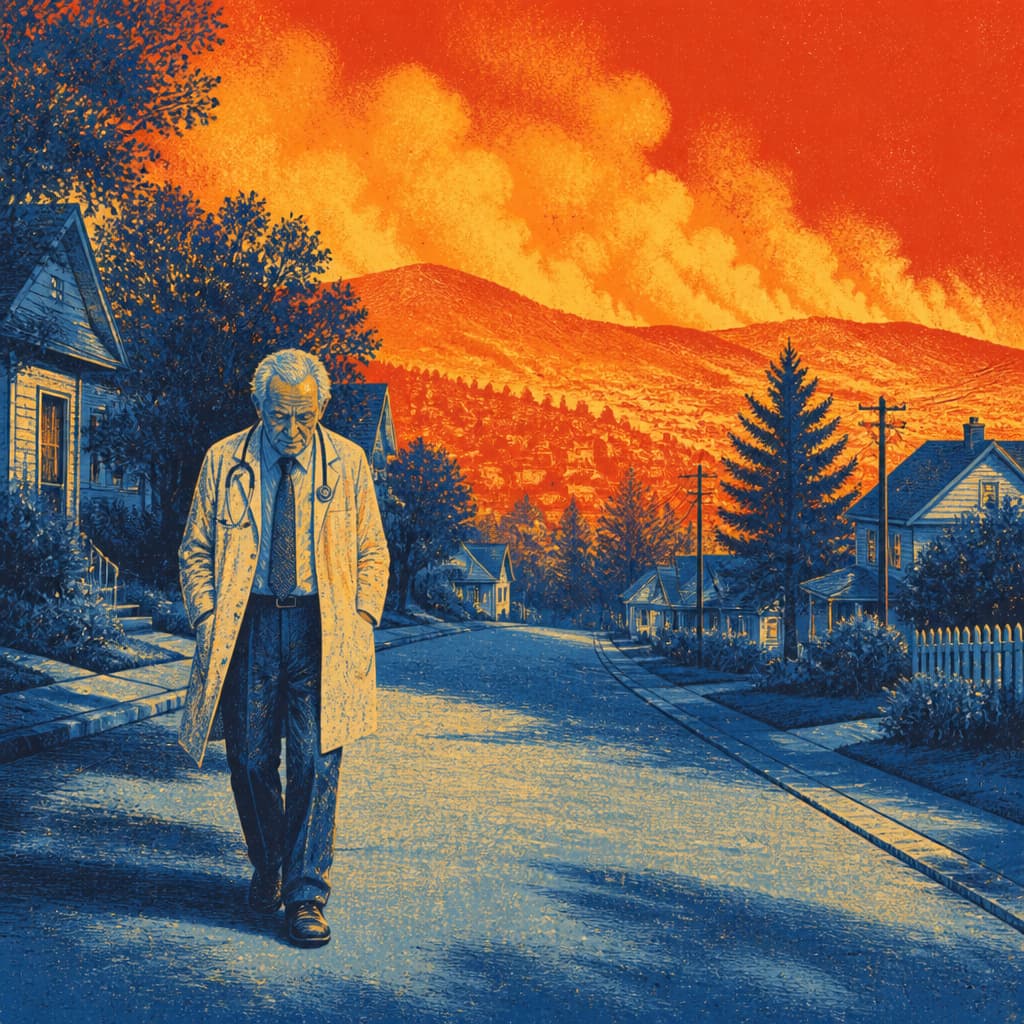
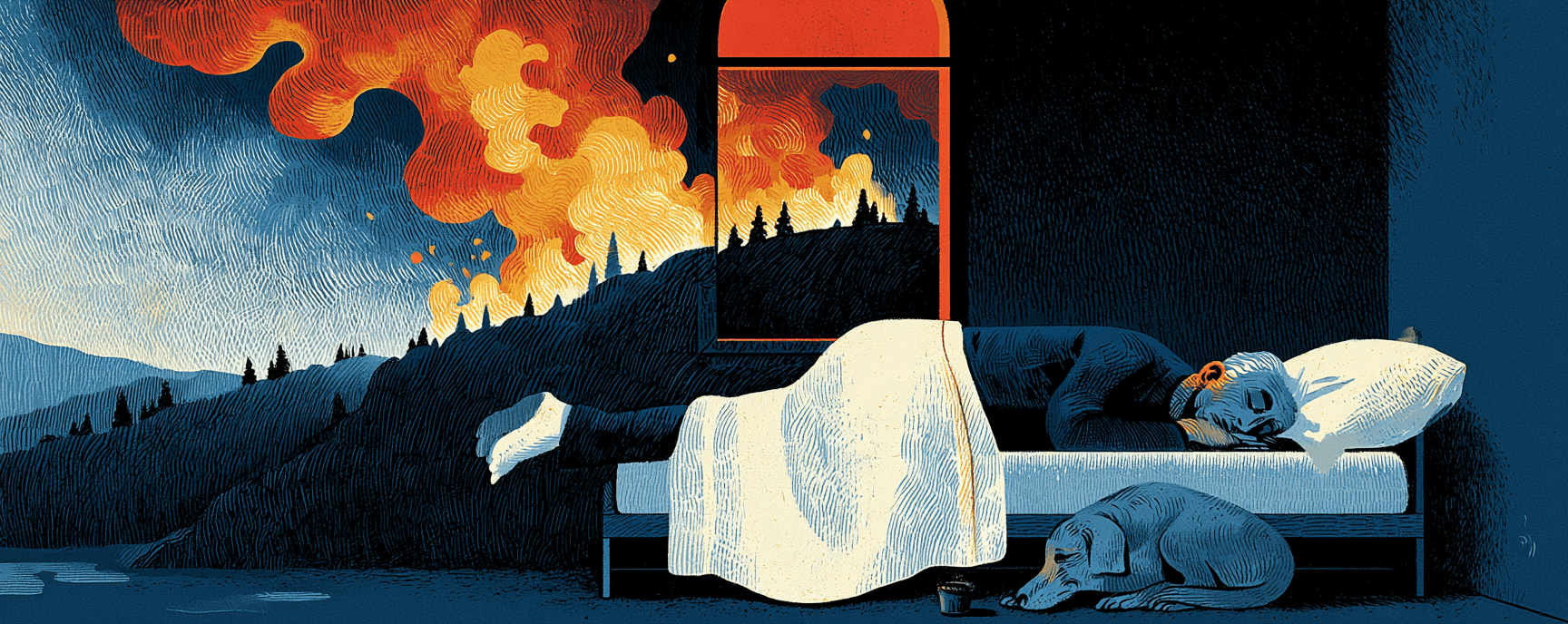
A stroke chart lists hypertension, atrial fibrillation, age. It does not list the eleven summers when wildfire smoke pooled in the Sacramento Valley and a patient breathed air fine enough to cross from lung tissue into blood. A 24.7-million-person study found each 1 µg/m³ increase in three-year average wildfire-smoke PM2.5 associated with a 1.3% rise in stroke risk, with no safe threshold. The damage accumulates across seasons, below any symptom, in vessel walls the body cannot report on. Medicine encounters the result organ by organ. The cause has no field in the record.
The Stroke That Doesn't Say Smoke
A stroke chart lists hypertension, atrial fibrillation, age. It does not list the eleven summers when wildfire smoke pooled in the Sacramento Valley and a patient breathed air fine enough to cross from lung tissue into blood. A 24.7-million-person study found each 1 µg/m³ increase in three-year average wildfire-smoke PM2.5 associated with a 1.3% rise in stroke risk, with no safe threshold. The damage accumulates across seasons, below any symptom, in vessel walls the body cannot report on. Medicine encounters the result organ by organ. The cause has no field in the record.
The Papers Behind the Lag
Long-term exposure to wildfire smoke particulate matter and incident stroke: a US nationwide study
Wildfire-specific PM2.5 carried nearly double the per-unit stroke risk of non-smoke particulates, suggesting composition matters as much as concentration.
Medicaid-eligible beneficiaries showed stronger associations, meaning the people most exposed to smoke are least buffered by the healthcare systems that could intervene.
The Papers Behind the Lag
Occupational heat exposure and chronic kidney disease risk under climate warming: a retrospective cohort study of petrochemical workers with mechanistic insights
Mediation analysis identified uric acid, hemoglobin, and albumin as early-warning biomarkers already collected in standard workplace health exams.
Binary exposure classification and a single-industry Chinese cohort limit direct transfer to the varied conditions U.S. outdoor workers face.
The Medicine Cabinet Problem

The body sheds dangerous heat by sweating and pushing blood to the skin surface. At least six common drug classes interfere with one or both. Beta-blockers reduce skin blood flow. Diuretics deplete fluid volume. Anticholinergics, in allergy pills and bladder medications, suppress sweating directly. None of these effects pause at sunset. When overnight temperatures no longer drop enough for the body to reset, each day's heat carries forward.
Among adults 65 and older, 54% take four or more prescriptions. A Medicare study found these drugs raised heat-hospitalization risk all summer, not only during declared heat waves. A 2026 scoping review estimated 40% of older adults' heat hospitalizations for dehydration were potentially preventable with timely medication adjustment. Diuretics and beta-blockers still carry no FDA heat warnings.
Don't stop taking anything. Do ask your prescriber whether your current regimen was designed for the summers you're living through now.