Three Rational Decisions That Killed Owens Lake

Fred Eaton bought water rights at market prices. William Mulholland solved an engineering problem that worked exactly as designed. Los Angeles voters chose their own future ten to one. Theodore Roosevelt applied conservation principles his administration believed in. Each decision was defensible within its own frame. Together, between 1903 and 1907, they killed a lake, emptied a valley, and produced the worst particulate dust source in the country. Los Angeles now spends $2.6 billion wetting the lakebed it drained so the wind doesn't poison the people who stayed.
Three Rational Decisions That Killed Owens Lake
Fred Eaton bought water rights at market prices. William Mulholland solved an engineering problem that worked exactly as designed. Los Angeles voters chose their own future ten to one. Theodore Roosevelt applied conservation principles his administration believed in. Each decision was defensible within its own frame. Together, between 1903 and 1907, they killed a lake, emptied a valley, and produced the worst particulate dust source in the country. Los Angeles now spends $2.6 billion wetting the lakebed it drained so the wind doesn't poison the people who stayed.
The Wrong Number
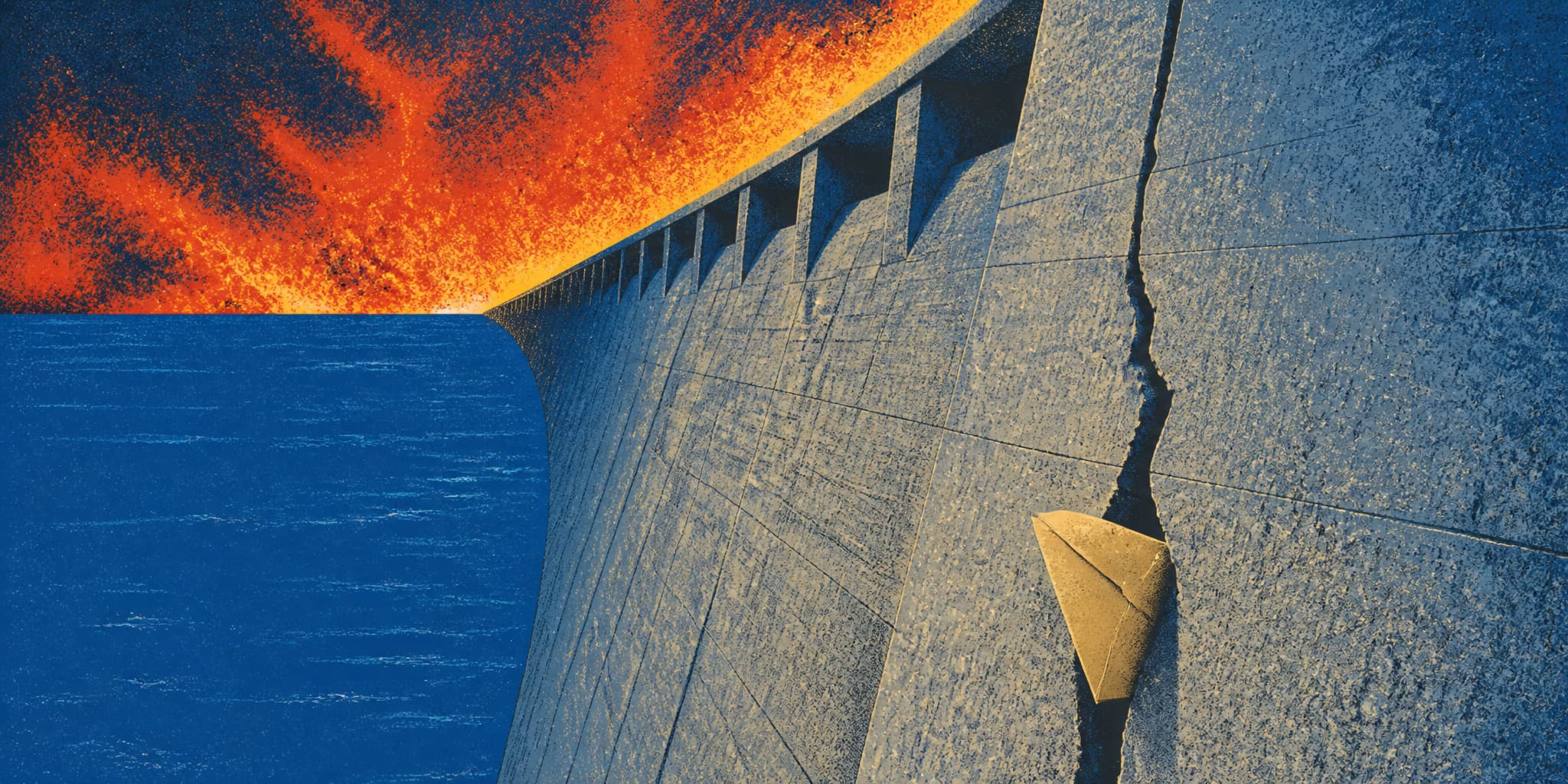
The Colorado River Compact of 1922 divided water that didn't exist. Eight men at Bishop's Lodge near Santa Fe allocated 7.5 million acre-feet annually to each basin, upper and lower, using flow data from 1899 to 1921. The estimate, 16.4 million acre-feet per year at Lee Ferry, was derived from gauges hundreds of miles downstream and extrapolated through assumptions one peer-reviewed analysis has called "grossly optimistic."
That measurement window was among the wettest in twelve centuries. A USGS hydrologist named E.C. La Rue had a lower number, 15 million acre-feet, and warned the commission before signing that the data period was anomalous. He wrote directly to Herbert Hoover. He received a thank-you note.
The compact, the 1944 Mexico treaty, and subsequent agreements committed 16.5 million acre-feet per year. Nobody modeled evaporative losses from reservoirs that hadn't been built yet. By 2022, the river's twenty-year running average had dropped below 13 million acre-feet. Western water law distinguishes between "paper water," the legal entitlement, and "wet water," what actually flows. A century of dams, cities, and irrigated agriculture was financed against the first number. The river kept running on the second.

Depletion and Abandonment

Two Waters
In 1974, federal hydrologists mapped the Ogallala's decline under Haskell County, Kansas, and published it. The farmers could read. They kept pumping. The corn was growing, the feedlots were buying, the combine note came due every November regardless of what the aquifer curve said. Now southwest Kansas is negotiating the terms of its own contraction — from a boom it built with its own wells and a depletion it documented in real time, with government maps, while it was happening.
The Lake Nobody Planned
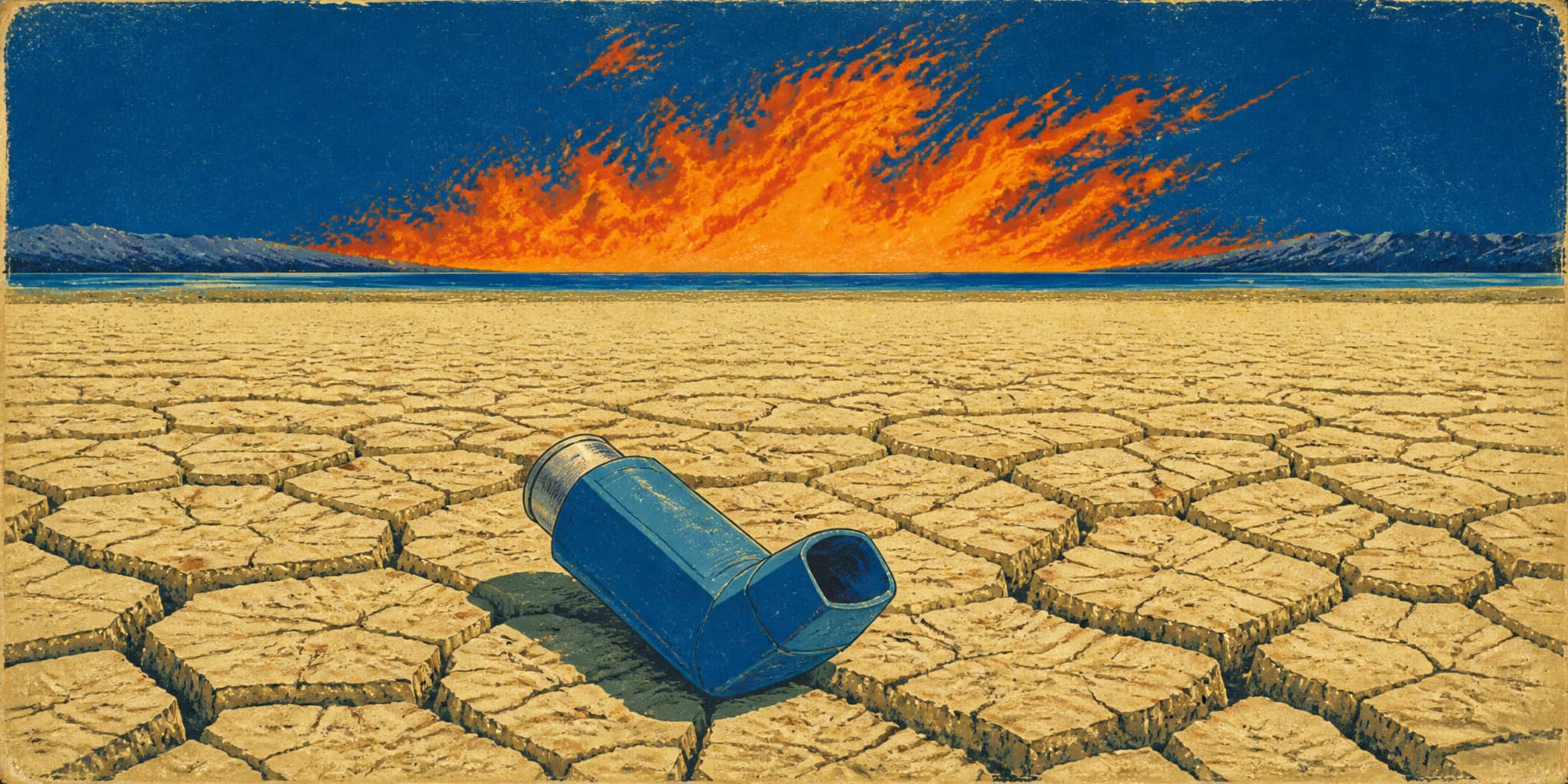
A canal breach in 1905 flooded a desert sink. Agricultural runoff kept the resulting lake alive for a century. Then the 2003 Quantification Settlement Agreement redirected that water to San Diego, and the Salton Sea started shrinking. The communities on its shore didn't pump the water out. They didn't sign the agreement. They didn't negotiate the mitigation timeline. They're breathing the exposed lakebed now, counting inhaler refills, while restoration proceeds at a pace calibrated to budgets rather than wind.
Further Reading