Every Kilowatt-Hour You Used Not Dying

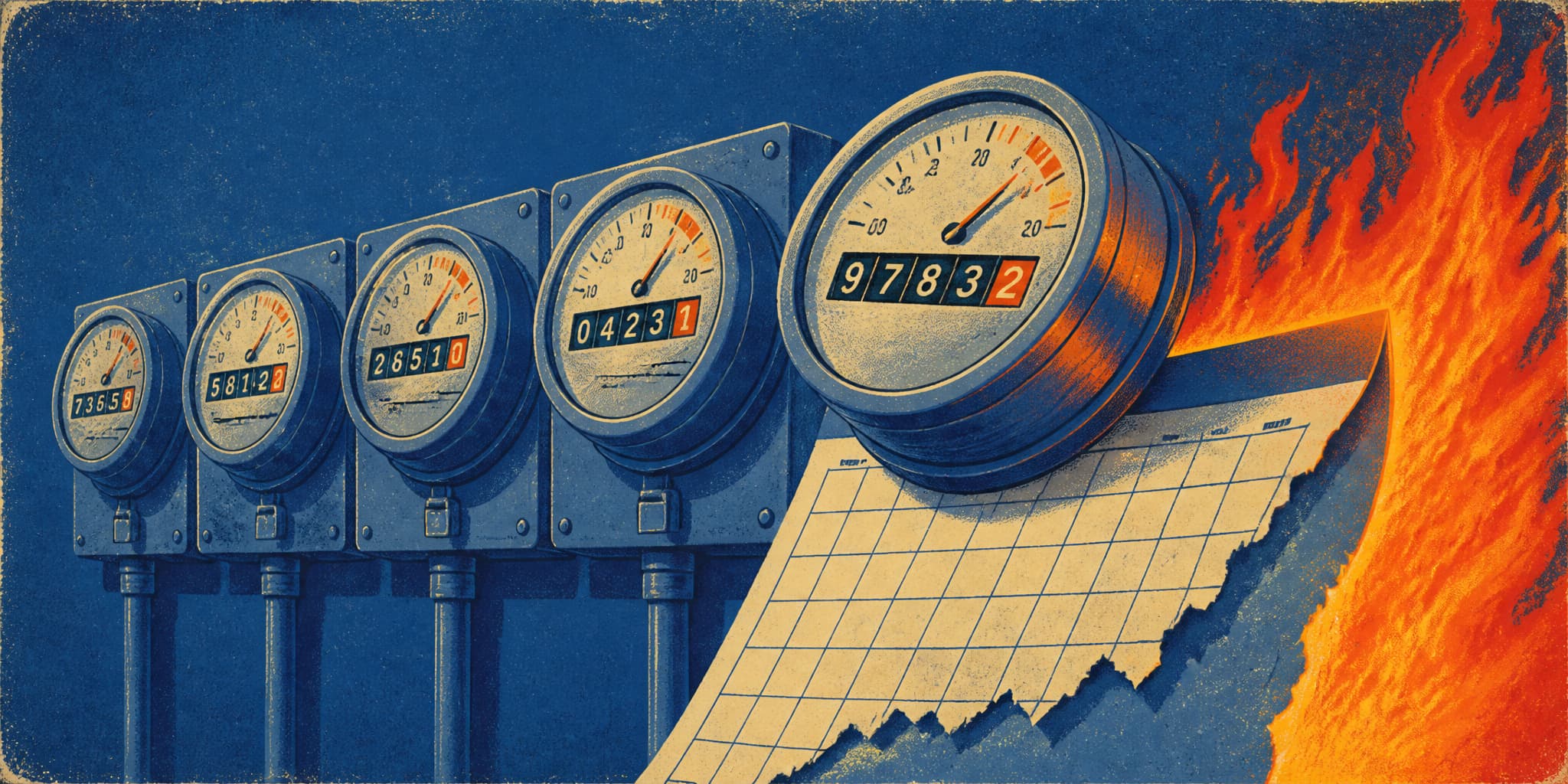
Katherine Korman was 82, lived alone in Sun City West, and probably had the money to pay her electric bill. APS disconnected her remotely in May 2024 after ten notices she apparently never registered. She was dead six days later. Her unpaid balance had started piling up during the previous summer's disconnection moratorium, the annual window when Arizona utilities can't shut you off for nonpayment and the meter keeps spinning anyway. The moratorium exists to prevent deaths like hers. What it also does, for hundreds of thousands of households, is convert the cost of not dying into a debt cliff that shows up every October 16 like a landlord with a crowbar.
Every Kilowatt-Hour You Used Not Dying
Katherine Korman was 82, lived alone in Sun City West, and probably had the money to pay her electric bill. APS disconnected her remotely in May 2024 after ten notices she apparently never registered. She was dead six days later. Her unpaid balance had started piling up during the previous summer's disconnection moratorium, the annual window when Arizona utilities can't shut you off for nonpayment and the meter keeps spinning anyway. The moratorium exists to prevent deaths like hers. What it also does, for hundreds of thousands of households, is convert the cost of not dying into a debt cliff that shows up every October 16 like a landlord with a crowbar.
The Cooling Ordinance

Under current Houston code, a landlord can substitute window screens for air conditioning. Screens. In a city where summer afternoons hit 100°F and the humidity turns breathing into a chore. Council Member Alejandra Salinas introduced an ordinance on July 14 to close that loophole, requiring refrigerated air equipment in all rental housing. The Houston Apartment Association supports it. Nearly 23,000 metro-area homes lack AC entirely.
Between the duty on paper and a cool room, though, there's a long chain of things that have to happen, and the renter's body sits at the far end. If council votes by mid-August, the 90-day compliance window lands around mid-November. Peak heat runs through September. Enforcement is complaint-driven: the tenant must know the law exists, file with 311, wait for one of the city's inspectors, then wait again while the landlord sources equipment and a technician. Federal refrigerant rules now restrict the old fix-it-with-Freon approach, meaning older systems often need full replacement. Dallas, which already mandates landlord cooling, fields 100-plus AC complaints weekly each summer. Austin passed a similar ordinance in April 2025; no public enforcement data from its first summer has surfaced yet.
The ordinance is worth passing. For the person sitting in a 96-degree apartment this week, it's a promissory note on someone else's timeline.
Further Reading