
The compressor used to cycle. Twenty on, ten off, twenty on. Thirty-four years in this house and I knew its rhythms the way I knew my own. June it kicked on around two in the afternoon and ran through evening. July and August it started earlier, ran harder. But it cycled. It rested.
It hadn't turned off in three days.
My son was in the kitchen filling a glass of water I didn't ask for. I could hear the ice cracking. He'd brought a bag of ice from the gas station when he showed up around nine. A case of water. Two frozen bottles in a grocery bag. He'd also brought a sleeping bag, which he unrolled on the living room floor without saying anything about it, which meant he was staying.
I was in my chair. Thermostat read eighty-four. Set to seventy-six. The air from the vent above the hallway moved but it wasn't cool. It was just air.
He set the water on the table next to me. Didn't say drink this. Went back to the kitchen.
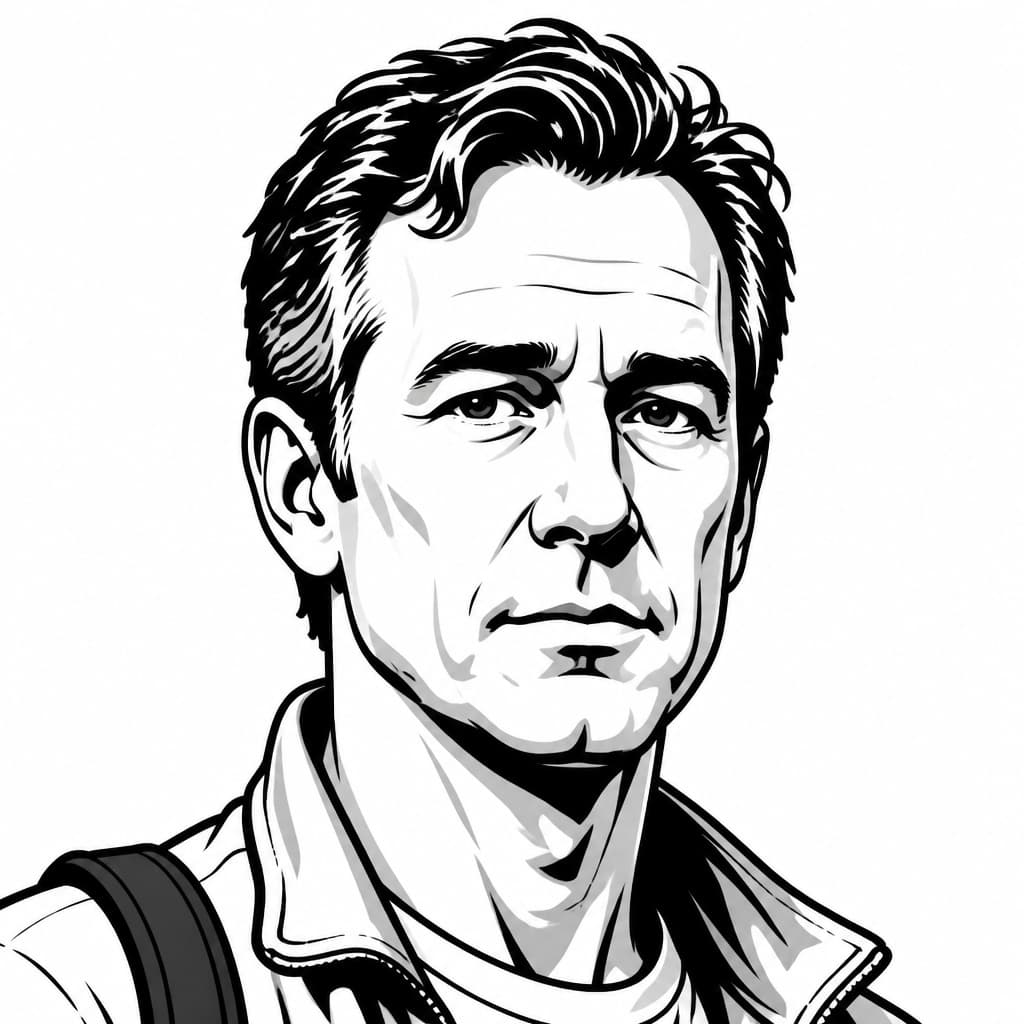
I poured concrete for thirty-two years. Foundations, driveways, patios, pool decks. I knew what heat did at hour one and what it did at hour eight. I drank water all day because the foreman made us, and because I'd seen what happened to the guys who didn't.
That was a different body.
He came back with his own glass and sat on the couch. Phone on the arm, screen up. I could see the battery from my chair. Seventy-one percent. He'd been checking something every few minutes since he arrived. Weather, or the grid, or whatever app told him what he figured he needed to know.
"You eat dinner?" he said.
"Had a sandwich around six."
"What kind?"
"Turkey."
He nodded. I watched him look at the glass he'd set next to me, then look away. The glass was sweating. I wasn't thirsty. I knew that didn't mean anything. But it was still true.
"Karen called," I said. Karen is his sister. She moved to Duluth four years ago. She wanted me to move up there, which she mentioned about once a month, and which I'd stopped answering.
"What'd she say?"
"Same thing."
Outside, the compressor. That low hum with something underneath it, a vibration in the floor. When it used to cycle off, the silence was a relief you didn't notice until it showed up. Now there was no silence.
"I'm going to wet a towel," he said, and was up before I could tell him I didn't need one.
He brought it from the bathroom, wrung out but heavy, and put it across the back of my neck. The cold went straight through me. I didn't say anything. He sat back down.
It warmed up in about ten minutes. That was the thing. These measures worked and then stopped working, and you did them again. He'd freeze water bottles and I'd hold them against my wrists and they'd go soft and he'd put them back. He'd wet the towel and drape it and it would warm and he'd wet it again. Small interventions on a cycle. Like the compressor used to be.
My wife would have thought this was ridiculous. She died three years ago. Before the worst summers but not before the bad ones. She handled heat the way she handled most things. She'd fill the bathtub with cold water and sit in it reading a magazine, hair up, reading glasses on. I'd come home from a pour and she'd say "Don't let the cold out" when I opened the bathroom door.
The house was hers more than mine. I paid for it and maintained it and replaced the roof twice. She was the one who made it somewhere you wanted to come back to. The curtains were hers. I'd replaced them with blackout curtains two summers ago. The kitchen tile was the color she picked in 2003, the year we moved in. The bedroom was arranged the way she arranged it. I slept on my side. Her side was empty and I kept it made.
My son knew all of this. When he talked about me moving, he talked about the AC unit, the age of the house, the electricity, the forty-minute drive on nights like this. He made practical arguments because he knew the real one wouldn't work. Or because he knew it would.
Midnight. I knew from the microwave clock, which was visible from my chair. He'd turned off most of the lights to cut the heat they put out. The house was dim except for the microwave and the glow of his phone.
Sixty-two percent.
I should have been asleep. I'd been getting up at five-thirty for forty years, even retired, and by ten most nights I was done. But the heat sat on you in a way that made sleep feel like something behind a wall. Every time I'd start to drift I'd come back. Aware of my skin against the cushion, tacky. Aware of the air. Aware of the sheet under me being warm everywhere my body touched it.
I'd moved from the chair to the couch. He'd moved to the floor, on top of the sleeping bag, not inside it. We were in the living room because it was the smallest room with a vent. He'd closed the doors to the bedrooms and the bathroom to keep what cool air there was in one place.
"You should drink some of that water," he said.
"I'm not thirsty."
"I know."
He said it like that. Not arguing. Just letting me hear that he knew and that it didn't matter. I picked up the glass and drank. Warm. The ice had been gone an hour.
He got up and refilled it from the bag, which was mostly water itself by now, and brought it back. His phone buzzed on the floor. He looked at it, set it down.
"What's it say?"
"Hundred and nine at the airport. Should drop below hundred and five by four."
"That's not bad."
He looked at me. I could see his face in the light from the phone. He looked like his mother around the eyes. I'd never told him that because I didn't know how to say it without it sounding like something it wasn't. Or like something it was.
"It's not great, Dad."
"I've worked in worse."
"I know you have."
Around two I got up to use the bathroom and he was awake immediately. Watching me cross the room. I didn't need help getting to the bathroom. I was seventy-five. My knees were bad from thirty-two years of kneeling on rebar and my back had its opinions, but I could walk to my own bathroom.
"I'm fine," I said.
The bathroom was warmer than the living room because he'd closed the door. I stood at the sink and ran cold water over my wrists, which was something I used to do on job sites. The cold moved up my arms and for a few seconds the heat backed off. Then it came back.
In the mirror I looked like what I was. Old man in a hot house at two in the morning. My face was red. Not sunburn. I splashed water on my face and on the back of my neck.
When I came out he'd set a frozen bottle on the arm of the couch. He was on his phone. Forty-four percent. Typing something. Maybe texting his wife. The light from the screen made him look young and worried at the same time.
I lay back down and held the frozen bottle against the inside of my wrist. Sharp and good. I watched the ceiling fan turn. He'd set it counterclockwise, pushing air down, which was right for summer. My wife always did that. He'd either remembered or figured it out himself.
"Your mother used to sit in the bathtub," I said.
Quiet for a second. "I remember."
"With a magazine."
"Yeah."
"She'd yell at me for letting the cold out."
The compressor outside. Still running. Still not cycling. The bottle was already going soft against my wrist, ice shifting inside it.
"She would've thought this was ridiculous," I said. "The two of us lying here."
"Probably."
"She would've filled the tub and told us to figure it out."
"She would've told you to drink your water."
I drank some water.
Four in the morning. The worst hour. Your body should have cooled down by now and hasn't. My chest felt heavy. Not pain but not nothing. My pulse was in my neck, slow, and my skin had stopped sweating at some point without me noticing. I'd been drifting in and out of something that wasn't sleep. My mind going quiet for a few minutes and then coming back to the heat and the hum and the room.
His phone was at eleven percent. He'd stopped checking it. He was on his back on the sleeping bag with his arm over his eyes, and I couldn't tell if he was asleep or just still. The frozen bottles were all warm. The ice was gone. The towel was dry on the back of the couch.
Everything we'd had against the night was spent or wearing down. The house held its heat the way concrete holds heat. You finish a pour at two in the afternoon and come back at midnight and you can still feel it coming off the slab. The walls and the roof and the foundation take it in all day and give it back all night, and the unit outside runs and runs and can't get ahead of what the structure itself is doing.
I thought about Karen on the phone. She said the summers in Duluth were beautiful. She said she had a room. She didn't say you're going to die in that house. She didn't have to.
I thought about my son on the floor. He'd driven forty minutes to be here. He'd drive forty minutes back in the morning, then work, then come back tomorrow night if the heat held. Which it would. He'd do this without saying anything about it because that's how I raised him. Which meant I'd raised him to do something I couldn't talk him out of.
He moved his arm off his eyes. "You awake?"
"Yeah."
"You want more water?"
"I'll get it."
"I'll get it."
He went to the kitchen. No more ice. He brought the water back warm and I drank it because he'd brought it.
He sat on the floor next to the couch, his back against it. Close enough I could feel the heat coming off him. We were both warm. The whole house was warm. The compressor ran outside, doing what it could.
"Karen wants me to come up there," I said.
"I know."
"She's got a room."
"She told me."
So they'd been talking. The two of them figuring out what to do about Dad. I didn't say anything about that.
"This house is paid off," I said.
"I know, Dad."
"Your mother picked the tile."
He didn't answer. I could feel him next to me, his shoulder against the couch near my arm. I hadn't been this close to him physically in years. Maybe since he was a kid and fell asleep watching a game and I carried him to bed. He was small then. Small enough to carry.
The light changed around five-forty-five. Not sunrise but the sky through the blackout curtains going from black to dark blue. The compressor was still running. Thermostat read eighty-two. Two degrees better than midnight.
My son was asleep on the floor. Finally. Mouth open, one hand on his phone like he was holding onto it even though it was dead. He'd gone out around four-thirty, mid-sentence, saying something about the weekend forecast. I'd watched him go quiet and then I'd watched him sleep for an hour. I hadn't done that since he was small.
He looked like her. Not just around the eyes. The way he slept. Mouth open, one hand reaching for something. She slept like that. I'd watched her for thirty years and I'd watched him for the first few of his life and now I was watching him again. On my floor. In my house. In the heat.
I got up slowly. Knees. Back. The floor was warm under my feet. I went to the kitchen and filled a glass of water and drank it without being told. I stood at the window and looked at the backyard. Gravel and two saguaros and the concrete pad I'd poured myself the year we moved in, for a shed that never got built. The sky was getting lighter. It was going to be hot again.
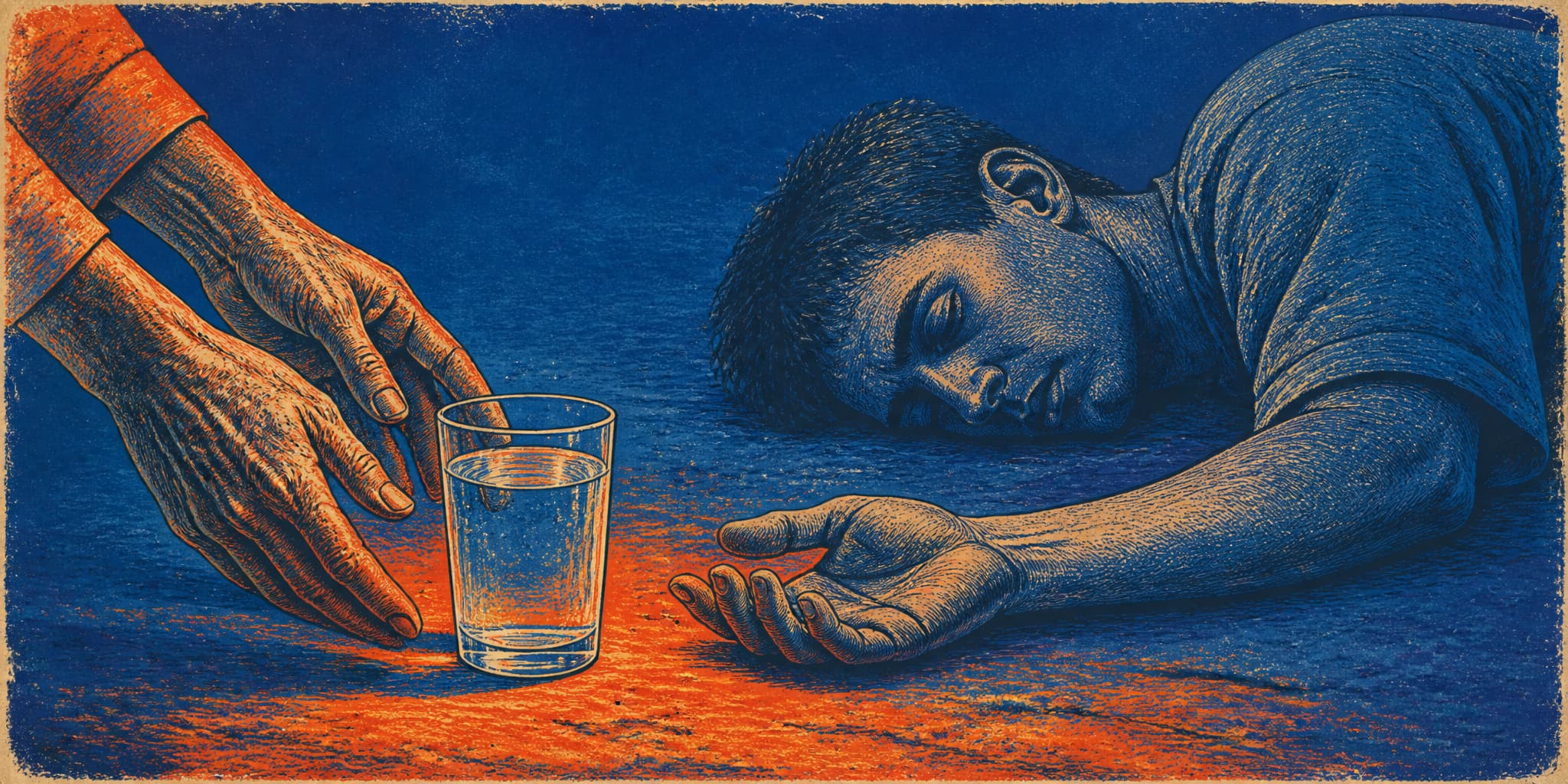
I filled another glass and set it on the floor next to him. Didn't wake him. Just set it there.
The compressor ran. The light came in. I sat in my chair and waited for him to open his eyes.
- AC present, not protective: Maricopa County's 2025 heat-death report found that air conditioning was present in 94% of indoor heat-related deaths, but 72% of those units were not functioning.
- The overnight threshold: Health Canada's June 2026 guidance recommends 26°C as an upper indoor temperature limit for older adults, framing it as health protection rather than comfort.
- Cooling behaviors that fade with age: A rapid review of older adults' heat-coping strategies found that with increasing age, people were less likely to take showers, use fans, open windows, or drink cool fluids when they felt hot.
- Bills don't pause with shutoffs: Arizona's summer disconnection moratorium keeps power on through October 15, but the Arizona Corporation Commission warns that charges continue to accumulate throughout the protected period.