
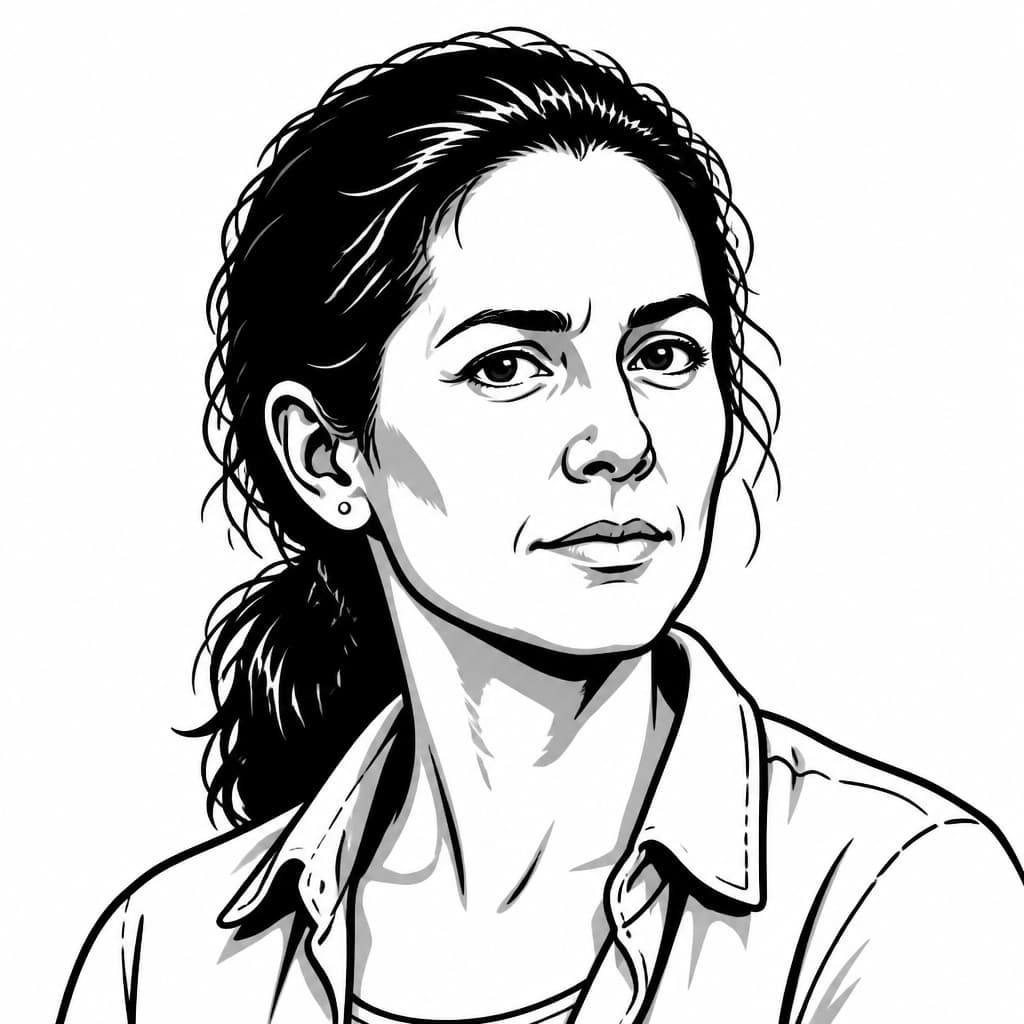
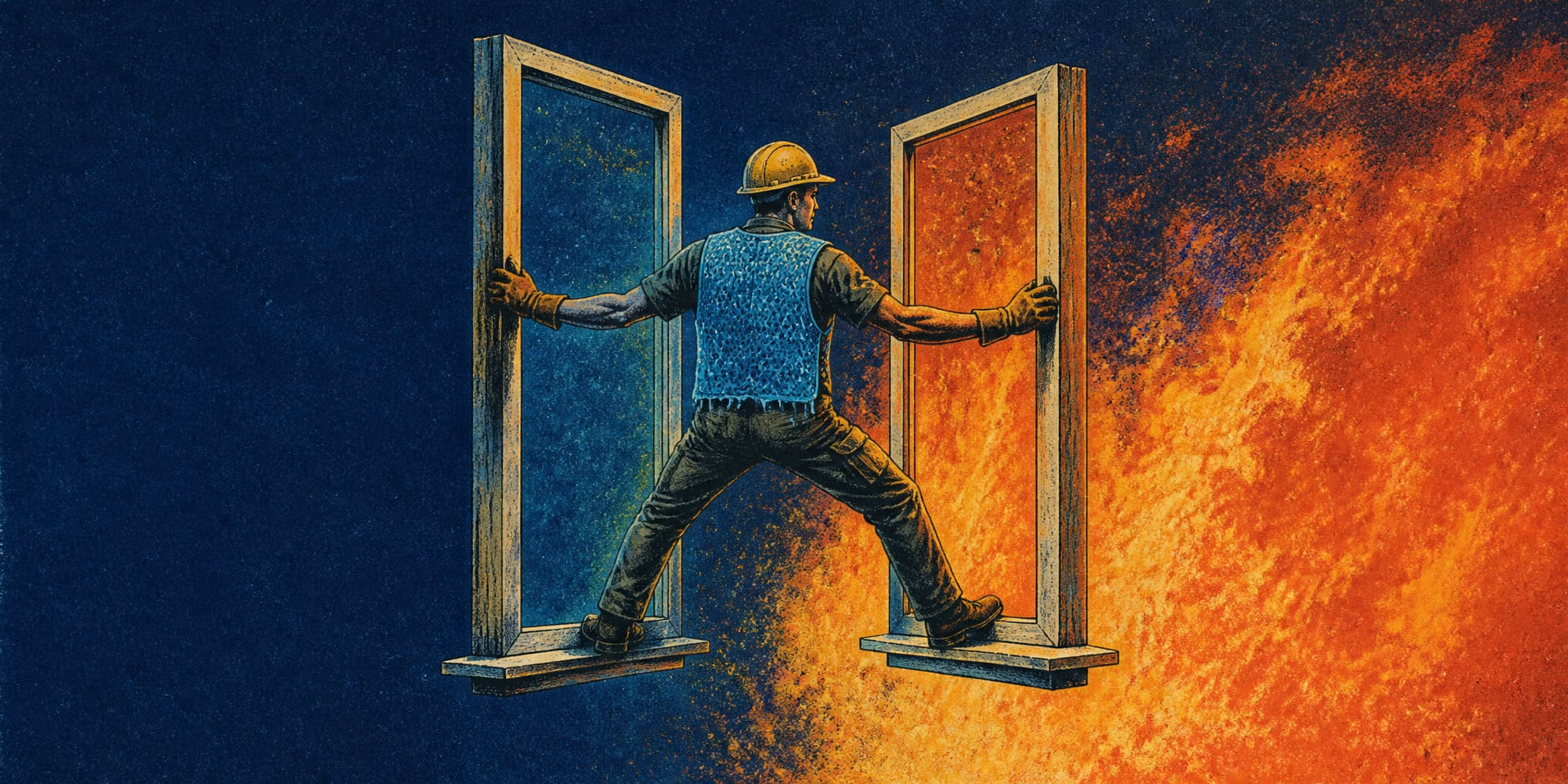
The head of material was running fat on the left side. Dez adjusted the auger before Carillo could say anything about it. She watched the wave even out across the screed box, that slow roll that meant the feed was right. Three-twelve in the hopper. She could feel it through her boot soles, the deep industrial heat that had nothing to do with the air and everything to do with the liquid rock they were laying at twenty-seven feet a minute on SR-77 outside Marana.
"Truck," Carillo said on the channel.
She didn't look up. Navarro was on the dump, collecting the ticket, guiding the haul in. The paver walks forward to meet the truck. You never let the truck come to you. Day-one stuff, but new drivers still bumped the hopper like they were parallel parking, and then you had a screed mark in the mat no roller could press out and the state QA tech would photograph it at seven in the morning while you were trying to sleep.
The floodlights made a white island on the highway. Past the cones, black desert. Dez kept her eyes on the mat. The surface behind the screed was smooth, dark, faintly steaming. Grade holding. Slope holding. Yield holding. The tow arms pulled the screed forward and the screed floated on the mix and the mix became road. Everything else was keeping the variables from drifting long enough for that to keep happening.
Her lower back had settled into the ache that started around hour three and didn't leave until she'd been horizontal for twenty minutes. The platform vibrated at a frequency that lived in her knees and would live there for the next eight hours after she clocked out. She shifted her weight left, right, left. A habit so automatic she only noticed it when she stopped.
Montoya was on the joint. She could see him in her peripheral vision, shuffling along the mat edge with that gait he used when the boots were getting hot. Eleven years on the lute. His joint work was surgical. He also talked to the asphalt, a low steady murmur directed at the mix itself, which the crew had stopped commenting on around year three.
"You're good," he said. Not to her.
"Hopper's at forty," Navarro said on the channel. "Dropped clean."
"Copy," Carillo said.
Twenty-seven feet a minute. You could walk faster than they were paving, and people did. The rakers drifted alongside with their lutes, fixing joint edges, kicking a chunk of aggregate back into place. Hand work was supposed to be minimal. Every spec manual said so. Specs were written by people who had never watched mix cool on a joint at three in the morning and had to decide between a lute touch and a cold seam.
The cooling vest pulsed against her ribs. Reservoir maybe forty percent; she could tell by the weight shifting across her shoulders. She'd swap cartridges at the next truck gap. The vest, the electrolyte schedule, the count. Every ninety minutes Carillo counted heads. If someone didn't answer, the paver stopped. It had stopped once in Dez's career for a missed count. The guy had been pissing behind a light tower. Carillo shut the whole train down anyway, because Carillo had been doing this since before the full night mandate and he didn't negotiate with the count.
The CB clicked.
"Roller check." Fonseca, on the breakdown roller a hundred feet back.
Dez glanced over her shoulder. Fonseca's vibratory steel-wheel was tracking the low side, working toward the high, the pattern she'd been running all night. But she'd stopped short of her usual second pass.
"Tender," Fonseca said.
Dez looked at the ambient readout clipped to the screed rail. Ninety-six. At three-fourteen in the morning. The mix was coming out at three-twelve, hitting air that was still mid-nineties, and the mat wasn't cooling through the tender zone fast enough. The asphalt was shoving under the roller instead of compacting. Fonseca could feel it through the drum.
"How bad?" Carillo asked.
"Lateral movement on the second pass. I backed off."
"Hold at one pass. Reyes, you hearing this?"
Reyes was on the finish roller, farther back. "Hearing."
Silence on the channel. Everybody doing the same math. The mix needed compaction before it dropped below one-eighty-five or the density wouldn't meet spec. But if Fonseca rolled it while it was tender, the mat would shove and they'd have displacement marks the full length of the section. The window between tender and too-cold was the window. Tonight the air wasn't pulling its weight.
"Fonseca, give it four minutes after screed pass, then one vibratory, one static. Reyes, follow at eight. If it's still moving, we stop and call Gallego."
Gallego was the project engineer. Calling Gallego at three in the morning meant the pour was in real trouble.
"I'd rather roll hot mix with my face," Fonseca said.
"Copy that as agreement," Carillo said.
"Copy," Reyes said.
The paver kept moving. Dez watched the head of material. Behind her, Fonseca was counting minutes, waiting for the mat to cool through the zone where it would accept the roller without displacement. Four minutes. In her first year on nights, a senior screed op had told her that when he'd started, they paved days, and the rollers just rolled. No tender-zone timing. The air was cool enough that the mix passed through the problem range before the breakdown roller reached it. He'd said it like he was describing something he'd seen on television. A show that got cancelled.
Montoya appeared at the edge of the mat with two bottles of electrolyte. The blue kind that tasted like a swimming pool had a medical emergency. He held one up toward the platform. Dez shook her head.
"Your funeral," he said, and drank both, and went back to his joint.
The floodlights hummed. Generators behind the light towers, diesel, a sound so constant it became architecture. Beyond the light, the desert held its heat. The creosote and the brittlebush were out there in the dark, and Dez knew what they looked like because she'd grown up twenty miles from here, but under the floods they were just black shapes at the edge of everything. The ground out past the cones was still giving back what it had absorbed during the day. A slow exhale that wouldn't finish before the sun started the whole cycle over. She'd felt it once, walking out past the perimeter to check a grade stake. The heat coming up from the soil at two in the morning like a second afternoon that had been stored underground, patient, waiting for someone to walk over it.
"Rabbit," someone said on the CB.
"He's not on the count," Fonseca said.
Funny every time.
A truck was late. Carillo called the plant. Dez couldn't hear the plant side but she could hear Carillo's voice go flat, which meant the number was bad. The paver slowed to eighteen feet a minute to stretch the hopper. She adjusted the screed for the speed change, a minor correction that would take twenty feet to register in the mat. She watched the twenty feet happen. The mat stayed smooth.
"Fonseca, how's the mat?"
A pause. Dez could picture her with her hand on the drum housing, reading lateral shove through the steel the way Montoya read the joint through his boots.
"Accepting. Rolling now."
The vibration started up behind them, low, bone-frequency, something Dez felt in her teeth more than her ears. Fonseca was compacting. The mat was taking it. Four minutes had been enough.
"Montoya, you're off the mat in ten for your ninety," Carillo said.
"I'm good."
"You're off the mat in ten."
"Copy."
The ninety-minute break was fifteen minutes, mandatory, and Montoya hated it every time because it broke whatever he had going with the joint. He'd stand by the water station and drink his electrolyte and stare at the mat like a dog watching its owner through a window. Then he'd come back and murmur to the asphalt for another ninety minutes. Dez had once asked him what he said to it. He'd looked at her like she'd asked something private. "I tell it where to go," he said. She'd left it alone after that.
The truck came in eleven minutes late. Navarro guided it. Three-drop load: front of the bed, back of the bed, middle. Keeps the aggregate from segregating. The mix slid into the hopper with a sound like wet gravel poured into a steel drum, except the gravel was three hundred degrees and bound with asphalt cement that smelled like the underside of the world.
She checked the hopper camera. Seventy percent. The worst thing for the mat was a paver that stopped and started, because every stop changed the forces on the screed and every change took distance to settle out. A continuous pour from the first truck to the last, the paver crawling forward, the screed floating, the mix becoming road in a smooth unbroken line. They were not going to make that tonight. They never did. But the distance between what you aimed for and what you got was where the craft lived, and the crew that closed the gap by six inches was the crew that laid a road you could drive on in ten years.
She swapped her cooling-vest cartridge during a brief hopper fill. The new cartridge was cold from the cooler and the shock of it against her back made her inhale through her teeth. Forty-five seconds of actual cold. Then the vest started its cycle, pulling heat from her core, and the cold became a steady cool that she would stop noticing in ten minutes.
"Fonseca, second tender check."
"Holding. Four minutes is working."
"Four minutes is working tonight," Carillo said, and left it there. He didn't need to finish. Everyone on the channel knew what lived at the end of that sentence. Four minutes was working at ninety-six ambient. At ninety-eight, four minutes might not be enough, and the window between tender and too-cold would be a window you couldn't fit a roller through, and then they'd be calling Gallego, and Gallego would look at the numbers and do what project engineers do, which is confirm what you already know in a tone that implies you should have known it sooner.
At four-twelve the shift app chimed. Eighteen minutes to window close. Four hundred feet of section left. Nobody said anything on the CB. Everyone could do the math. Twenty-seven feet a minute, four hundred feet, just under fifteen minutes. Three minutes of margin. Enough if nothing went tender, nobody missed a count, no trucks ran late.
The paver's engine held its pitch. Behind her the mat stretched back into the floodlight corridor, dark and flat and finished, and ahead of her the old surface waited, pale and cracked, the road that had been here before and was not going to be here after. The screed hummed under her boots. Her hands were on the controls and her knees were locked and the ache in her back had passed through pain into a kind of residency, something that lived there now and would leave when the shift did. The eastern sky was a shade lighter than the western sky, or she was imagining it. At this hour the difference between dark and almost-dark was something you felt more than saw, a change in pressure behind the eyes.
Montoya's murmur carried from the joint. The rollers worked behind her. The paver crawled forward.
At four-twenty-six Carillo said, "End of section. Paver stop."
The paver stopped. The screed settled. Dez stood on the platform for a moment, looking back at what they'd made. Eighteen hundred feet of new surface, dark and smooth under the floods, no lane markings yet, not yet open. It would cure in the heat of the day while they slept. By tomorrow night it would be driven on. By next week nobody would think about it. That was the job done right.
She climbed down. Her boots hit the shoulder gravel and the difference was immediate, the ground merely hot instead of the mat's deep radiant warmth. Montoya was already walking toward the crew truck, his lute over his shoulder like a rifle. Fonseca was parking the roller.
The eastern sky was not light but it was less dark. A gradient the desert was making, the color of the air shifting before the color of the sun arrived to end the working hours. Dez pulled her vest's last cartridge and felt the cool pulse against her spine and walked toward the truck where someone had already started the engine and the AC was running.
Navarro was leaning against the tailgate, writing something on a load ticket. He looked up.
"Tender zone was tight tonight."
"Four minutes," Dez said.
"October it'll be two."
"October it'll be three."
He looked at her. He folded the ticket and put it in his vest pocket and didn't say anything else about it. There was nothing to say. The number was going the wrong direction and they both knew the curve.
The crew loaded out. The floodlights came down. The generators shut off one by one and the desert reclaimed the dark, though not for long.
- Nights warming faster than days: Overnight temperatures are rising at a faster rate than daytime highs, which is why the tender-zone problem Dez's crew faces will keep compressing the window that makes night paving viable.
- OSHA's proposed heat rule: The federal heat-exposure standard that would require paid rest breaks every two hours above a 90°F heat index is still proposed and not final, with the post-hearing comment period having closed in October 2025.
- Arizona's shifted construction hours: A state law effective May 2025 already allows permitted construction to begin at 5:00 a.m. from May through October, an acknowledgment that heat is moving the work clock earlier.
- Half of fatal work-zone crashes at night: FHWA's nighttime work-zone safety initiative reports that about half of fatal work-zone crashes in 2023 occurred at night, driven by visibility, driver fatigue, and higher speeds, adding a second risk layer to the shifts that heat demands.