

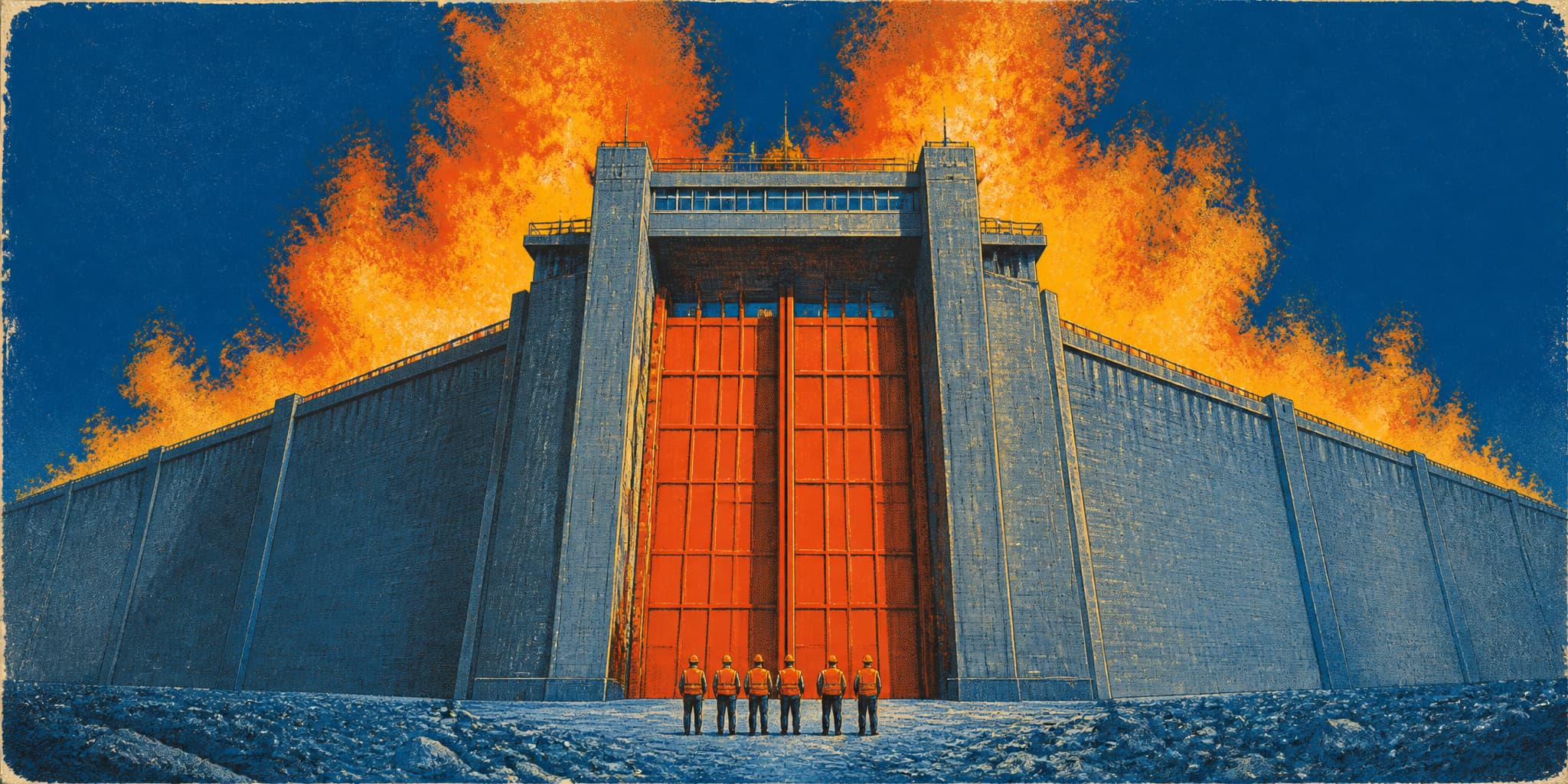
There's a photograph in the city's March 2026 quarterly report showing the Bureau of Coastal Resilience operations crew at the East Side floodwall. Small group, safety vests, standing in front of a $1.45 billion system designed to protect 110,000 people from storm surge. Until last month's hiring push, the bureau had six permanent staff.
I spent enough years on ships to know that building a thing and running a thing are two different problems, and the second one never gets the ribbon-cutting. Those 18 floodgates require a hurricane forecast 96 hours out, a human decision to deploy, and trained crews at every gate. Standard operating procedures are still being drafted. The adjacent barrier at Montgomery Street is still under construction. And when the gates close, rainfall pools behind them unless a separate drainage system — also unfinished — handles the water trapped inside.
New York spent a decade and a fortune building a wall. Now it's trying to build, from scratch, the workforce that makes the wall mean something. The 75 new positions budgeted at $43.2 million are a start. Whether they're hired and trained before the next big storm is a question nobody in that photograph gets to answer.
What the gates protect against: 100-year coastal storm surge plus projected sea-level rise through the 2050s. Specifically not rainfall flooding — the kind that killed 11 New Yorkers during Hurricane Ida's remnants in 2021.
Protected zone: East 25th Street to Montgomery Street, 2.4 miles of Manhattan's Lower East Side, including 11 NYCHA public housing developments.
The trapped-water problem: Closed floodgates seal the surge out but also seal rainwater in. A parallel sewer system ("Parallel Conveyance") is supposed to drain it. That construction isn't finished.
The southern gap: The Brooklyn Bridge–Montgomery Coastal Resilience project connects at the barrier's southern end. Until it's done, the continuous wall doesn't exist.
Target completion: Full system now projected for 2027, per the March 2026 quarterly report.