The River Stays Hot After the All-Clear

When the National Weather Service lifts a heat warning, your phone tells you the worst is over. A 2026 study in Nature Geoscience found that where atmospheric and river heat waves overlapped, the river outlasted the air in 99.6 percent of cases — by an average of 2.67 days, and in the extremes by more than twelve. Downstream of that expired alert sits a chain of decisions running on different clocks: the fisheries biologist reading gauge temperatures, the treatment-plant operator adjusting chemistry, the outfitter loading boats into water that hasn't cooled.

The River Stays Hot After the All-Clear
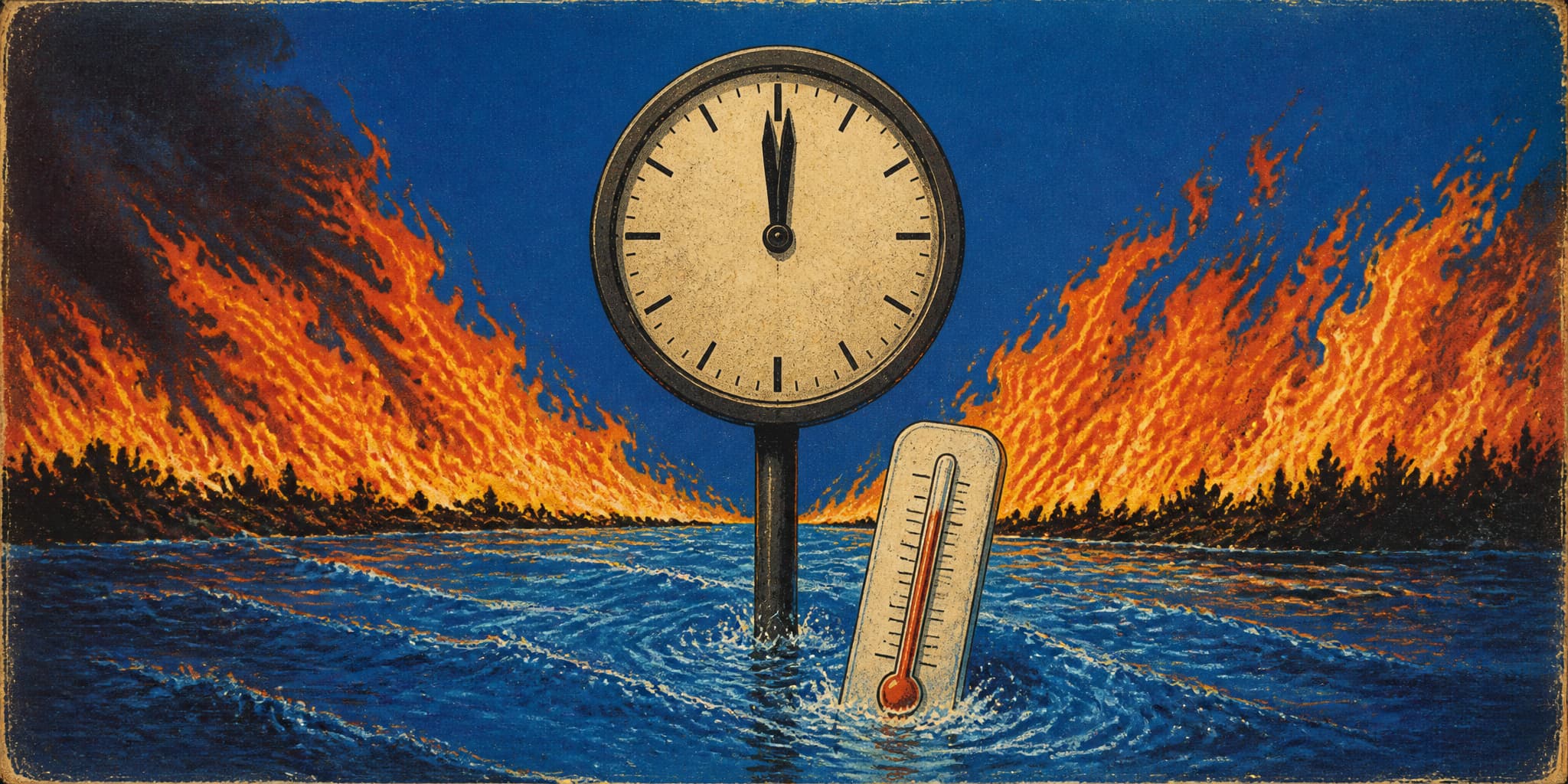
When the National Weather Service lifts a heat warning, your phone tells you the worst is over. A 2026 study in Nature Geoscience found that where atmospheric and river heat waves overlapped, the river outlasted the air in 99.6 percent of cases — by an average of 2.67 days, and in the extremes by more than twelve. Downstream of that expired alert sits a chain of decisions running on different clocks: the fisheries biologist reading gauge temperatures, the treatment-plant operator adjusting chemistry, the outfitter loading boats into water that hasn't cooled.
Duration Science
Threefold Increase in Atmospheric-Riverine Compound Heatwaves Under Climate Change
Nighttime temperatures, not daytime peaks, are the strongest predictor of when rivers overheat alongside the atmosphere.
Under high emissions, 98.5% of atmospheric heatwave days could coincide with river heatwaves by century's end, up from 43.7% in the 1980s.
Duration Science
Heatwaves Enable Wildfire Activity in the Western United States
Grasslands and shrublands peak around day four after onset; forests lag until about day seven.
Western heatwaves increasingly hit multiple regions at once, raising the prospect of competing demand for shared firefighting crews and aircraft.
Duration Science
Widespread Ecological Responses and Cascading Effects of the 2021 Western North American Heatwave
At one site, mussel beds spent nearly three years recovering before a later stressor wiped out the progress entirely.
A multi-institution consortium based at UBC's Biodiversity Research Centre, published in Nature Ecology and Evolution.
Duration Science
Fire Weather Waves Drive Extreme Fires Globally
The study spans 1979–2024 across all burnable ecoregions, extending the U.S.-focused fire-tail findings to a global scale.
Communications Earth and Environment, complementing the western U.S. heatwave-fire lag research with worldwide fire weather data.
Seams in Protection

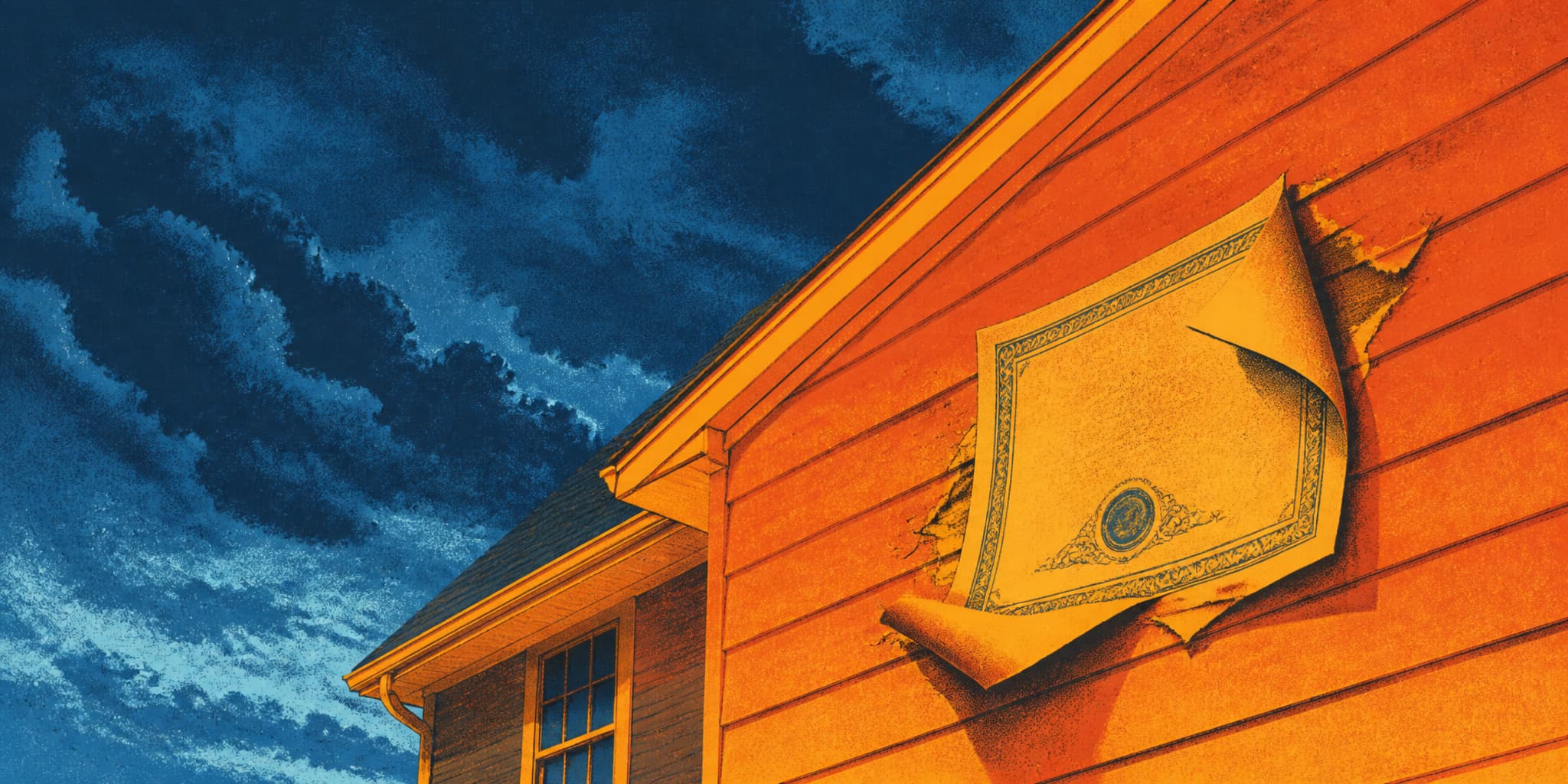
During Hurricane Sally, FORTIFIED-designated homes in coastal Alabama filed claims at roughly half to a quarter the rate of conventional homes nearby. An Alabama Department of Insurance and University of Alabama analysis estimated that converting the sample's conventional homes would have saved policyholders $32.6 million in deductibles alone.
So the standard works. What's interesting is everything between building the house right and actually paying less for insurance. You need a certified contractor, an independent evaluator on site mid-build, a documentation package that clears review by the Insurance Institute for Business & Home Safety, and a certificate that expires after five years. Then you need an insurer in one of ten states that offers a discount. Build the same house in the other forty, and your premium stays where it was.
Alabama got fifty thousand homes certified by late 2024 because the state funded grants, mandated discounts, and trained evaluators. A housing finance professional told researchers for a 2026 Nature Communications study: "Do we actually reflect [risk reduction] in our pricing? No, we never do."
Recovery and Handoffs


Favorite Featured Stories

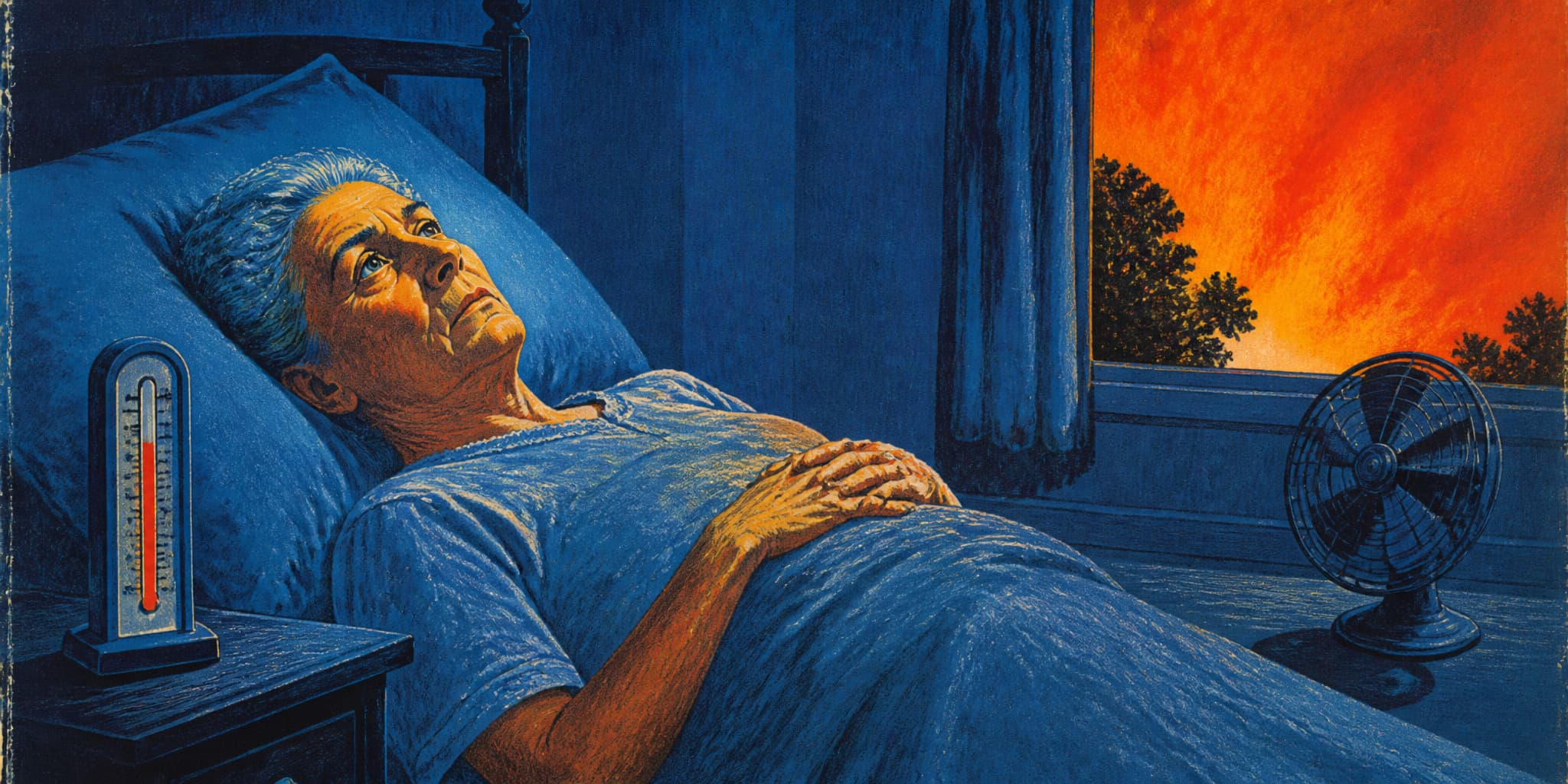
Globally, the hottest nighttime "feels-like" temperatures are rising faster than daytime peaks. The survivability models...

A rain gauge measures depth. Soil accepts a rate. A Nature paper out in May finds the two numbers have come apart: when ...

A stroke chart lists hypertension, atrial fibrillation, age. It does not list the eleven summers when wildfire smoke poo...

The hottest nights on Earth are warming faster than the hottest days. A UK Met Office analysis puts the gap at 0.32°C pe...