The Cooling System of Cheryl Henderson

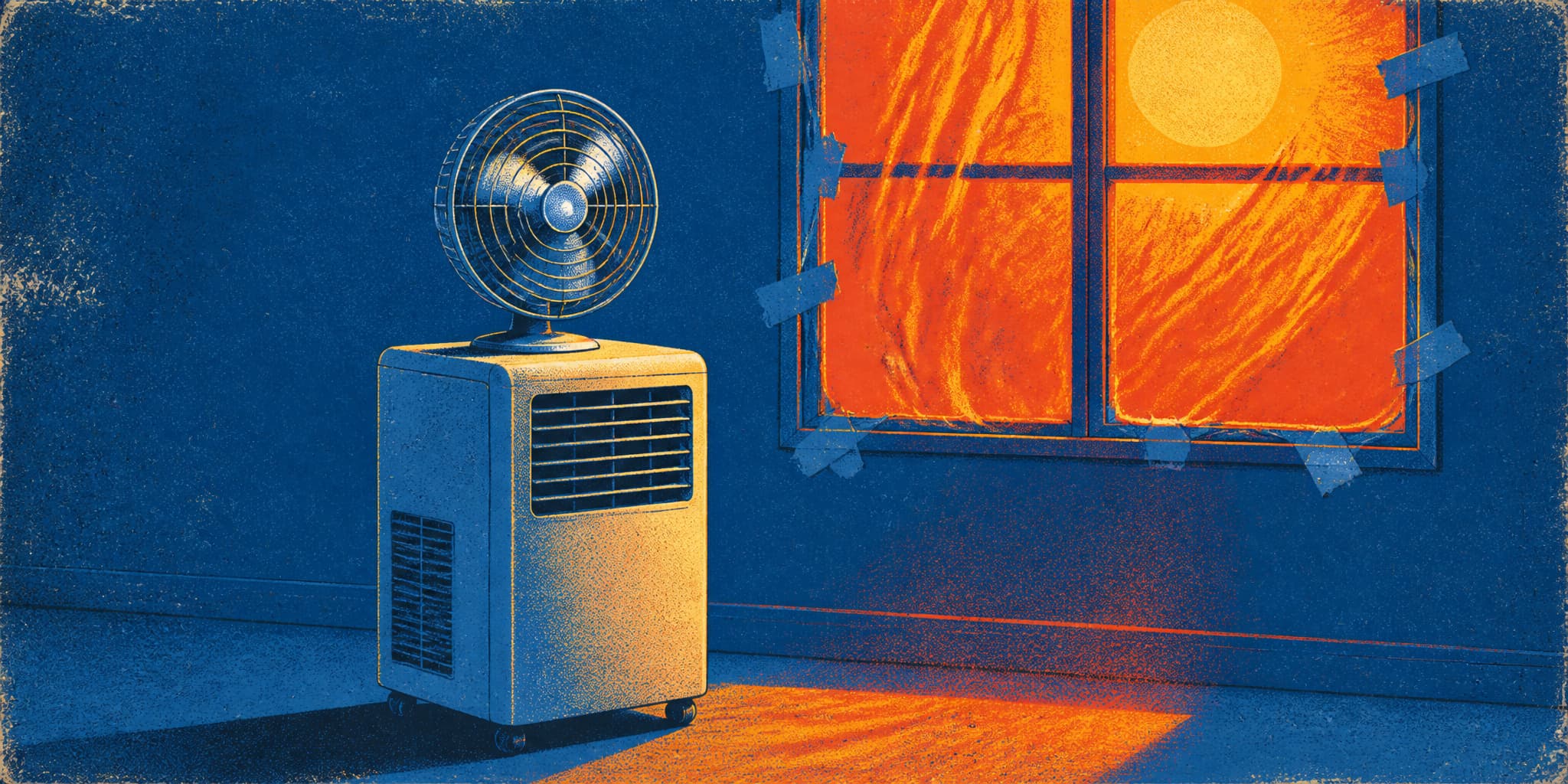
A Houston television crew filmed Cheryl Henderson's apartment for three minutes in July: four portable fans, two ceiling fans, one working portable AC taped into a window, one with a dead compressor. Blackout curtains drawn. No oven use. Cold showers when she wakes up sweating. Henderson has COPD, and nobody measured the indoor temperature. What follows is the inventory of everything she manages daily to keep that apartment survivable — the equipment, the electric bill, the state's power grid, her own lungs, and now a proposed city ordinance — and what that inventory looks like once somebody finally puts it on one page.
The Cooling System of Cheryl Henderson
A Houston television crew filmed Cheryl Henderson's apartment for three minutes in July: four portable fans, two ceiling fans, one working portable AC taped into a window, one with a dead compressor. Blackout curtains drawn. No oven use. Cold showers when she wakes up sweating. Henderson has COPD, and nobody measured the indoor temperature. What follows is the inventory of everything she manages daily to keep that apartment survivable — the equipment, the electric bill, the state's power grid, her own lungs, and now a proposed city ordinance — and what that inventory looks like once somebody finally puts it on one page.

Return Inventory

By August 5, four days after the Spokane Complex fires forced 60,000 people out, Debra Curran knew her house had survived. She and her husband were still at the Convention Center shelter. He has ALS. Going home meant an ambulance, not a car.
That single fact opened a chain of dependencies most evacuees never have to think about. An ambulance had to be available, and during the evacuation, a hospice patient in a separate case waited hours for one before a nurse physically carried them out. Power had to be running at the destination; Avista still had over a thousand customers dark. Roads had to admit emergency vehicles. A physician or the family had to decide the transport risk was acceptable.
The sheriff's office lifts the evacuation order. Avista restores the power. EMS dispatches the ambulance. But nobody coordinates the sequence for a family like the Currans, and nobody tracks whether all the pieces have actually come together at the same address, on the same afternoon.
Parallel Assemblies

Thirty Feet from the Creek
Two Hill Country families lost their homes in the same July 4 flood. Thirteen months later, one is watching a new house go up. The other is still in a donated RV thirty feet from the creek, paying insurance on a project that hasn't broken ground. What separated them was what each family could reach, and whether it held together.

Eighty Acres Instead of Two Hundred
Brady Pearson planted eighty acres of corn this summer instead of two hundred. The rest went to sorghum or sat fallow, freeing water for neighbors on the same ditch. Less corn means less feed, which means fewer cattle, which means less income. On a Mesa County ranch in extreme drought, every adjustment moves everything else.
Component Reading