
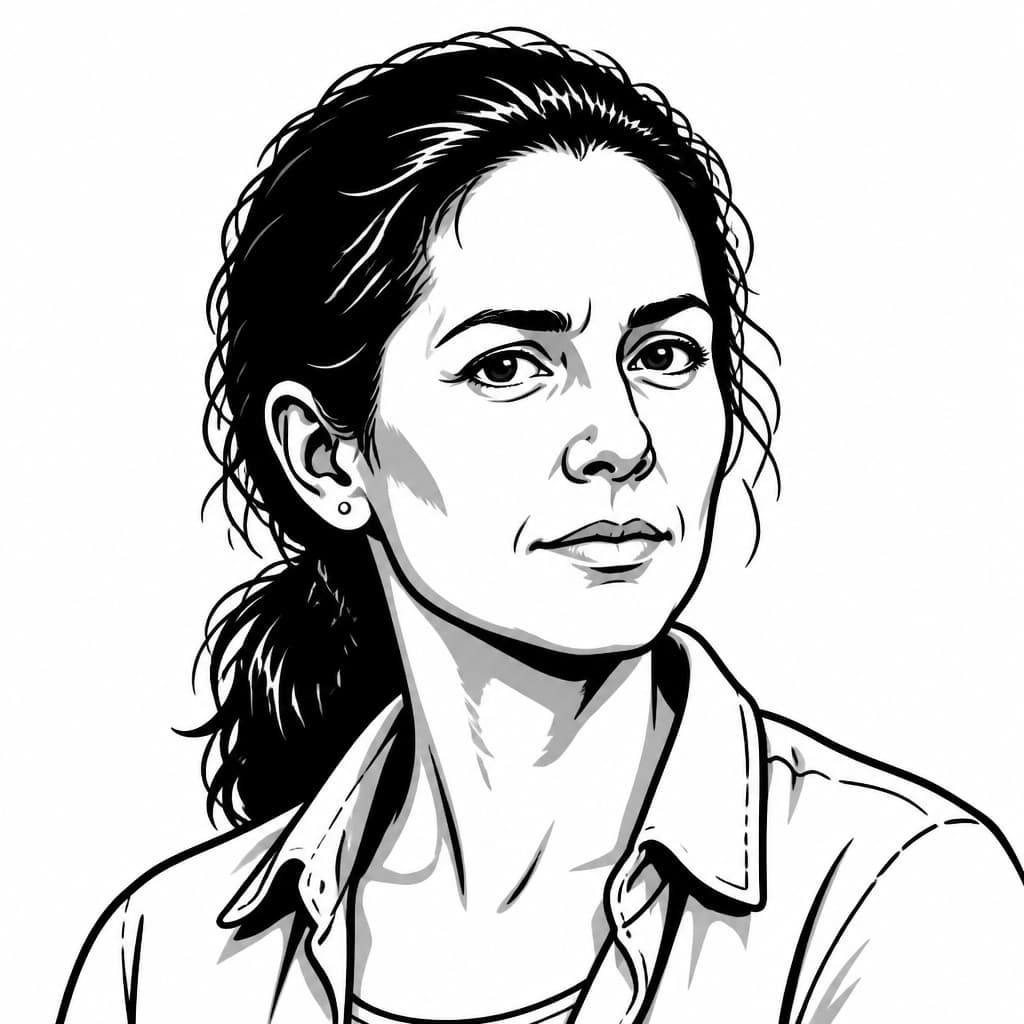
CASS
The room was wrong before she had the tablets out.
Six stations around the horseshoe, six tablets, because six was what the agenda needed. Cistern rotation for the Ahtanum district. The Simcoe Creek diversion gate that had been leaking since June and needed a welder. Uplink allocation for September's weather relay. The kind of session that drew eight people and finished before the building got hot.
When she looked up from the clerk's terminal there were twenty-three chairs full and bodies standing in the doorway. Faces from Wapato. From White Swan. From the Satus Creek camps. A woman she'd never seen had brought her own chair and wedged it between the water-station map and the east wall, in the strip the morning sun hadn't come around to yet.
Alahmoot sat second row, left side, satchel across his knees. Twelve hours from Lapwai on roads that used to take four, and that was assuming the Lewiston bridge held and Boone's people at Deadman Pass were charging the posted toll instead of whatever number they'd arrived at that morning. He looked like the drive. Dust in the creases of his neck, boots still laced, which meant he'd slept in them or hadn't slept.
He caught her eye and nodded, and held the nod a half-second longer than a greeting needed.
Della hadn't come in yet.
Cass checked the terminal. Forty-one percent, which got her to midday if she kept the screen dim and stayed off the relay. She opened the record template and typed the date. August 14, 2068. Water Allocation Session, Toppenish Seat. She left the attendance field blank because the number kept moving. Two more people came through while she watched, one of them carrying a camp chair under his arm the way you carry a chair you expect to be sitting in for a long time.
She knew how this had happened. Nine days ago she'd pushed Helen Reuben's verification to the Spalding relay, which was Alahmoot's network, and she'd known he would use it. She hadn't known nine days was enough to fill a room.
Then Della came in wearing the gray shirt with the Nation's seal over the pocket, the thread gone from black to the color of old tea. Her hands were empty.
She looked at Alahmoot for about as long as it takes to read a gauge. She looked at the room. She looked at Cass. There wasn't anger in any of it. It was closer to what a person does when a number they've carried for years turns out to be off, and they're finding the difference while everyone watches them not react.
She sat down in the front row, center, greeted nobody, and folded her hands.
Cass opened the session.
ALAHMOOT
He'd been at Toppenish since two in the morning, parked behind the community building with the truck battery feeding a reading light clipped to the visor and the filing spread across the passenger seat. Daniel's block letters. Naomi's cursive running uphill toward the right margin the way it always had. Paper that had yellowed in the archive and hadn't crumbled. That was the reason they'd used paper.
The drive had taken him through the Clearwater canyon in the last of the light and across the plateau in the dark, which he counted as a mercy. In daylight you had to look at it.
He'd made the same run in June, so he knew what the dark was covering. The cottonwoods on the Clearwater approach were half what they'd been when he started making this trip, and the survivors were shorter, thinner through the crown, crowded down at the waterline like they were trying to drink faster than the bank was drying. Above the green strip the basalt showed through everywhere, dark columnar rock with pale dust caught in the joints where the loess used to hold. His father used to say the hillsides above Spalding carried bunchgrass thick enough to hide a dog in. Now it was bare soil and cheatgrass stubble and last year's burn scar running black from the ridgeline down to within forty feet of the road.
The wheat ground between Lewiston and Colfax had gone over three years ago. The last farmer holding out up there had walked off the place after the July windstorm took his topsoil down to the basalt cobble, and the fields were a continuous mat of dried annual grass now, which would burn in September the way it burned every September, and the burn would clear the ground for next year's crop of the same thing. He'd watched that conversion move west for fifteen years. It used to stop where the irrigation started. Then the irrigation stopped.
Past Lewiston the route climbed off the river and didn't come back to water for hours. Up onto the plateau, past the grain elevators at Dusty and Washtucna that hadn't held grain in a decade, through country that looked identical in every direction. He stopped once to check the coolant and stood in the dark listening to the wind come through the cheatgrass. It sounded like paper.
A woman from the Toppenish community brought him a plate to the truck window before dawn, sorghum porridge and dried elk. She looked at the pages on the seat and said, "You're the one from Lapwai."
He said he was.
She looked a moment longer. "My cousin's at White Swan. She says that diversion gate at Simcoe's been leaking since June and nobody's fixed it because all anybody wants to talk about is the dams."
"I'm sorry about the gate."
"Fix the gate first," she said. "Then argue about the dams." And she walked off before he could put together an answer, which he understood to be the point.
The sun came up over the ridge east of town and hit the array on the community building's roof. Twelve panels, angled south, maybe eight of them still making current. Two had the laminate peeling at the corners, moisture into the cells, output bleeding off a little every month, and nobody was going to replace them, because the ones that worked worked and the dead ones made shade for the live ones behind them. He had learned to stop pointing this out. It never improved anyone's morning.
He put the filing back in the satchel and checked the truck. Sixty-two percent, enough to get home by noon if he didn't run the headlights. Then he went inside, found a seat, and waited for Della.
THE SESSION
The cistern rotation took four minutes. The Simcoe Creek gate took three: Cass read the maintenance request, a man from the Simcoe district confirmed the leak was worse than the request said, Della authorized a welding crew and two days of generator time. September's uplink allocation went through unopposed in about ninety seconds. The room sat through all of it with the patience of people waiting for the second half of a program.
"New business," Cass said.
Alahmoot stood up. The satchel buckle took him a moment because his hands were stiff from the wheel. He got the pages out and held them where the room could see they were paper, and handwritten.
"This was drafted by Daniel Calder of Lapwai and Naomi Sennett of this seat," he said. "Twenty-one years ago. They submitted it to the archive here, and the presiding officer reclassified it as unauthorized." He didn't look at Della when he said it. "Their daughter's sitting at the clerk's table. She's the one who pulled it back out, and she verified it against Helen Reuben's field record at Magpie Creek, which is forty-five years of continuous monitoring by one woman nobody was paying. I'm entering it as new business."
He set the pages on the table in front of Cass. She didn't touch them.
"The proposal is specific," he said. "Open Lower Granite and Little Goose for fish passage. Repair Ice Harbor and Lower Monumental for generation. Send the recovered power to the interior seats. Lapwai, Kamiah, Kooskia, Grangeville, whoever's still drawing breath east of the divide. It was written as a compromise by two people who could see both sides of it because they lived on both sides of it."
Nobody said anything. Chairs took weight differently. The woman with her own chair uncrossed her arms.
Della let it sit until somebody's seat creaked.
"The filing was reclassified because it went in without authorization from this seat and without consulting the affected treaty parties," she said. "None of that has changed."
"The data has."
"Helen Reuben's data says Magpie Creek holds cold water through a window that gets shorter every decade, and that somebody counted three juvenile fish in it last summer. That isn't a policy."
"It's fish."
"It's O. mykiss, which is rainbow trout and steelhead both. You cannot tell them apart looking down through a mask at a fish four inches long. One of them goes to the ocean and comes back. The other one lives out its whole life in that creek and doesn't need a single thing opened for it."
The man from Wapato said, "Does it matter? Fish in the creek's fish in the creek."
"It matters because the claim is for salmon," Della said. "Chinook, coho, sockeye, steelhead. Named species, in agreements signed by named parties. If we're reopening the dam question, we reopen it on the treaty record. Not on three fish that might be trout."
"So you agree the dam question should be reopened," Alahmoot said.
Something that was almost a laugh went around the room. Della's mouth tightened.
"I agree that my step-brother drove twelve hours to wave my dead daughter's handwriting at me," she said. "I'd like to hear what he's actually asking for."
"What Daniel and Naomi asked for. Open the upstream pair, repair the downstream pair, and stop pretending we can keep the river and the power both, when we can't have either one without giving something up."
"And the generation goes to Lapwai."
"The generation goes to the interior. All of it, split among the seats. You know what four hours a day looks like, Della. Helen's granddaughter runs our clinic. She schedules injections around the refrigerator cycle, because some of what she has doesn't survive the warm gaps between the forty-minute windows, and she's gotten very good at it, which I don't consider a triumph. The school's tablets die by early afternoon, so the little ones get screens and the older ones get books. The older ones read better now. That would be funny if you sat with it a while."
"I've read the clinic reports," Della said. "I've also read the thermal profiles." She turned her head toward the back of the room. "Tam. You're here. Fourteen cold-water reaches. What do they say?"
Tam was against the back wall with his legs stretched out and his arms crossed, in the posture of a man who had been hoping the morning would pass without his name in it.
"Same thing Helen's record says. The window's narrowing. Some reaches are losing days faster than others. A few are holding steady because they're spring-fed and the springs haven't failed yet."
"If we opened the upstream dams. Free-flowing from Lower Granite down to the confluence. Would the thermal corridor carry a returning run?"
"Maybe. For a while."
"How long is a while?"
"I don't have a number for you. I have fourteen data points that say the ground's warming and the water does what the ground does. You want me to say twenty years, or ten, or five, and the honest answer depends on things I don't control and neither do you."
Reyes had come in after Della and taken up a place by the door where she could watch the room and the hallway at the same time. She said, "Tell them about the coordinates."
Tam looked at her. "No."
"They're going to ask."
"Then they'll ask."
The man from Wapato asked. "You've got locations for these cold reaches. Where are they?"
"I don't share coordinates."
"Why not?"
"Because the last time somebody mapped something worth having in this basin, three factions were standing on it inside a season. I've watched it happen with springs. With timber. There was a solar install outside La Grande that lasted eight months before Boone's people took it down to the frames. You map it, you mark it, you lose it."
"We're not Boone's people."
"You're people," Tam said. "That's sufficient."
The room didn't care for that, and Della let the irritation go all the way around before she picked it up.
"The coordinates aren't today's question," she said. "Today's question is the dams. Alahmoot wants us to execute a twenty-one-year-old compromise. I'm saying you don't split the difference on a river that was taken whole."
"It wasn't taken whole. It was taken in four pieces, by four decisions, and every one of them was made somewhere else. Somebody else built them, somebody else ran them, and somebody else quit paying for the maintenance and walked away. We inherited pieces. We can use the pieces."
"We inherited a crime scene."
"We inherited a powerhouse that could run a refrigerator without a timer on it. Call it a crime scene if you want to. My nurse calls it Tuesday."
The woman with her own chair laughed, one hard note, and after that nobody was pretending this was a formal proceeding.
A young man at the back stood up. Callused hands, a burn scar climbing his left forearm that could have been welding or could have been fire, and you couldn't tell which from across the room.
"Has anybody in here actually been down there? Last five years?"
Nobody had.
"I went into Ice Harbor two years ago. Walked in from the south, through the old boat ramp. So — the concrete's fine. That's what people don't understand. The concrete's fine, the spillway piers are fine, the powerhouse is standing up straight. Everything that isn't concrete is dead. The switchyard's a rust garden. Transformer oil leaked out onto the pad years ago and the stain's still there, about the size of this room. Three of the spillway gates are seized open, so the river's been running through those bays on its own since whenever the last operator locked up and left. The fish ladder's still a ladder, structurally. But the pumps that push water through it to bring the fish in are gone. Somebody carried them out. Juvenile bypass screens are silted solid. I couldn't see the turbine intakes because they're under water, but the access doors on the downstream face have rusted through and there's water standing in the erection bay, which there shouldn't be."
He stopped. "Sorry. I've been carrying that around two years and nobody's ever asked me."
"Keep going," Della said.
"Repairing that isn't welding a gate. You'd have to dewater the turbine pits and get eyes on the runners. Rebuild or rewind the generators. Find excitation and protection gear, or fabricate it. Transformers. The whole switchyard. And then connect the output to something that wants it. You'd need people who've done it, or people who've watched somebody do it. You'd need a crane. You'd need months. Probably years."
"We know," Alahmoot said, and he said it patiently, because he'd run those numbers a long time ago and had been living with them since. "Nobody's talking about six turbines. One. Maybe two. Partial capacity at one dam is enough to change the arithmetic for the whole interior."
"One turbine still needs a head of water you can control. It needs intake gates that close, and it needs emergency closure, and it needs somebody standing there to use them when it goes wrong. Otherwise you're not operating a powerhouse, you're standing next to one."
"So we put somebody there."
"With what training?"
"With the people in this room. With the people at Lapwai who have kept a clinic alive on four hours a day and improvisation. With whoever's left who remembers how a turbine works, or can learn it off somebody who does."
The farmer from the Ahtanum district had been shifting in his seat for twenty minutes. He stood.
"That gate at Simcoe Creek has been leaking since June," he said. "We just authorized a welder. That's a gate I can see from my kitchen. It moves water that grows food that's on plates in this room. Can we fix that before we rebuild a federal dam with no budget, no crane, and no electrician?"
"The gate's authorized," Cass said from the clerk's table. "Two days of generator time. It's in the record."
"Fine. Good. Then can we do the September cistern schedule, because my district's short eleven percent and nobody's said why."
"Ahtanum flow is down," Della said. "It's been down since July. The snowpack that fed it came in at thirty-eight percent. We allocated what came out the other end."
"Then take it off Toppenish Creek."
"Toppenish Creek is filling this building's cistern and three others. There's nothing sitting there to take."
He sat down. He wasn't satisfied. He was outnumbered.
"Boone knows about the filing," Reyes said from the door.
The ventilation fan, which Cass had stopped hearing an hour earlier, came back up as the loudest thing in the room. The man from Wapato put both hands flat on his knees. The woman with her own chair looked toward the door she'd come in through, and then made herself look away.
"Word moves on the corridor," Reyes said. "Church circuit had it four days ago. Boone's people at Pendleton had it yesterday. I don't know what he does with it. I know what he does with leverage, and a dam that might make power is leverage."
"Boone doesn't hold the Snake corridor," Alahmoot said.
"Boone holds the passes. Anything that moves between here and those dams goes through his ground or around it, and around it is two extra days through country that will cook you in August. You send an assessment party, you're asking Boone's permission whether you write it that way or not."
"Then we ask."
"And he charges what?"
Alahmoot didn't answer right away, because everyone in the room knew the general shape of what Boone charged, and knew the price went up when the freight was political.
"This is why the filing was reclassified," Della said. "Not because the engineering was wrong. Because acting on it means crossing ground we don't hold, repairing infrastructure we didn't build, and negotiating with people who will use our interest in it against us. Daniel and Naomi understood the river. They didn't account for the politics."
"They accounted for it," Cass said.
The room turned. She hadn't spoken since the agenda items. She was behind the terminal with the screen dimmed and her hands flat on the table on either side of the keyboard.
"Page four. Route assessment and faction consultation. They mapped three approaches to Ice Harbor that stay off the I-84 corridor. They identified the skills gap and proposed a training exchange with the Umatilla seats. They budgeted for corridor access fees. Line item seven."
She wasn't reading it off anything.
Della looked at her granddaughter, and the room watched Della look at her granddaughter. Her hands, folded since she sat down, came open. She reached toward the pages on the table, her daughter's cursive visible from where she sat, and stopped with her fingers short of them. Her hand went back to her lap. She looked at the east wall for a second, at nothing on it, and then back at Cass.
"The proposal is twenty-one years old," she said, and her voice had come down. "So is the route assessment. Boone wasn't at Pendleton then. The church didn't exist. There were no tolls on the corridor. The thermal record didn't say what it says now."
"The dams are the same dams."
"The dams are twenty-one years further gone."
"Then somebody should look at them before they're twenty-two years further gone."
That got a harder laugh out of the room. The engineer with the scar was nodding.
"She's right about the clock," Tam said. "Concrete doesn't care which of you wins this. Neither does steel. Every year nobody goes down there, the repair gets more expensive and the options get fewer. That's true whether you want them open or want them running."
"Thank you, Tam. Would you like to give us those coordinates while you're being useful?"
"No."
"Then we're deciding on half the information."
"You've never had more than half. It hasn't stopped you yet."
Della stood up. It was the first time she'd been on her feet since she came through the door, and the room quieted for it.
"If we send anybody," she said, "they assess all four. Not two. All four. And the assessment covers fish passage — the ladders, the juvenile bypass, the attraction-water systems, the condition of every one of them. Not just what spins."
"Agreed," Alahmoot said. Fast. Faster than a man weighs a condition he's hearing for the first time.
Della heard it. She looked at him, and he looked back with his hand flat on the satchel, and neither one of them said the thing, because they had been not saying things to each other since they were children in the same house.
"They report to this seat," she said. "Not to Lapwai. Not to the church. Not to Boone. Here."
"Agreed."
"And nobody touches anything. Assessment only. No repair, no breach, no modification of any structure until this seat has the findings and votes on them."
"Agreed."
The farmer from Ahtanum raised his hand. "Can we do the cistern schedule now?"
CASS
The session ran until the building became unbearable at half past eleven. The cistern schedule took forty minutes, because the Ahtanum shortage turned out to be more than eleven percent of nothing. Two of the district's three collection points had silted in during the July dust, and cleaning them needed generator hours that had already gone to the Simcoe gate. Cass logged the conflict, logged the reallocation, logged the farmer's objection and Della's ruling. Clerk's work. If that gate got welded inside the month it would be because of four lines nobody in the room would ever read.
They left in stages. Wapato first, then Satus Creek, then the woman with her own chair, who folded it and carried it out without speaking to anybody. The engineer stood by the door talking with someone Cass didn't know. Reyes went out the back hallway, which was how Reyes always went out, by whichever door put her closest to her vehicle and furthest from anyone who wanted to keep talking.
Tam stopped at the clerk's table on his way past. He looked at the pages, still sitting where Alahmoot had put them.
"You know what happens when the delegation gets down there."
"They assess the dams."
"They see the dams. Turbines, spillways, ladders, switchyard. Then they come back and have the same argument they had this morning, except now it has pictures."
"Better than arguing about a place nobody's been."
"Maybe." He picked up the corner of the top page, Daniel's block letters, and put it back down flat. "Your parents wrote a compromise. This room heard a menu. Those aren't the same document."
"They heard what they heard. That isn't mine to control."
"The record is." He nodded at the terminal, the dim screen, the charge indicator she'd been watching since eight. "Whatever goes in that box travels on two networks and gets read by people who want opposite things out of it. That filing was invisible for twenty-one years. As of this morning it's an asset. You know what happens to assets in this basin."
He left.
The last three people gathered their things by the door and talked in voices too low to make out. The ventilation fan cycled off, its timer or the charge dropping under threshold, and the heat came in off the walls. She could feel it in the metal of the table and in the terminal's casing, warm under her palm in a way it hadn't been at eight o'clock.
Nineteen percent. Maybe an hour of screen before it quit and she'd be waiting on the afternoon charge to finish the record.
She pulled up the minutes. Complete through the cistern reallocation. The new-business field had a category selector at the top. Presentation, informational. Motion, proposed and carried. Motion, proposed and failed. Tabled for future session. Four options and a free-text box underneath with the cursor blinking in it.
Informational kept the filing in the minutes and out of everybody's way. Della would take that. It would sit in the record the way it had sat in the deep archive: present, logged, doing nothing at all.
She looked at the pages. Her father's block letters. Her mother's cursive going uphill toward the margin. Page four. Line item seven.
Seventeen percent. She put her hands on the keys.
She entered it as a motion, proposed and carried, with Della's three conditions attached in full. All four dams assessed. Fish passage included. Report to this seat. She recorded the delegation authorization.
Then she specified the assessment sequence, because nobody in the room had said one word about sequence. Ice Harbor first. Lower Monumental. Little Goose. Lower Granite. Downstream to upstream. Whoever walked Ice Harbor first would come back describing what could be fixed, and would still be using that vocabulary four dams later.
Nine days of watching the filing move had taught her that much. Who sees what first, who writes the report, who arrives at the end with the weight already leaning.
She attached Helen Reuben's verification. The whole archive, not the summary — forty-five years of temperature readings, the channel-migration notes, the three juvenile O. mykiss, the nine surviving stations, and the line where Helen had recorded that the creek now ran a hundred and twelve feet from the channel described in the original legal record. She attached her parents' proposal entire. The open half and the repair half and page four.
She saved it and opened the relay. Eleven percent. Two transmissions if she kept them short.
The first went to Spalding, Alahmoot's network. Full record, delegation authorization, assessment sequence, attachments.
The second went to the Toppenish relay, Della's network. The identical package, sent inside thirty seconds of the first, so that neither of them could say afterward that they'd learned it second.
Two green returns came back. Eight percent. She sat with them on the screen for a moment and then powered the terminal down before it could get any lower.
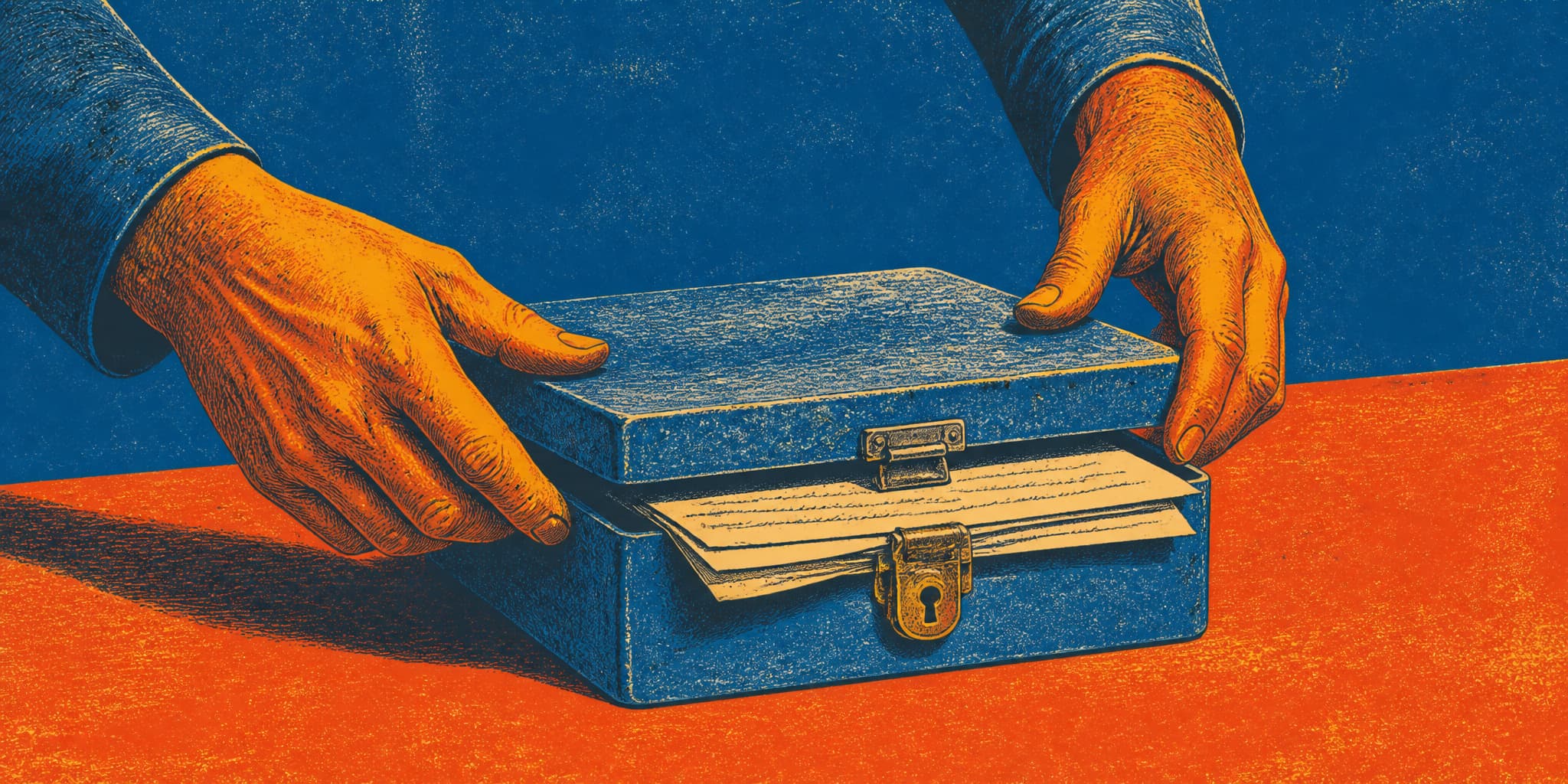
She gathered up the pages, her father's hand and her mother's, and put them in the clerk's lockbox under the table. Not the deep archive where Della had buried them. Not anybody's satchel. The lockbox, where the clerk's papers lived, where the next clerk would find them without having to go looking.
The Simcoe gate still needed welding. The Ahtanum cisterns were still short and were going to stay short through September. The uplink allocation had gone through unopposed, which meant nobody had looked at it, which meant it was probably wrong.
She locked the box and went out into the heat.
- The lower Snake dams: The four dams in this chapter are real federal projects whose future remains actively contested, with the 2023 federal restoration agreement terminated in 2025 and litigation resumed over operations and listed fish.
- Creek-level salmon monitoring: The field protocols behind Helen Reuben's fictional station — temperature loggers, redd counts, carcass surveys, snorkel transects — are drawn from Idaho's standardized spawning ground survey procedures, which have tracked salmon and steelhead across hundreds of backcountry stream miles for decades.
- Eastern Washington's water forecast: Washington's draft 2026 Columbia River Basin forecast projects summer water-availability vulnerabilities by the mid-2040s as snowpack declines and precipitation shifts toward rain, with the Yakima Basin already in its fourth consecutive drought year.
- Rangeland conversion and fire: The cheatgrass cycle Alahmoot drives through is an accelerating real phenomenon across the inland Northwest, where invasive annual grasses create continuous fine fuels that reinforce repeated burning and displace the native bunchgrass steppe.