
The Adaptation Inventory

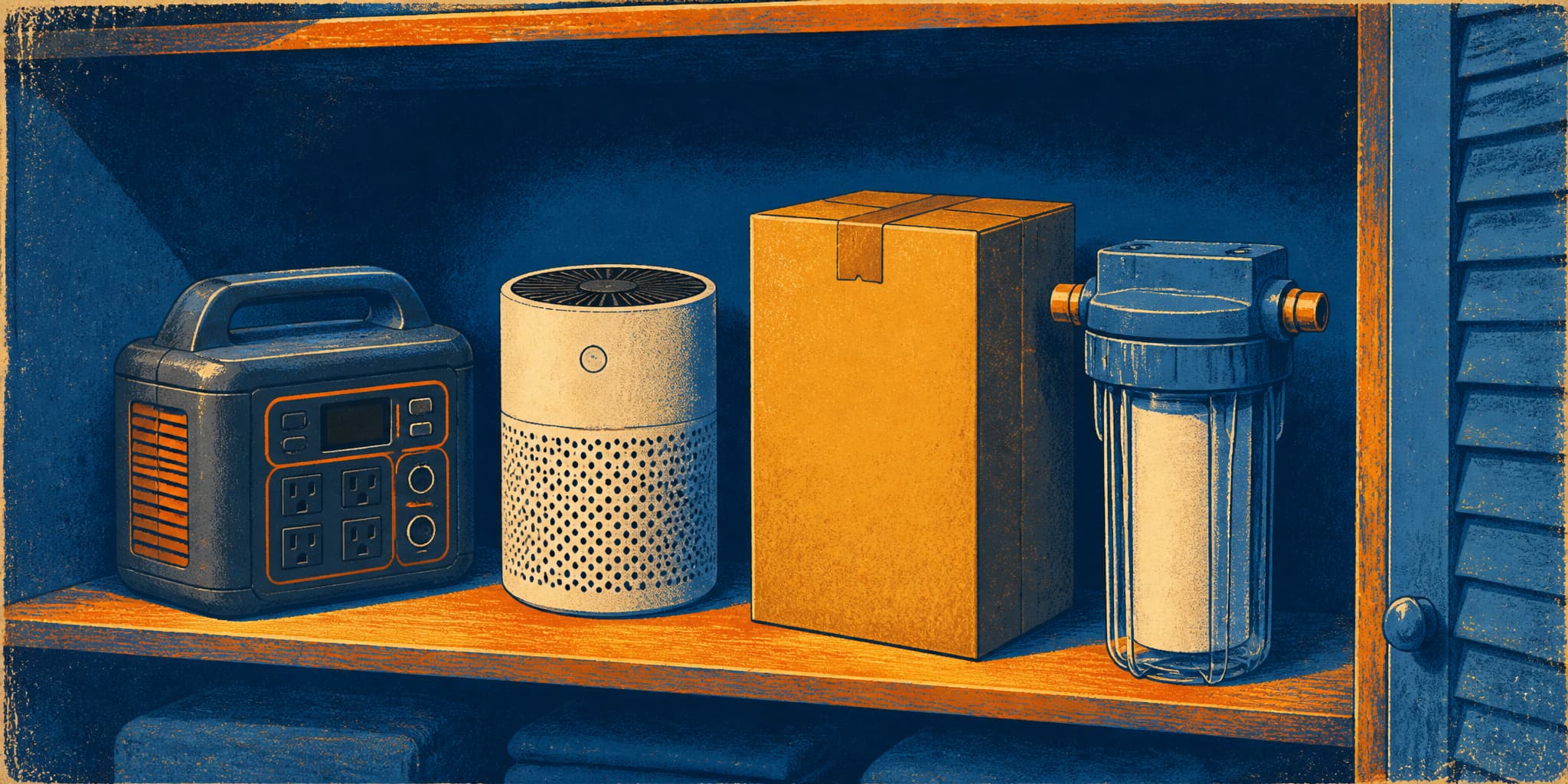
Over the past few years, a lot of American households have quietly assembled their own private utility systems: a portable power station after an outage, an air purifier during wildfire smoke, a water filter after reading a municipal water report. Each purchase solved one afternoon's problem. Taken together, they describe a household expected to supply its own backup electricity, air treatment, water filtration, and cooling. This piece takes the objects apart one by one — retail cost, maintenance schedule, what each assumes about the person buying it, and which public system it's filling in for.
The Adaptation Inventory
Over the past few years, a lot of American households have quietly assembled their own private utility systems: a portable power station after an outage, an air purifier during wildfire smoke, a water filter after reading a municipal water report. Each purchase solved one afternoon's problem. Taken together, they describe a household expected to supply its own backup electricity, air treatment, water filtration, and cooling. This piece takes the objects apart one by one — retail cost, maintenance schedule, what each assumes about the person buying it, and which public system it's filling in for.
The Things You Already Need


After Hurricane Helene, a mother staying in a hotel with her two-week-old was given formula in 32-ounce containers. They didn't fit in the mini-fridge, and nobody had told her the containers needed refrigeration once opened. The right supply reached the right person and still didn't work. When officials say evacuate or shelter in place, the instruction assumes your medication doesn't need cold storage, your wheelchair folds, your birth certificate is retrievable, and a week of spoiled groceries is an inconvenience rather than a hole in the month's budget. Those assumptions have costs, and they land on the households already carrying the most.
The Things You Already Need
After Hurricane Helene, a mother staying in a hotel with her two-week-old was given formula in 32-ounce containers. They didn't fit in the mini-fridge, and nobody had told her the containers needed refrigeration once opened. The right supply reached the right person and still didn't work. When officials say evacuate or shelter in place, the instruction assumes your medication doesn't need cold storage, your wheelchair folds, your birth certificate is retrievable, and a week of spoiled groceries is an inconvenience rather than a hole in the month's budget. Those assumptions have costs, and they land on the households already carrying the most.

Kit Sandoval Has Two Slide Decks and You Weren't Supposed to See the Other One
CONTINUE READINGOne Object Carries It
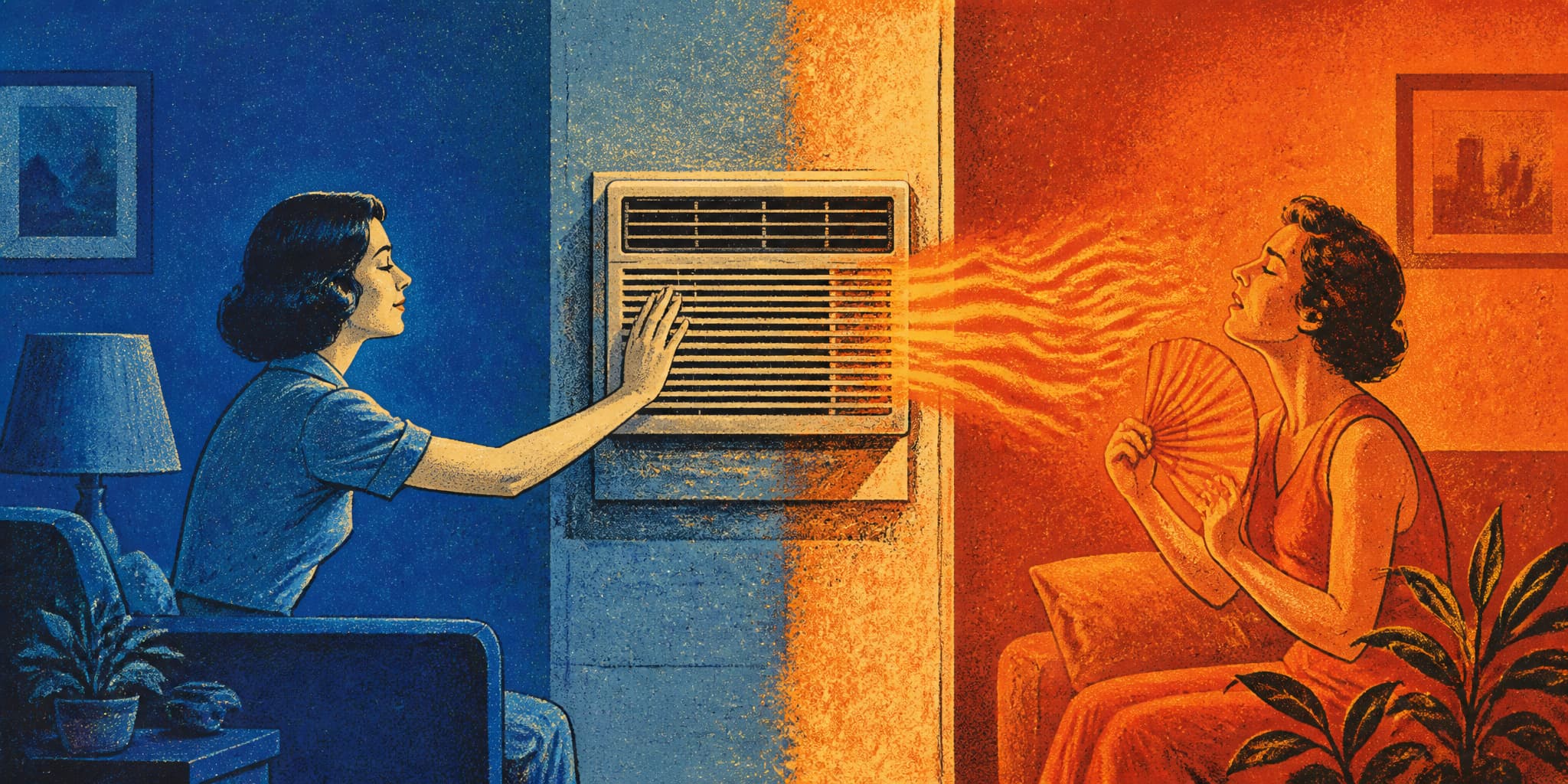
Until August 19, a Houston landlord could point to a window screen and call it adequate ventilation. The city's new ordinance closed that loophole, so the screen comes out and a window unit goes in.
A window AC starts around $150, the cheapest path to compliance, which is why it's worth paying attention to what it actually does. It runs on electricity the tenant pays for, in a state with no hot-weather disconnection moratorium. When it breaks, repair depends on a complaint-to-inspection sequence that takes time heat doesn't give. The compressor adds its own energy to the exhaust, so the unit pushes more warmth outside than it pulls from the room. In dense housing, one tenant's cooling warms the air entering another tenant's window.
The temperature standard: 80°F or 20 degrees below outdoor, whichever is warmer. On a 110°F Houston day, 90°F indoors is compliant.