
Two papers this summer examined the Atlantic Meridional Overturning Circulation, the ocean conveyor that carries warm water north and keeps East Coast sea levels in check. Both agree it's weakening. The disagreement is about what shape the danger takes. Van Westen et al. found that AMOC stability depends on how fast the planet warms, not how much — the same temperature produced collapse or survival depending on the rate. Mehling et al. found Greenland meltwater weakens the AMOC substantially but doesn't trigger abrupt shutdown in their model.
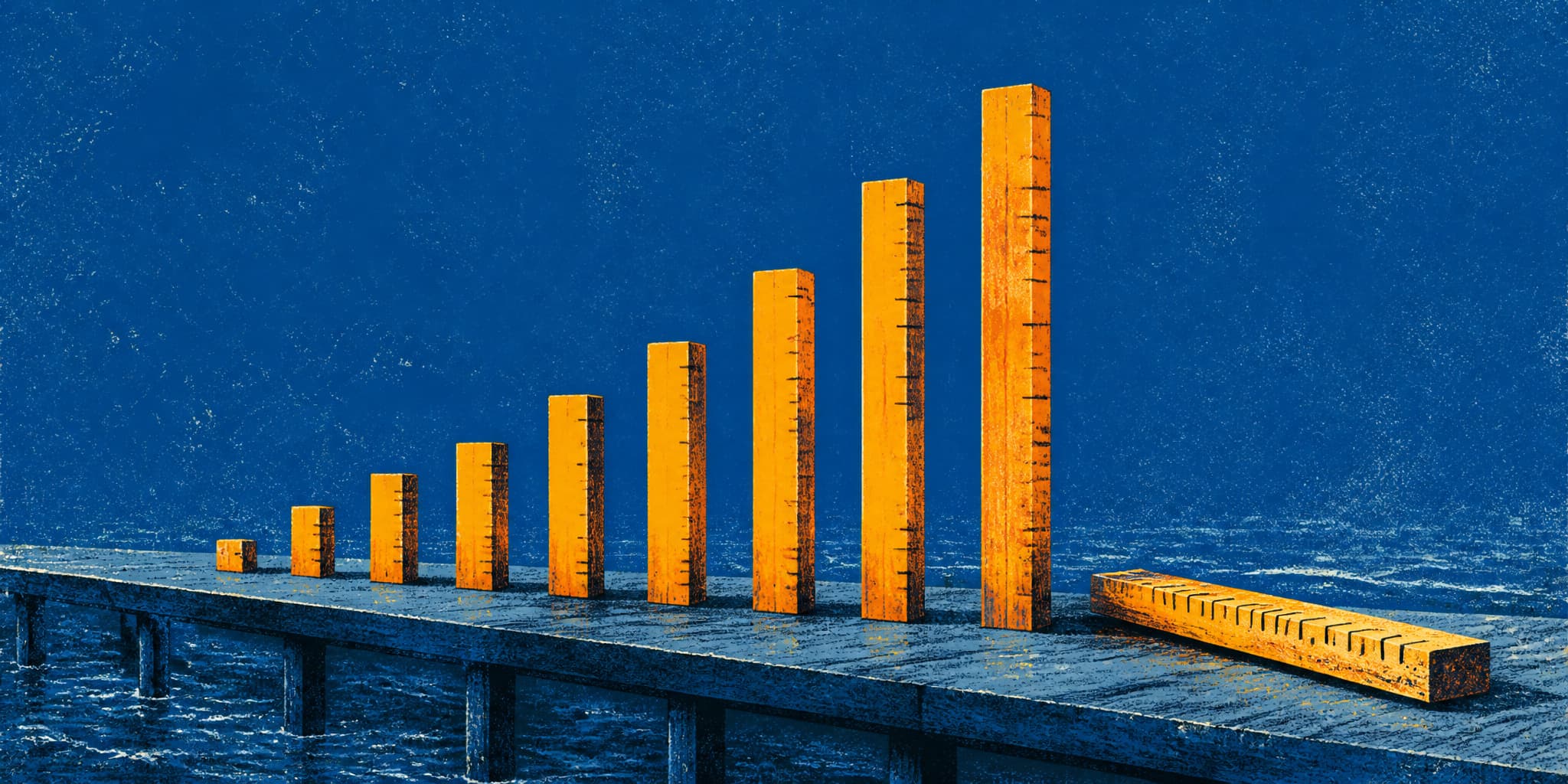
The prior estimate for an AMOC collapse threshold was roughly 4°C, with uncertainty so wide it was barely useful. These papers don't narrow that range. They call into question whether a fixed threshold is the right way to think about the problem at all. If rate matters as much as magnitude, the number moves depending on how fast you approach it — which means coastal planners from Boston to Miami are working with a target that won't hold still.
Rate, not just temperature: Van Westen et al. identified roughly 0.3°C per decade as the warming speed above which AMOC collapse became possible in their model. Current warming is approaching that pace.
Local effect of weakening: A weaker AMOC draws less water northward, letting sea levels build along the U.S. East Coast above the global average — an effect already measurable in tide gauge data.
Overshoot matters: Van Westen warned that strategies allowing temperatures to temporarily exceed targets could trigger collapse during the overshoot, and that once crossed, "it can't simply be undone."
One model each: Both studies used single climate models. Sybren Drijfhout of the University of Southampton has argued the Mehling model makes the AMOC more resilient than other models suggest.