
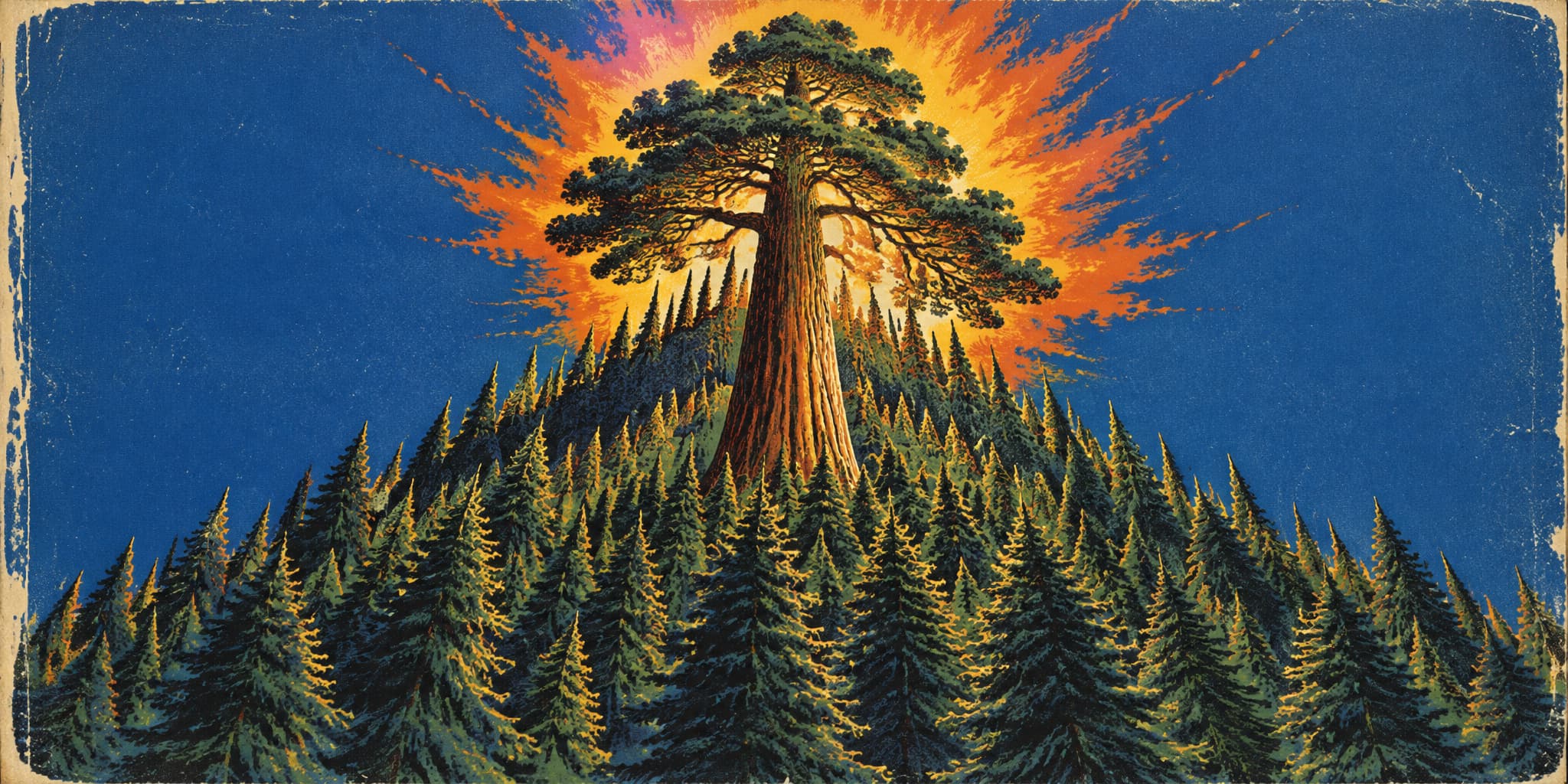
Seven miles north of Flagstaff, a 154-acre ponderosa pine stand has been measured since 1908. In 1876, surveyors recorded 23 trees per acre — big pines, widely spaced, grass thick between them. Low fires swept through every few years and killed the seedlings before they could crowd in.
By 1992: 1,254 trees per acre. Cattle had grazed out the grass that carried fire. Without fire, seedlings survived. They shaded out more grass, which meant less fire, which meant more seedlings. The loop ran for a century. The canopy closed. The grass disappeared under needles.
The research station opened in 1908 to study why ponderosa pines weren't regenerating. Now its scientists work to thin them back out. What filled the gaps was dense young growth connecting floor to canopy — a vertical path for fire that the open forest never provided.
Fort Valley, AZ — what changed and when
1858: Surveyor Edward Beale describes the ponderosa stand: "a glorious forest of lofty pines...every foot covered with the finest grass...perfectly open."
1876: 23 trees per acre. Surface fires every 2–10 years.
Late 1800s: Livestock strips the grass that carries fire between trees.
~1919: A seedling wave roots in the bare interspaces. Without fire, it holds.
1992: 28.3 tons of biomass per acre. Fire behavior has shifted from surface burns to crown-fire conditions.
Across the West: Ponderosa densities rose at least 10-fold during the 20th century. Shade-tolerant species moved in beneath the closed canopy.