The Tunnel and the Doctrine
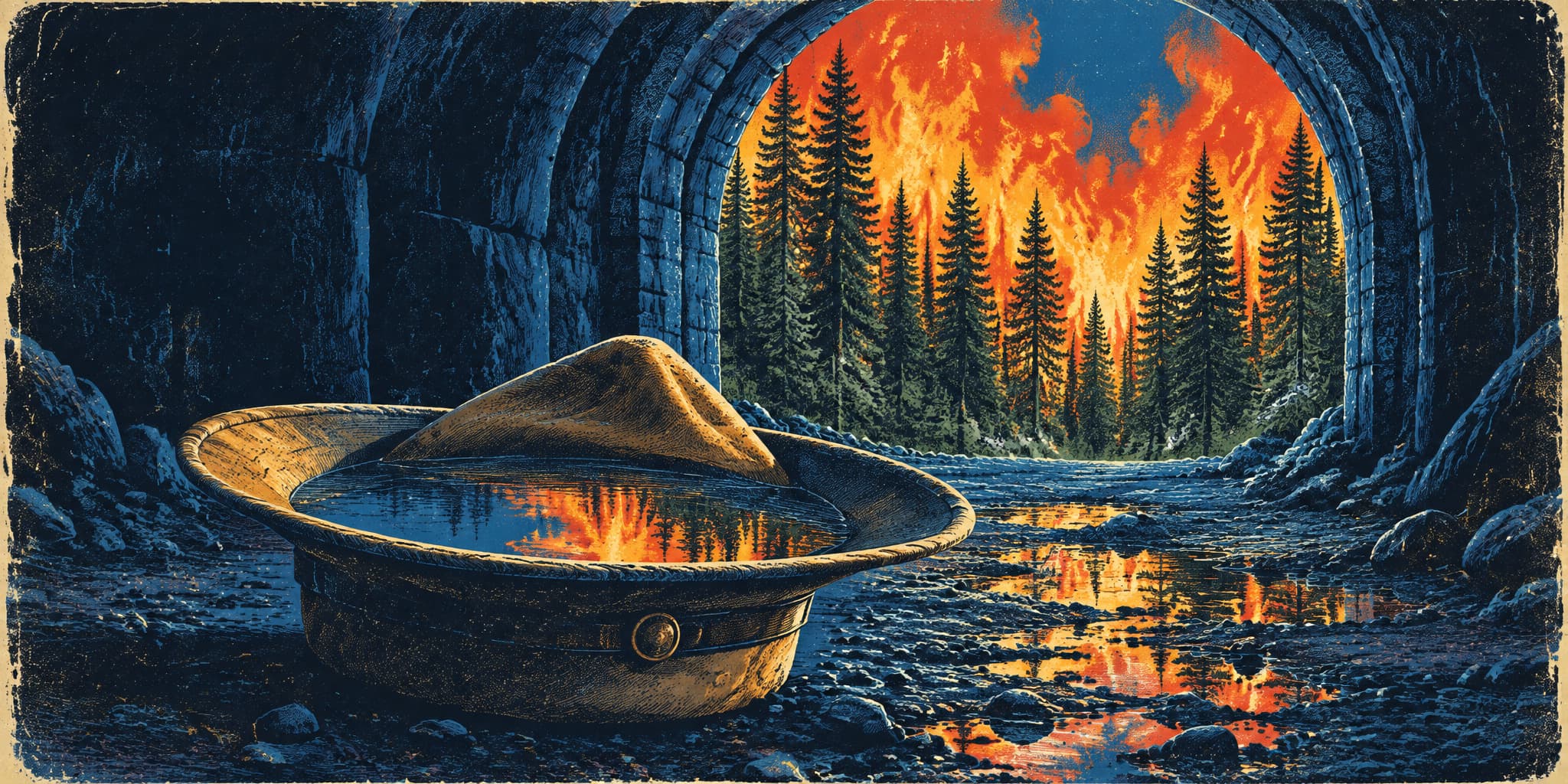
In 1910, a Forest Service ranger kept his crew inside a mine tunnel by threatening to shoot the first man who ran, while the mountains burned around them. Most of them lived. The agency that nearly went under with them drew a reasonable conclusion from the disaster: fight every fire, everywhere, right away. For decades the doctrine worked. Meanwhile the forests filled with fuel nobody was watching pile up, and fourteen million more homes went into fire country. The fires burning now, in landscapes shaped by a century of successful protection, are worse than anything the men in that tunnel could have imagined.
The Tunnel and the Doctrine
In 1910, a Forest Service ranger kept his crew inside a mine tunnel by threatening to shoot the first man who ran, while the mountains burned around them. Most of them lived. The agency that nearly went under with them drew a reasonable conclusion from the disaster: fight every fire, everywhere, right away. For decades the doctrine worked. Meanwhile the forests filled with fuel nobody was watching pile up, and fourteen million more homes went into fire country. The fires burning now, in landscapes shaped by a century of successful protection, are worse than anything the men in that tunnel could have imagined.
Physical Consequence
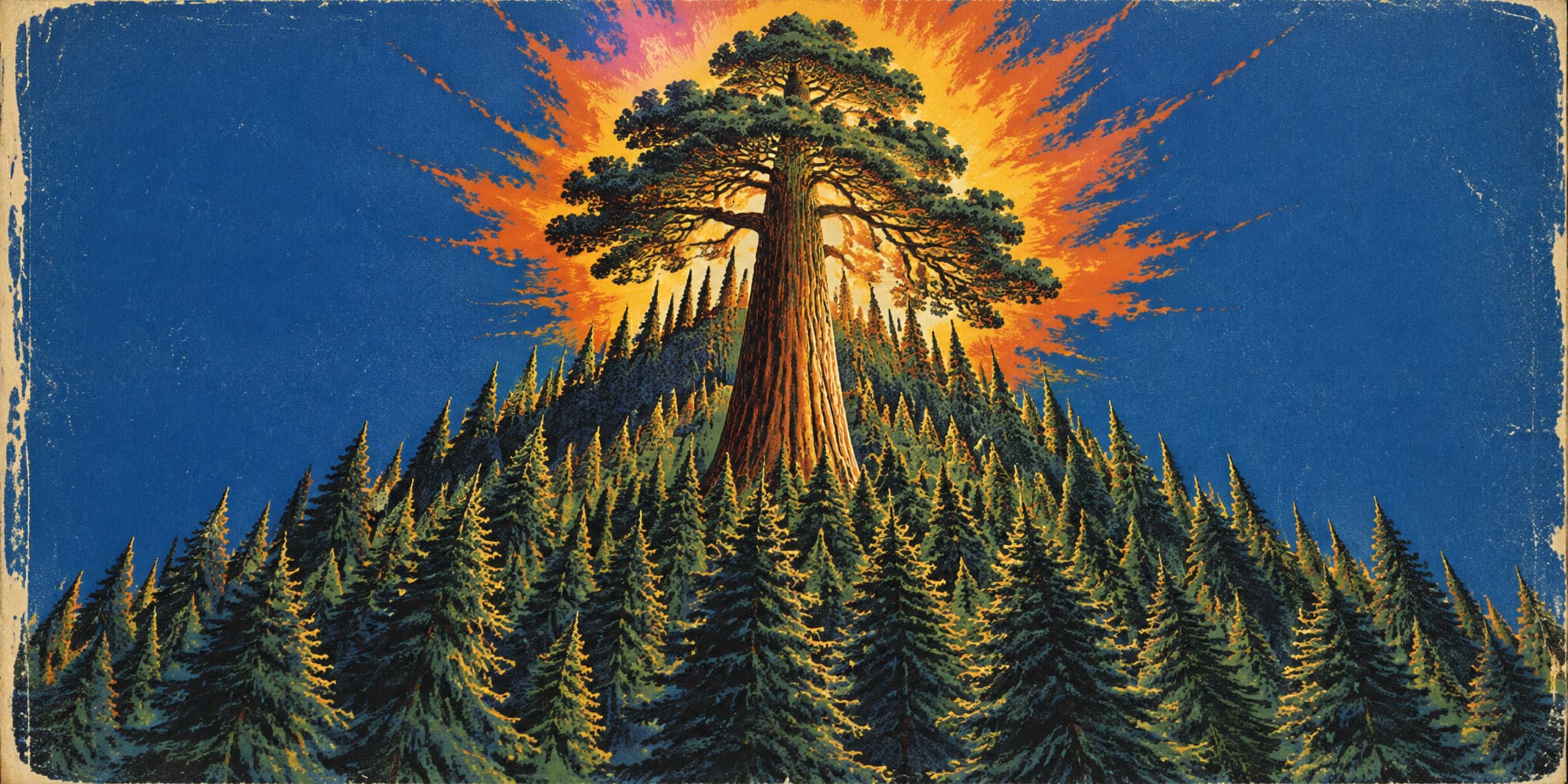
Seven miles north of Flagstaff, a 154-acre ponderosa pine stand has been measured since 1908. In 1876, surveyors recorded 23 trees per acre — big pines, widely spaced, grass thick between them. Low fires swept through every few years and killed the seedlings before they could crowd in.
By 1992: 1,254 trees per acre. Cattle had grazed out the grass that carried fire. Without fire, seedlings survived. They shaded out more grass, which meant less fire, which meant more seedlings. The loop ran for a century. The canopy closed. The grass disappeared under needles.
The research station opened in 1908 to study why ponderosa pines weren't regenerating. Now its scientists work to thin them back out. What filled the gaps was dense young growth connecting floor to canopy — a vertical path for fire that the open forest never provided.

Two Alternatives
Yellowstone's Sixteen-Year Experiment
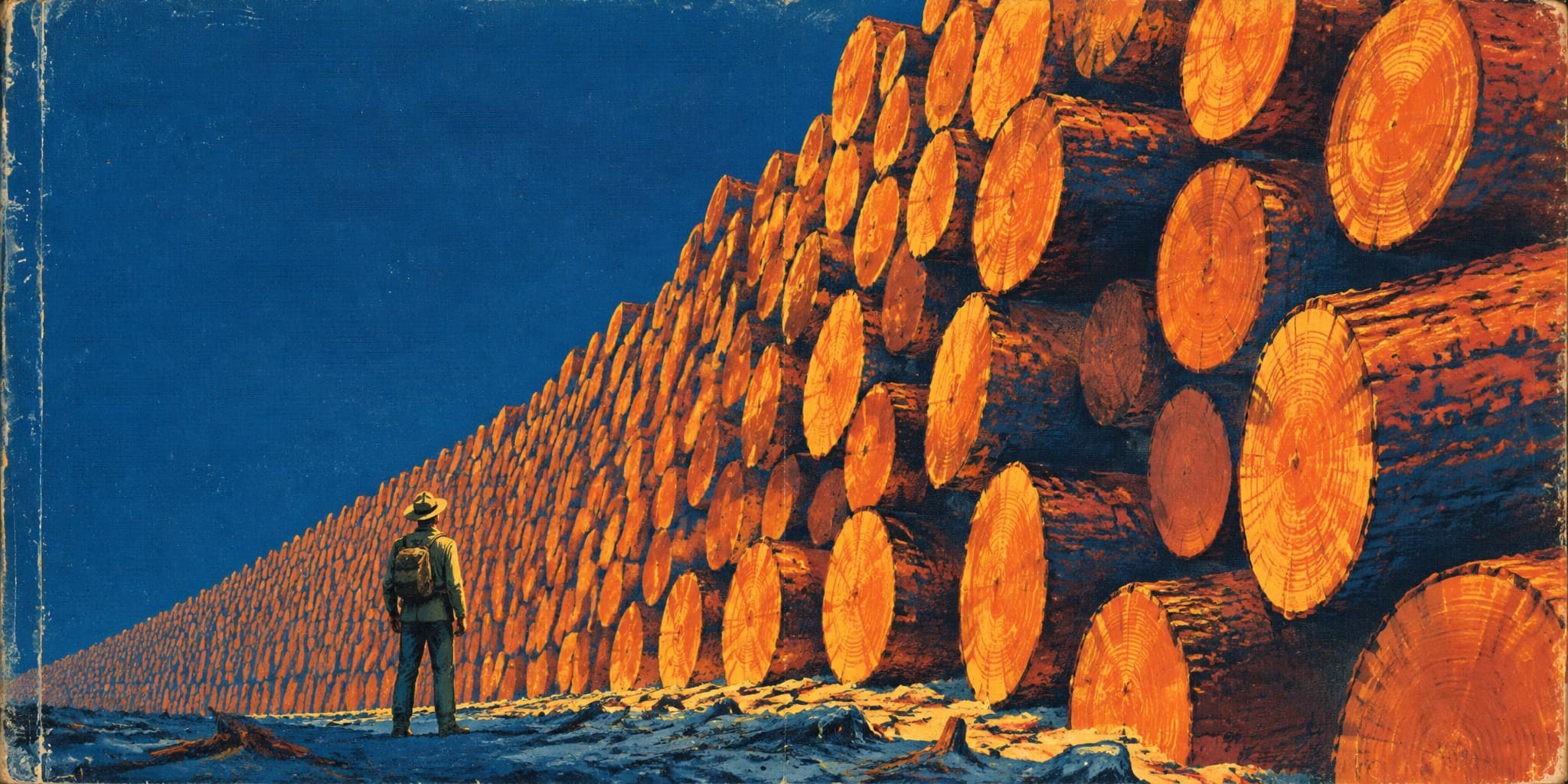
Yellowstone's fire managers spent sixteen years letting lightning fires burn, and it worked, right up until a drought arrived that wasn't in the dataset. The 1988 fires burned 36% of the park. The forests recovered within a decade. The political willingness to let fire do its ecological work took much longer, and the federal government now spends more than six dollars fighting wildfires for every dollar it spends trying to prevent them.
Why Florida Kept Lighting Fires
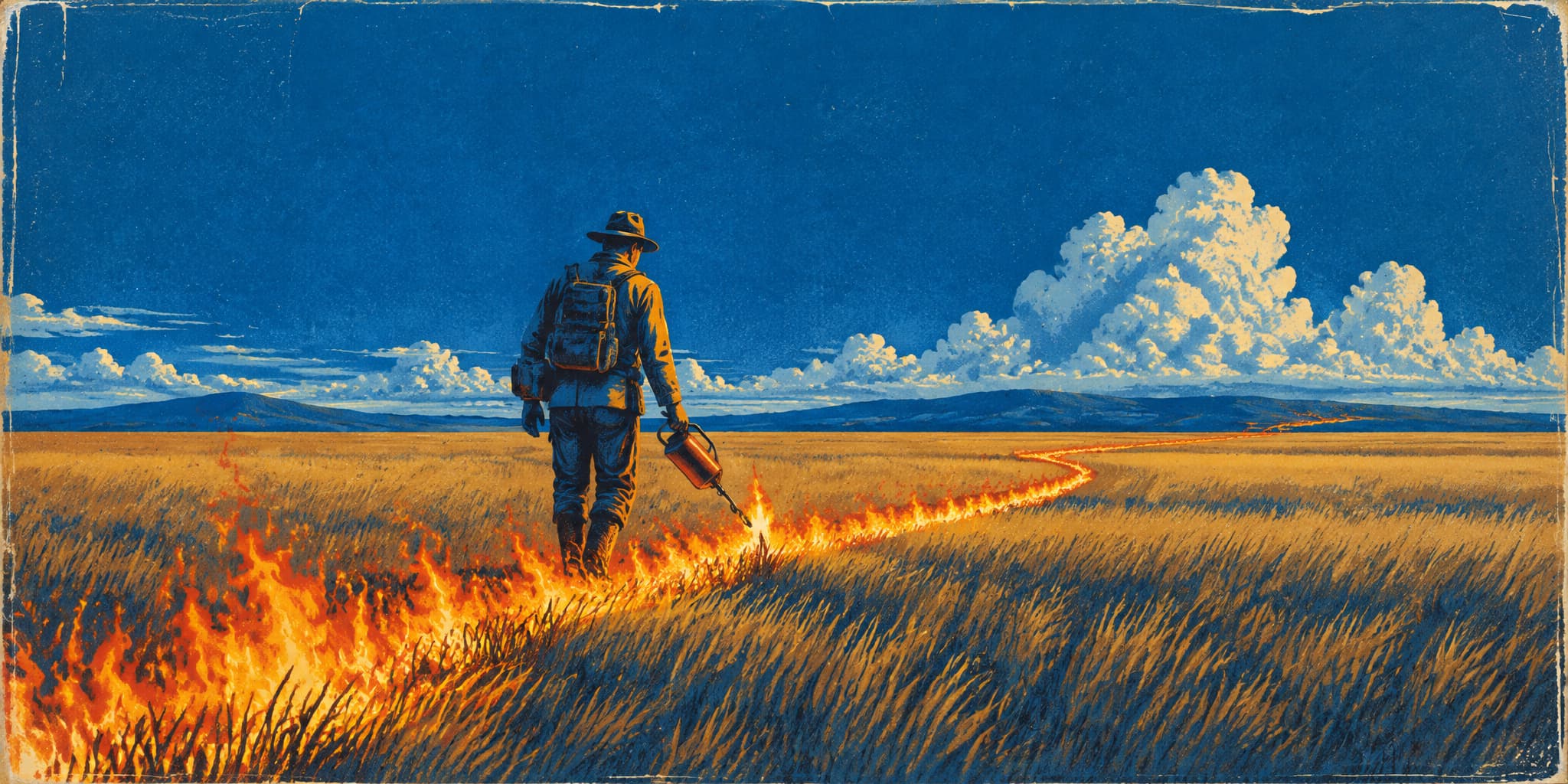
After Yellowstone 1988, the federal government pulled back from ecological fire management. Florida went the other direction and kept going, even through fire crises of its own. The state now burns over two million acres a year under a legal and institutional system built across decades. Western states are adopting pieces of it. Whether the pieces work without the whole is still an open question.
Current Connections