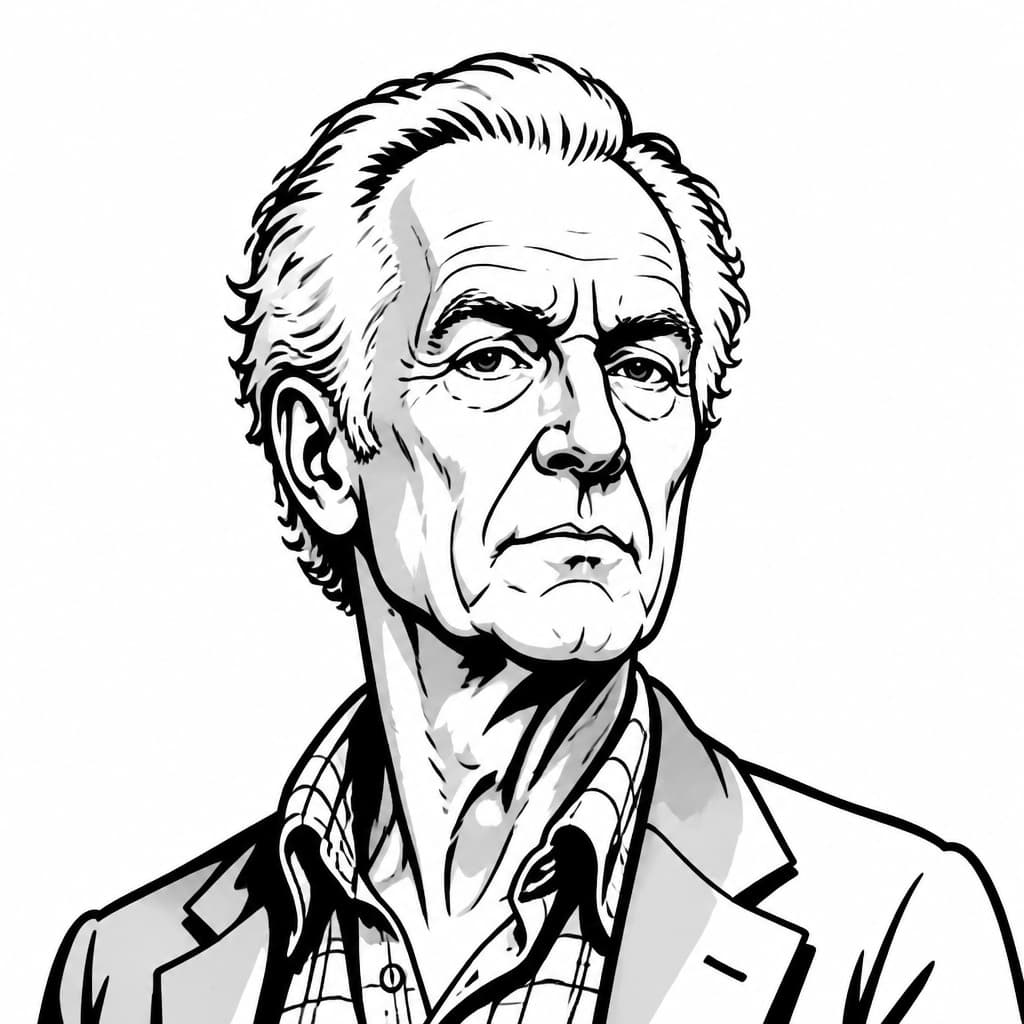
On the evening of August 20, 1910, a Forest Service ranger named Ed Pulaski led about forty-five men through burning timber above Wallace, Idaho, hunting for a hole in the ground he remembered from earlier seasons. The men weren't firefighters. They were miners, loggers, and day laborers, recruited off the streets of Spokane and Butte a few weeks before and sent out to dig fire line across country most of them had never set foot in. Pulaski knew the drainage. The rest of them had to take his word for it.
The wind had been building all afternoon, shoving dozens of separate fires together across the Coeur d'Alene Mountains. By mid-afternoon the smoke had turned the sky dark. The pack horses bolted. Somewhere in there Pulaski quit trying to fight the fire and started trying to keep his crew alive.
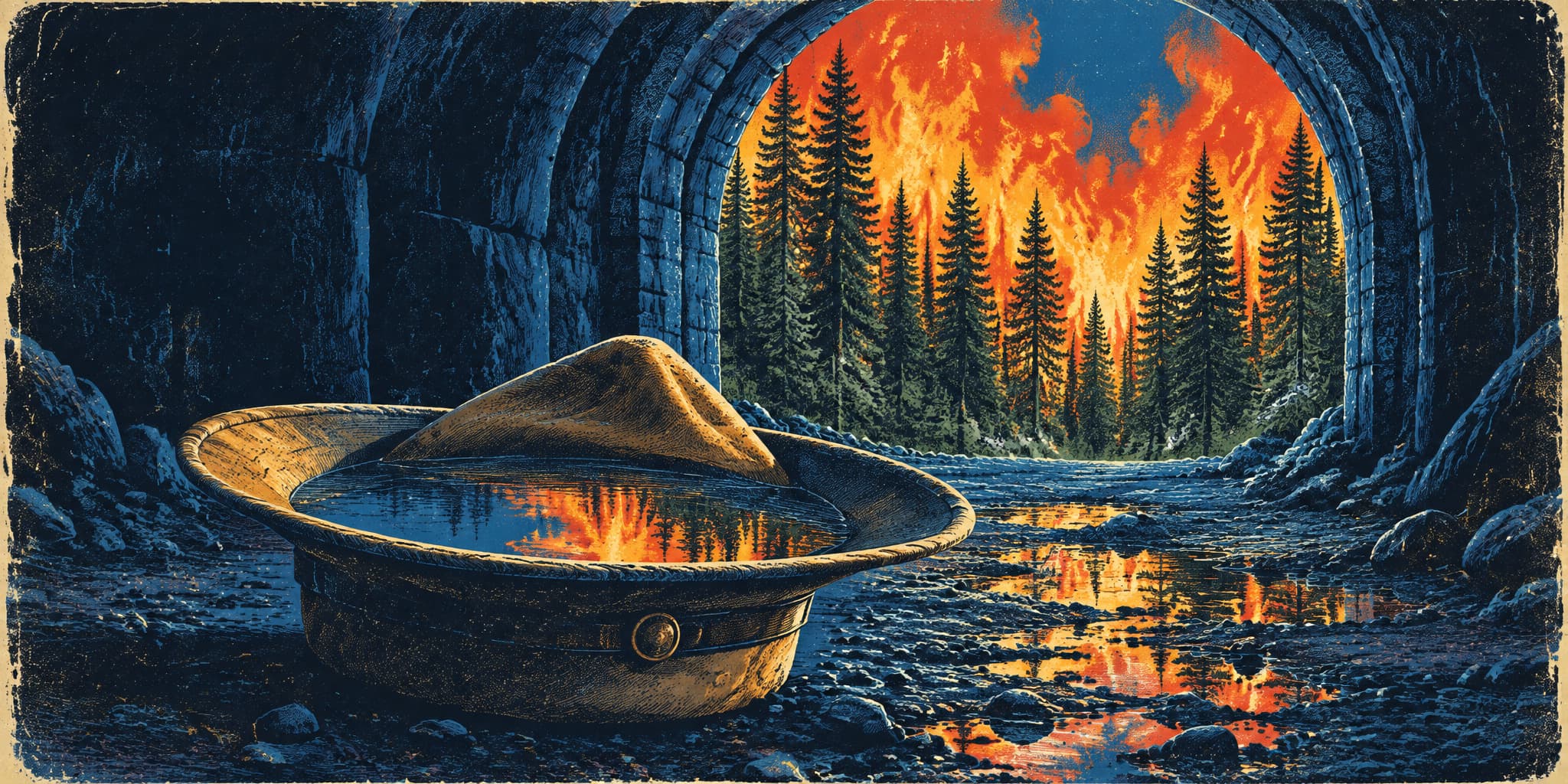
He found the tunnel. It was an old prospect adit in the West Fork of Placer Creek, which Forest Service archaeologists later identified as the Nicholson prospect, though every retelling since has called it the War Eagle mine, and I expect they always will. A falling tree killed one man before they got there. The rest crowded inside along with two horses, and Pulaski told everybody to lie face down, because what little air was fit to breathe was down near the floor.
The mine timbers at the entrance caught fire. Pulaski hung wet blankets across the opening, carried water in his hat from a seep inside the tunnel, and put up fresh blankets when the old ones burned through. When one man tried to leave, Pulaski told him he'd shoot the first one who moved toward the entrance. Men cried and prayed and passed out from the heat and the smoke, and after a while Pulaski passed out too.
Sometime later he heard a voice say the boss was dead.
"Like hell he is," Pulaski answered.
Five men were found dead inside the tunnel. Around five in the morning the survivors felt fresh air, crawled out to the creek, and started staggering down the drainage toward Wallace. Women from town met them on Placer Creek with coffee and whiskey, which was a kind thought, but the burned men couldn't take anything except cold water. Pulaski reached Wallace blind. His eyes, lungs, and throat were damaged in ways that never fully healed.
Most of those details come from Pulaski's own account, published thirteen years later in American Forestry magazine as the winning entry in a ranger-story contest. That's good evidence for what he remembered. It isn't a diary somebody kept that night. The sources can't agree on how many men went into the tunnel (forty, forty-three, forty-five), and nobody has ever settled it. What every version agrees on is the dead, and the ranger who kept the rest of them inside.
A Five-Year-Old Agency Gets Its War Story
The Forest Service was five years old. Its founding chief, Gifford Pinchot, had been fired by President Taft seven months earlier. The new chief, Henry Graves, had inherited an outfit whose morale was already shot and whose authority over the national forests was still being fought over in Congress.
District 1, run out of Missoula, covered twenty-eight national forests, close to thirty million acres of northern Idaho and Montana. By mid-July more than three thousand emergency laborers had been hired. By the time it was over, more than nine thousand firefighters were on the payroll, overseen by a skeleton force of rangers spread across terrain so rough that reaching a fire could mean cutting twenty or thirty miles of trail before the men and supplies got there.
Before the August 20 blowup, crews had put out more than three thousand small fires and brought more than ninety large ones under control. Then the wind came up and undid the lot of it. Ferdinand Silcox, the assistant district forester running the regional operation, wrote up the collapse that November. Fire jumped the lines, overran the positions, and killed crews in drainages they couldn't get out of.
Wallace was a town of three thousand people squeezed into a narrow canyon, and it lost roughly a hundred buildings after fire came into the east side of town around 9:15 that evening. A relief train carrying women and children pulled out at ten, picked up evacuees at Mullan and Saltese, and got to Missoula the next morning.
Across the region the fires killed eighty-five people by the usual modern count, seventy-eight of them firefighters. Some sources say eighty-seven. Silcox's own November 1910 report counted seventy-four, which looks like a narrower tally made before the accounting was finished. Nearly all the dead were temporary laborers, the same men hired off the sidewalks of mining towns a few weeks earlier, who died in country they'd never seen before that summer. Elers Koch, who fought the fires and later became assistant regional forester, called the season a "complete defeat."
That phrase deserves a minute. The men running the Forest Service in 1910 weren't bureaucrats in the sense we mean now. Most of them were young, and they were working country that could kill you a dozen ways before fire ever got around to it. They had just watched men die under their command, men they'd recruited and whose names they were answerable for. And the idea they'd hung their careers on, that the federal government could look after these forests, had been humiliated in front of the whole country.
People in that spot generally come out of it with a plan, and these people did.
The Reasonable Conclusion
The agency's leadership looked at the wreckage and drew a conclusion that made perfect sense given what they knew and what they'd just been through. The trouble, as they saw it, was capacity. There weren't enough trails, telephone lines, or lookouts, and the men didn't arrive fast enough. Silcox's November report reads like a detailed operating plan: patrol the country, spot fires early, get word out, get crews moving, and you can reach a fire while it's still small enough to handle.
Pinchot, though no longer in charge, put out a public statement six days after the blowup. "Forest fires are preventable," he said, and he compared forest protection to a city fire department. A city doesn't let a neighborhood burn and then hold a meeting about whether fire has ecological value. It builds the department, hires the men, strings the wires, cuts the roads, and puts the fires out.
Nobody in a position of authority asked whether the forests of the northern Rockies had been burning for thousands of years before the Forest Service came along, or whether all that burning had been doing something the trees needed. The question wasn't on the table. They had just carried dead men out of drainages and watched their young agency come close to going under. Men who have been through that don't usually sit down afterward to reflect on fire ecology. They promise each other it won't happen again.
Twenty-Five Years to Doctrine
Ferdinand Silcox, the same man who had counted seventy-four dead laborers in November 1910, became the fifth chief of the Forest Service in 1933. What set off his next move was the 1934 Selway fires, which burned 242,000 acres in the backcountry of central Idaho. But the New Deal had also handed the agency something it never had in 1910: Civilian Conservation Corps crews, equipment, and enough federal money to make putting out every fire look like it might actually be possible.
On May 25, 1935, Silcox signed the directive that came to be called the 10 a.m. policy. It called for "fast, energetic and thorough suppression of all fires in all locations" during potentially dangerous fire weather. If the first attack failed, crews were to keep coming back at it with the aim of having the fire under control by ten o'clock the next morning. The policy covered every national forest, and it specifically took the value of the timber off the list of reasons to fight one fire harder than another. You fought the fire because it was a fire.
A majority of regional foresters voted for the policy at the April conference. A 1944 retrospective by the agency's fire-control chief said the recommendation passed "without a dissenting vote," though the surviving record doesn't make clear whether the two accounts are describing the same ballot. No document has Silcox saying that 1910 was on his mind when he signed. But the line from the young assistant district forester tallying dead laborers to the chief signing an order for total suppression twenty-five years later is hard to miss.
The People Who Could See
The vote wasn't quite as unanimous as the official record would have it, and the people who saw things differently didn't fare especially well.
Elers Koch, the same man who'd called 1910 a complete defeat, published an essay in the Journal of Forestry in February 1935, three months before Silcox signed the directive. "The Passing of the Lolo Trail" argued that punching more roads, landing fields, and telephone lines into remote backcountry to control fire couldn't be justified by the timber it protected. Koch wanted to leave low-value wilderness to the forces of nature. Bob Marshall and Aldo Leopold backed publishing his argument. Earl Loveridge, the fire-control chief, ran a rebuttal in the same issue, and Loveridge's view carried the day.
Eight years later Harold Weaver, a forest supervisor on the Colville Indian Reservation who worked for the Bureau of Indian Affairs rather than the Forest Service, published a paper arguing that keeping fire out of ponderosa pine entirely was producing "undesirable ecological and silvicultural effects," and that conditions over large areas were already serious and getting worse. He was outside the chain of command that enforced the 10 a.m. rule, which is likely the only reason he could get away with saying so.
In the 1950s Harold Biswell, a University of California forestry professor who'd learned prescribed burning while working at the Forest Service's Southern Research Station, started experimental burns in California ponderosa pine after state and federal managers refused to let him do the work on their land. The agency's research chief warned him to stay out of controlled burning. State and federal fire-control officials demanded that Berkeley get rid of him, and his dean came under pressure to keep his research confined to rangelands.
What the Forests Did
In the Selway-Bitterroot Wilderness, Forest Service fire-atlas data show 1,095,203 acres burned between 1889 and 1934. In the exclusion era, 1935 through 1977, the figure was 25,795 acres. Foresters measure this with something called a fire-rotation period, meaning how long it would take, at the current rate of burning, for fire to pass over the whole landscape once. In the Selway-Bitterroot it went from 55 years to 2,194 years. In the Bob Marshall Wilderness Complex it went from 46 years to 9,230.
The Forest Service adds its own caveat: the exclusion years also happened to have cooler springs and relatively few extremely dry summers. Weather and policy were pulling in the same direction, and the numbers don't cleanly separate one from the other.
Some of the change, though, you can see with your own eyes, because people stood in the same spot seventy years apart and took a picture. At Lick Creek on the Bitterroot National Forest, fire scars on six trees and stumps record forty-two fires between 1600 and 1900, about one every seven years. A 1909 Forest Service photograph shows an open ponderosa pine stand of the kind early surveyors described all over the inland West, with big trees spaced well apart and grass growing between them. A photograph taken from the same point in 1979 shows young ponderosa pine and Douglas-fir crowded into every gap between the old trees. The Forest Service's own analysis credits the change to both fire exclusion and soil disturbance from logging, since the site was cut in 1952 and again in 1962. But the same pattern turned up in forests nobody ever logged.
You don't need a forestry degree to follow what happened. The dry ponderosa pine and Douglas-fir forests of the northern Rockies grew up with fire coming through every six to twenty years. Those frequent, low fires burned through the understory, killed young trees before they got tall, cleaned up dead wood, and kept the woods open. When the fire stopped coming, the forests filled in. They got thicker, dead wood piled up on the ground, and young trees grew tall enough to work as ladders, carrying a fire that would have stayed down on the surface up into the crowns of the big trees. Stands that fire had kept open closed up and became stands that fire could kill.
It happened most dramatically in the dry forests at lower elevations. Higher and wetter forests, the lodgepole pine and subalpine country, had always burned less often, and sometimes in fires that took out whole stands, no matter what the Forest Service did or didn't do. The effect of suppression shows up strongest where fire used to come most often and where suppression most thoroughly kept it away.
Fourteen Million More Homes
While the forests were loading up with fuel, people were building houses.
The wildland-urban interface, which the agencies call the WUI, is the zone where houses run up against or mix in with undeveloped wild vegetation. Across the lower forty-eight states, housing units in the WUI grew from 30.1 million in 1990 to 44.1 million in 2020. In California, Oregon, and Washington, sixty-one percent of all new housing built during the 1990s went into the WUI. By 2000 those three states had nearly 1.5 million WUI homes in landscapes with estimated fire-return intervals of zero to thirty-five years, which is to say places where fire had historically come through at least once inside the life of a mortgage.
The data start in 1990, and they don't prove that suppression is what drew people to build there. But a peer-reviewed economic study using government firefighting expenditure records found that publicly paid-for suppression works as a subsidy for development. In some high-hazard, thinly settled places, the expected value of that protection can run past twenty percent of what the house is worth.
Anybody who has lived behind a levee or watched a flood-control project go in will recognize how this works. When protection succeeds, it does more than lower the risk. It changes what people build and where they put it. The longer the protection holds, the more gets built behind it, and the harder it gets for anyone to say out loud that the protection was always going to run out someday.
What Pulaski Left Behind
The 10 a.m. policy was formally retired in 1978 and replaced with rules that let some fires burn under prescribed conditions. The shift has gone on, unevenly, for nearly fifty years since. There are prescribed fire programs now, and fire managers talk about fire-adapted ecosystems in a way their predecessors wouldn't have.
But a century of piled-up fuel doesn't go away on the schedule of a policy memo, and there are fourteen million more homes in the WUI than there were in 1990.
Pulaski spent two months in a Wallace hospital, blind and burned. Then he went back to rangering. He came up with a combination axe and hoe that wildland firefighters still carry and still call a Pulaski. His health never came all the way back, and the Forest Service, the agency he'd nearly died for, spent years denying his disability claim. That one doesn't usually make it onto the plaque. He died in 1931, four years before Silcox signed the directive that turned his night in the tunnel into the founding story of an institution sworn to fight every fire there was.
Nobody in this story did anything foolish. Pulaski kept his men inside the tunnel, and most of them lived. The agency built the means to fight fire everywhere, all the time, and for decades it mostly won. The forests went without a fire they'd lived with for thousands of years and grew into something different. And people, seeing that the protection held, built houses in the woods, which is about what anybody would have done.
The forests are burning now in the ways suppression was meant to prevent, in country full of homes that are there partly because suppression worked for as long as it did. When it gave way, it gave way under everything that had been piling up the whole time it held, and the result is fire on a scale Ed Pulaski couldn't have pictured from the floor of that tunnel, with his hat full of water and his men lying face down in the dark.
- Koch's wilderness argument: The internal Forest Service debate over whether remote backcountry was worth the cost of fire control began with Elers Koch's 1935 essay and continued through the Northern Rockies wilderness fire history, which documents how dramatically fire-rotation periods changed once the exclusion policy took hold.
- Protection as development subsidy: The pattern where successful hazard protection encourages building in protected zones also shaped a century of flood-control finance in Dayton, Ohio, where property owners still pay assessments based on where water stood in 1913.
- Biswell's prescribed burns: Harold Biswell's experimental fires in California ponderosa pine, conducted after state and federal agencies refused him access to public land, are documented in a peer-reviewed historical introduction that traces the institutional resistance he faced through the 1950s.
- WUI growth since 1990: The wildland-urban interface added fourteen million housing units between 1990 and 2020, with the USDA Forest Service's national dataset tracking how development has continued to expand into fire-prone vegetation across the contiguous United States.
