The Street That Thins Out


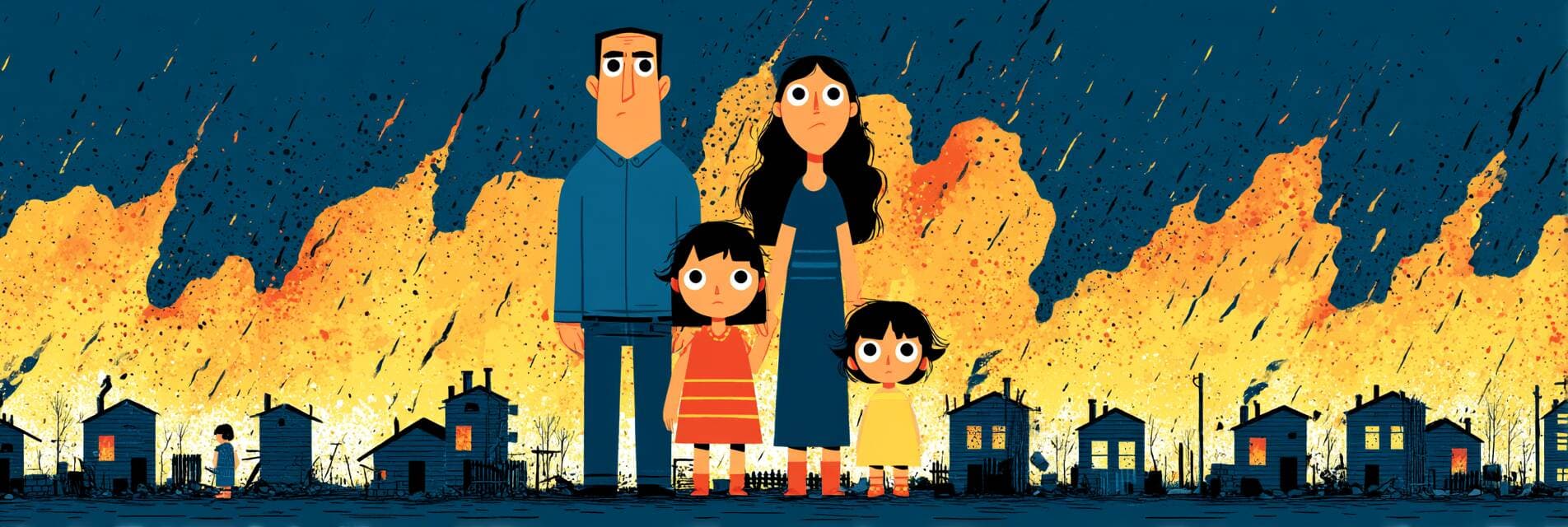
FEMA has approved 251 property buyouts in Buncombe County since Hurricane Helene. No houses have been demolished yet. When they are, the families who remain will live on streets with gaps in them — empty lots where kitchens used to be, and the quiet dissolution of the carpools, the shared childcare, the neighbor who noticed when lights didn't come on across the way. The buyout program purchases properties. Neighborhoods fall outside its vocabulary.
The Street That Thins Out
FEMA has approved 251 property buyouts in Buncombe County since Hurricane Helene. No houses have been demolished yet. When they are, the families who remain will live on streets with gaps in them — empty lots where kitchens used to be, and the quiet dissolution of the carpools, the shared childcare, the neighbor who noticed when lights didn't come on across the way. The buyout program purchases properties. Neighborhoods fall outside its vocabulary.

Five to Ten Miles

Across 550 counties, Rice University and Kinder Institute researchers found that FEMA buyout participants moved an average of five to ten miles. People stayed local. What researchers call "the social value of home" could, in theory, survive that distance.
In Harris County, where 585 predominantly Latino households and 390 property owners faced the nation's largest mandatory buyout, the average conceals a harsher sorting. Homeowners with $80,000 properties moved three times farther than those with $280,000 homes. Participants landed in areas 34 percent whiter and 32 percent wealthier.
Collective Adaptation

The Shared Bet
Gina Gigot cut her family's water use by a quarter and stopped growing corn on 9,000 acres in western Kansas. The aquifer data says she's right. But the grain elevator needs volume to survive, the bank knows how to underwrite corn, and every neighbor is watching to see who moves next. On the depleting Ogallala, each farmer's rational pivot is also everyone else's problem.

The Split Village
Every resident of Newtok, Alaska, has finally crossed the river to the new village of Mertarvik. The most documented climate relocation in U.S. history is complete — and a third of the families are in temporary housing, the power plant can't keep up, and federal funding has frozen. Dozens of threatened communities were watching to learn what relocation looks like. Now they know.
The Social Fabric