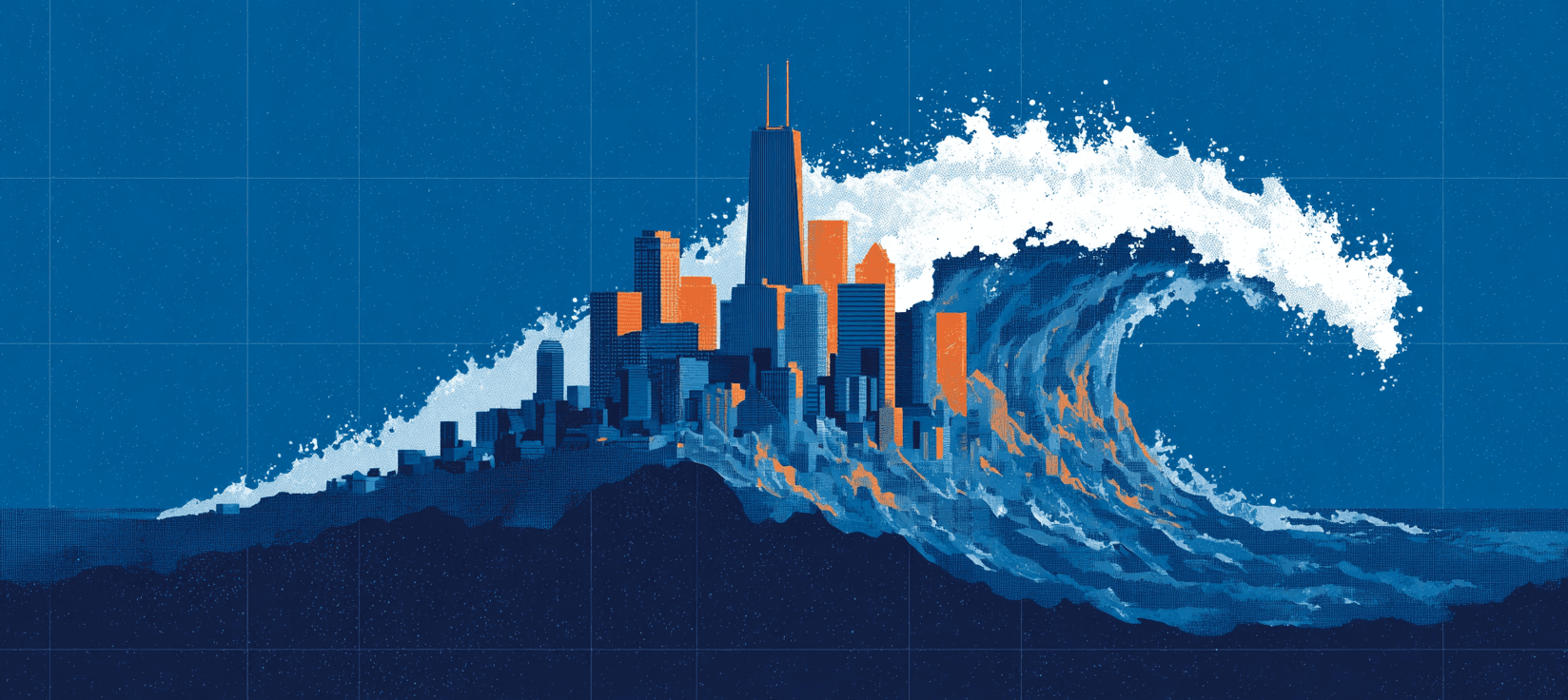
The Wrong Number

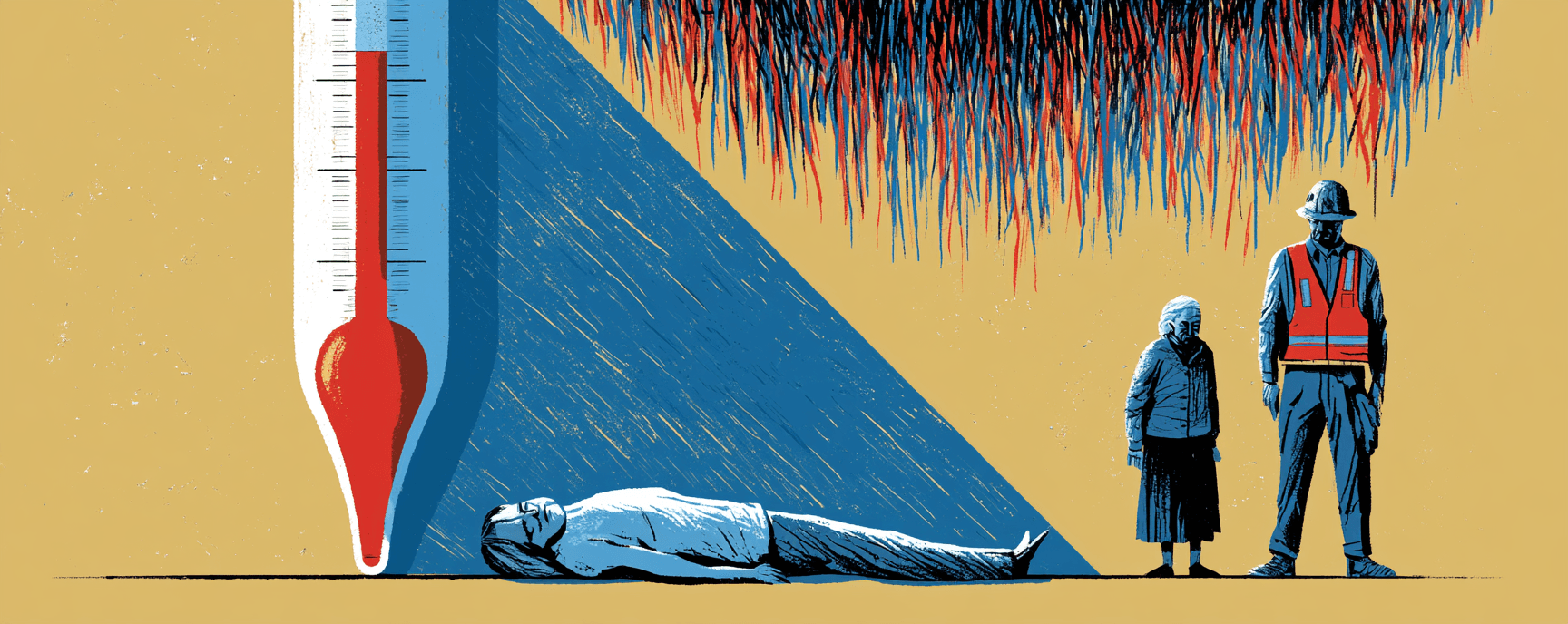
Phoenix's deadliest summer killed 645 people at a peak wet-bulb temperature of 24.32°C, more than ten degrees below the number every heat-survivability model treats as the line between livable and lethal. A March 2026 paper in Nature Communications tested that 35°C threshold against six real heat events where people actually died. It failed all six. The lethal line is a distribution, shaped by age, sun exposure, and access to cooling. The people inside the gap are already there.
The Wrong Number
Phoenix's deadliest summer killed 645 people at a peak wet-bulb temperature of 24.32°C, more than ten degrees below the number every heat-survivability model treats as the line between livable and lethal. A March 2026 paper in Nature Communications tested that 35°C threshold against six real heat events where people actually died. It failed all six. The lethal line is a distribution, shaped by age, sun exposure, and access to cooling. The people inside the gap are already there.
The Papers
Deadly Heat Stress Conditions Are Already Occurring
Empirical lethal thresholds ranged from 24.1°C to 34.6°C wet-bulb depending on age and health. The 35°C ceiling in advisory systems has never been the real number.
The study finds dry heat equally deadly as humid heat, undercutting the "it's a dry heat" assumption still embedded in Southwest public health messaging.
The Papers
The Rate of U.S. Coastal Sea-Level Rise Doubled in the Past Century
A Woods Hole analysis using 70 stations overturns a DOE conclusion drawn from five, three of which sit on sinking ground.
Small vertical gains produce outsized jumps in flood frequency, compressing the timeline for when coastal infrastructure thresholds get crossed.
The Papers
Long-Term Exposure to Wildfire Smoke and Mortality
Cumulative smoke dose over years, not individual bad-air days, best predicted long-term mortality from cardiovascular, endocrine, and mental health causes.
If causal, the associations imply over 11,000 U.S. deaths annually from wildfire PM2.5, roughly 16% of all fine-particulate mortality nationwide.
The Papers
AMOC Weakening Observed at Four North Atlantic Latitudes
Previous AMOC estimates leaned on models and proxies. This study uses direct measurements across multiple latitudes spanning twenty years.
AMOC weakening redistributes heat across the Atlantic, reshaping European weather, West African monsoon patterns, and hurricane intensification corridors.
Dry Heat, Demolished

Phoenix's 2023 heat wave was the driest of six deadly events the Perkins-Kirkpatrick study examined. It was equally lethal. The killing mechanism is different from humid heat but no less efficient: sweat evaporates so fast you don't register how much fluid you're losing. The feeling of relative comfort is the hazard.
And the primary tool Americans use to gauge danger makes it worse. At 115°F with 8% humidity, the heat index reads 108. The instrument designed to warn you tells you the heat feels cooler than it actually is.