The guy at the seafood market in Houma had two kinds. Wild from the Atchafalaya Basin, brought in that morning. Pond-raised from up near Henderson. He had them in separate coolers with the lids propped open.
Renée looked at both. The wild ones were mixed sizes, dark-shelled, moving over each other. The farmed ones were uniform and clean. Her mother never would have bought farmed.
"Wild are better," the vendor said. Not pushing.
"Where in the basin?"
He told her a landing she didn't know. Somewhere north of Morgan City.
"You looking for something specific?"
"My mama used to get hers from down by Point Farm. The canals behind the WMA."
He shook his head. "Nobody's pulling from down there. Not for a few years now."
"I know."
"Too salt."
"I know."
She looked at the wild ones again. Darker than she remembered Point Farm crawfish being. Bigger, some of them.
"These come in this morning?"
"Four a.m. Guy I know runs traps off Bayou Sorrel."
She didn't know Bayou Sorrel. Her mother would have. Her mother had known every landing between Houma and the Gulf, or seemed like she had. Nonc Aldus brought the crawfish. They came from the canals behind Point Farm. When that stopped, there was the market.
She bought sixty pounds of the wild. Two sacks. That was about right for twelve people, maybe a little short. Her mother would have bought seventy, but her mother would have had Nonc Aldus bringing them to the house in his truck, and they would have stood in the yard for twenty minutes talking about nothing while the sacks sat in the shade. Nonc Aldus had been dead four years. Her mother, seven months.
She put the sacks in the back of her truck on a tarp and drove south on 665.
The oaks past Montegut were mostly dead, the ones still standing leaning away from the canal. Houses up on new pilings next to empty lots where houses used to be. A few of the lots had concrete pads showing through the salt-tolerant stuff that comes in where grass won't hold. The marsh on either side of the road was more water than grass now. She could see old fence posts from somebody's cattle land standing in open water a hundred yards out. Past the school the water was closer to the road than when she was a kid. With a south wind it came up over the shoulder. She drove.
Her house was her mother's house before that, and her grandmother's before that, and it had been raised twice. Once in the nineties, once after Ida. Twelve feet up on concrete pilings now, stairs going up the side, the yard underneath where her mother used to park and where the boil had always happened. She'd set up the burner and pot that morning before she left.
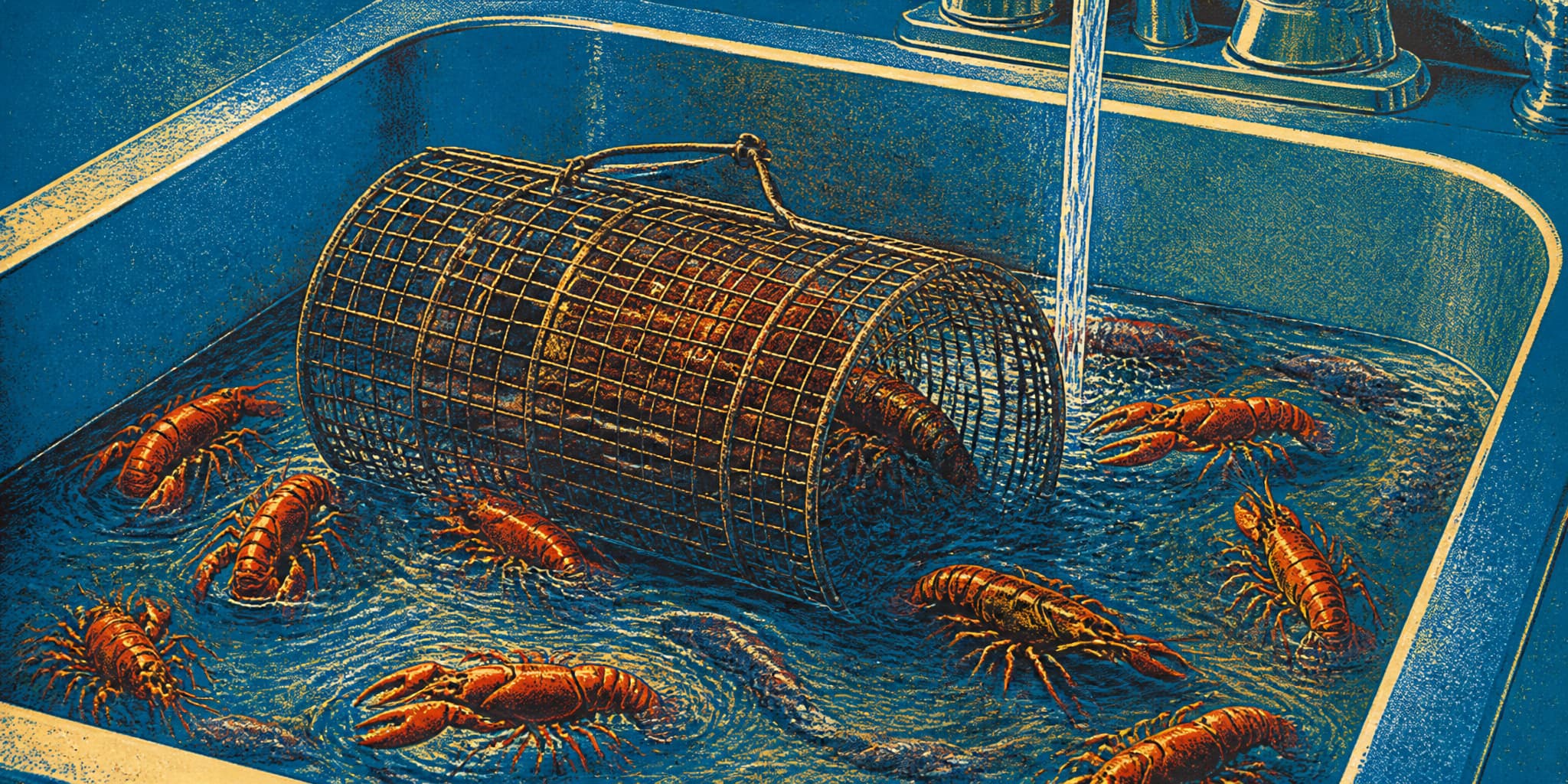
She carried the sacks upstairs and put them in the kitchen sink with the water running slow and cold. They'd stay there until she was ready.
Potatoes she had. Small reds from the store. Corn from the store too, six ears she'd cut in half. Her mother used to get corn from a man in Dulac who grew Silver Queens behind his house, ready right when crawfish season was winding down. He'd moved to Thibodaux after Ida. She didn't know if he still grew it. Onions, whole, four. Lemons. Three pounds of andouille from Bourgeois in Thibodaux, which her mother had always used and which was still the same as far as Renée could tell. Same casing, same smoke, same snap when you bit through. A box and a half of Zatarain's. A stick of butter for the cooler at the end. That last part was her mother's, not everybody did it, and Renée had never left it out.
She halved the lemons and quartered the onions. Cut the sausage into pieces the length of her thumb, angling the knife so each piece had a flat side to sit on the newspaper. Her mother had cut them the same way. She put everything in bowls on the counter.
Her sister Danielle called at two.
"We're leaving in an hour. You need anything?"
"I'm good."
"How many pounds?"
"Sixty."
"Mama always got seventy."
"I know."
"Where from?"
"The market. Wild, from the basin."
"Good." A pause. "I made a cake. Lemon."
"Bring the cake."
"OK."
Renée hung up and stood in the kitchen. Through the window she could see the yard, the burner and pot set up under the house, the table where they'd spread the newspaper. Her mother's yard. Hers now. The crawfish were moving in the sink, slow under the running water. She reached in and picked one up. Good size, clean, the shell dark reddish-brown. It curled its tail and she set it back.
Her mother would have held it up and said something about it. Renée didn't have the words for what.
Her mother had grown up eating crawfish Nonc Aldus caught in the freshwater canals behind Point Farm, in the part of the WMA where the marsh was still marsh, where you could set wire traps in the ditches and the shallow cuts and come back the next morning and pull them full. She never said those crawfish were better. She just knew where they were from.
Renée had gone with Nonc Aldus once or twice as a kid. His flat-bottom through the canals in the early morning, the water dark and shallow, cypress knees along the banks. The traps coming up trailing mud and grass, crawfish spilling into the boat. She remembered them looking different from the ones in the sink but couldn't have said how. Smaller, maybe.
He'd stopped trapping down there around 2028. The freshwater marsh had been turning for years, the ponds opening wider, the tree line pulling back. He tried farther north for a season, then quit. Seventy by then, bad knees, gas at what gas cost, and the places he knew weren't the places anymore. He'd told her mother the water tasted different when he pulled the traps. Her mother had said she knew.
At four Renée went downstairs and lit the burner. Filled the pot from the hose. Poured in the Zatarain's, enough to turn the water the color of dark tea, which was how her mother had gauged it. Her mother never measured. Just poured until it looked right, and it was always right. Added the lemons and the onions and let it come to a boil. The smell came up through the yard, that sharp peppery smell that gets in your clothes.
Potatoes first, then corn, then sausage. She let them cook. Went upstairs and got the crawfish, carried them down in the sacks, heavy and shifting. When the potatoes were almost done she poured the crawfish in and the pot went crazy for a second, the water dropping off the boil and then coming back, and she stirred them down with the paddle and put the lid on.
Danielle and her husband and their two kids got there at five-fifteen. Renée's son Marcus was already sitting on the tailgate of his truck with a beer. Danielle came up the stairs with the cake in a bakery box and Renée took it and put it in the kitchen and came back down. Danielle's kids ran around the pilings.
"Smells right," Danielle said.
"Yeah."
"Mama's recipe?"
"Same as always."
Danielle looked at the pot. "She'd be out here with a beer telling you you put too much seasoning."
"Even though I didn't."
"Even though you didn't."
They stood there. Renée checked the time on her phone. Five more minutes, then she'd cut the fire and let them soak. The soak was the part that mattered. Her mother had always let them go fifteen minutes, longer than most people, and Renée asked her once why and her mother said because that's how long it takes.
She cut the fire. The boil went quiet. Steam rose off the pot.
"Where'd you say you got them?" Danielle asked. Not suspicious.
"Basin. Wild. Up by Henderson somewhere."
"Good."
"They're good."
"I didn't say they weren't."
Danielle went to get a beer. Marcus was talking to Danielle's husband about something, their voices low and easy under the house. The kids were chasing each other around the pilings. The light had gone gold and flat, coming in off the water.
When the fifteen minutes were up she drained the pot into the cooler with the butter and the extra seasoning, the way her mother did it, and spread newspaper on the table and poured the crawfish out in a pile with the corn and the potatoes and the sausage. Everyone came and stood around and started eating.
They were good crawfish. The tails were fat and the seasoning had soaked in and the corn was sweet and the potatoes were soft all the way through. Marcus said so. Danielle said so. Danielle's husband, who was from Gonzales and had opinions about crawfish, said so.
Renée ate and didn't say much. She peeled them the way her mother had taught her, pinching the tail and twisting, sucking the head, dropping the shells in the pile. The seasoning was right. The soak was right. What she'd had any say over had come out right.
She thought about Nonc Aldus pulling traps in the canals, the water dark and shallow, the crawfish coming up in the wire. Her mother in the yard. The two of them standing there while the sacks sat in the shade and nobody hurried.
The crawfish on the table were from the Atchafalaya Basin, caught by someone she'd never met in water she'd never seen.
Danielle's kids were throwing corn cobs at each other. Marcus was laughing at something. The light was almost gone. South of them, past the dead oaks and the empty lots, the canals behind Point Farm were still there. The water in them was just different water now.
The boil was good. She figured that was close enough.
- Where wild crawfish come from: A peer-reviewed analysis of Louisiana landings found that 90% of recorded wild crawfish harvest historically came from the Atchafalaya Basin, with river stage in November and December predicting February catches.
- Saltwater and the marsh: AP reporting from late 2025 describes dead trees marking storm-driven saltwater intrusion along Bayou Pointe au Chien, where former cattle land is now submerged and ponds have merged into single bodies of water.
- What the models project: CPRA's crayfish habitat suitability model treats salinity above 6 parts per thousand as unsuitable for reproduction, and its 50-year future-without-action scenario projects salinities well above that threshold across most of Eastern and Western Terrebonne.
- Citrus under pressure: LSU AgCenter reported in 2022 that saltwater intrusion had made citrus production nearly impossible in some south Louisiana areas, alongside hurricane, disease, freeze, and development pressures on the state's remaining groves.
