The Night That Won't Cool

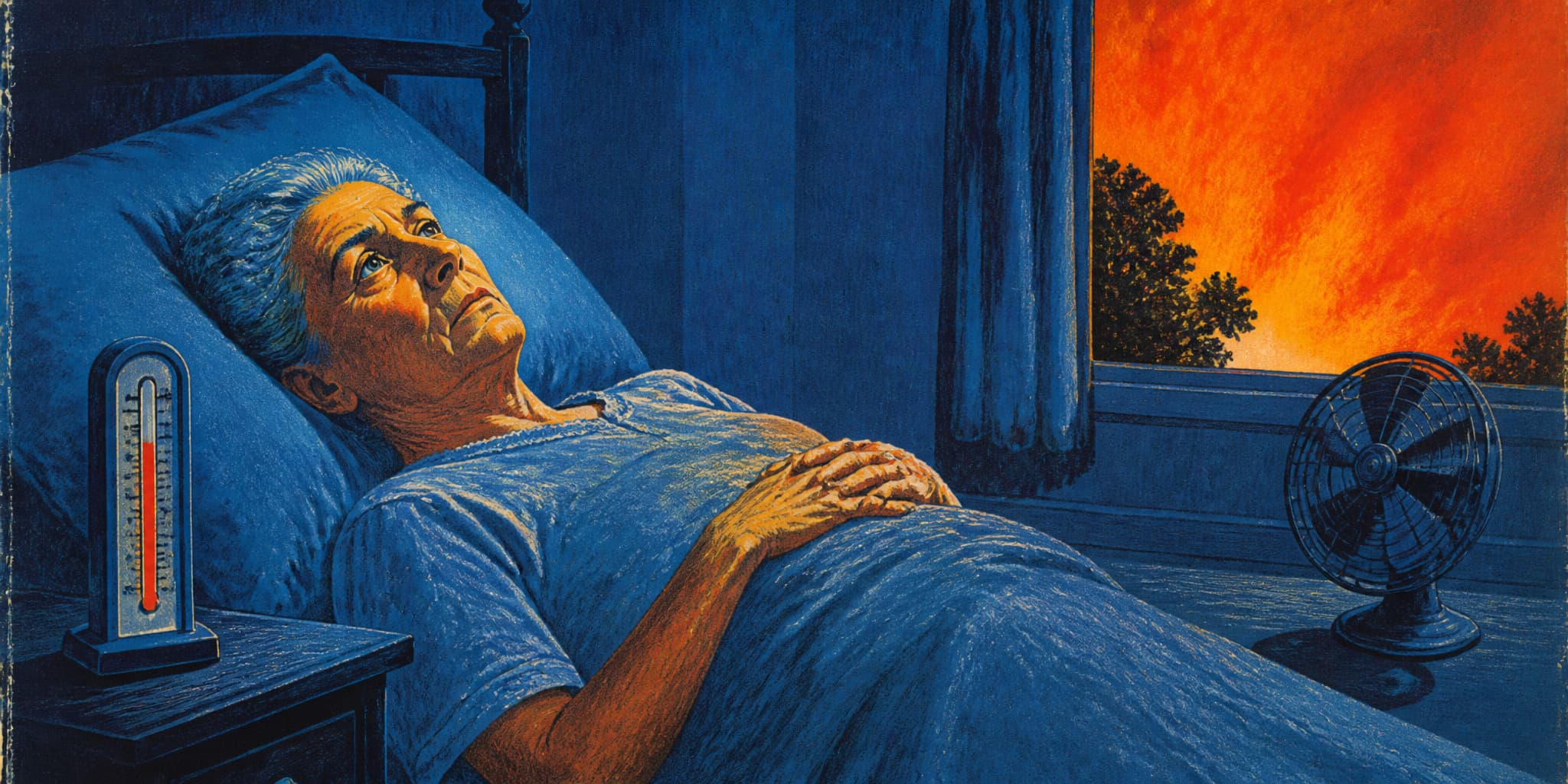
Globally, the hottest nighttime "feels-like" temperatures are rising faster than daytime peaks. The survivability models used to judge when heat turns lethal assume the body recovers overnight, resetting to normal core temperature every six hours. In Maricopa County, where 430 people died of heat last year, an 82-year-old woman's bedroom thermometer stayed in the 90s until morning. The model resets. Her body didn't. What accumulates in a person who never recovered from yesterday, in a room the night can no longer cool?
The Night That Won't Cool
Globally, the hottest nighttime "feels-like" temperatures are rising faster than daytime peaks. The survivability models used to judge when heat turns lethal assume the body recovers overnight, resetting to normal core temperature every six hours. In Maricopa County, where 430 people died of heat last year, an 82-year-old woman's bedroom thermometer stayed in the 90s until morning. The model resets. Her body didn't. What accumulates in a person who never recovered from yesterday, in a room the night can no longer cool?
The Evidence Base
Global heat stress intensification and its expanding footprint on the human population
Seventy percent of the global population now faces 90-plus days of strong heat stress annually, up from 55% in the 1970s.
Nighttime temperatures are rising faster than daytime across the dataset, shrinking the physiological recovery window human bodies depend on between hot days.
The Evidence Base
Deadly heat stress conditions are already occurring
In Phoenix's July 2023 heat wave, up to 28% of six-hour periods exceeded physiological survivability limits for adults over 65.
Most survivability models assume six cooler hours reset accumulated heat strain — this study finds that premise breaks down for aging bodies.
One Adaptation's Clock

A 21-month field study of reflective pavement across 11,500 square meters in north Phoenix tracked what happened after the city coated roads with a lighter surface meant to cool the urban heat island. After dark, it delivered: air temperature dropped up to 0.58°C. In a city where nights at or above 90°F have tripled since 2019, that matters to anyone trying to sleep through them.
At midday, the cost fell on the people walking. The lighter surface bounced sunlight upward into their bodies, and a 2023 ASU study measured radiant heat exposure 4.5 to 5.8 degrees higher over reflective pavement than conventional asphalt at peak sun. An air thermometer reads slightly cooler, but a person standing on the street absorbs more heat than they would on untreated road.
Over 21 months, the surface itself degraded. Reflectivity dropped 53%, from 0.28 to 0.13, approaching the reflectance of the old asphalt underneath. Phoenix paused the program in 2024, citing product issues, and has since switched coatings. The city has treated more than 140 miles of road. A resident who'd lived with the surface for years told InvestigateTV: "I don't know that I really noticed a difference."