
Fern
Three orange pin flags stood along the upper channel where it left the spring head, their wire stems pushed through soil she had spent three seasons building out of composted amaranth stalk and dirt hauled up from the talus. Fern saw them from the ridge where the ponderosa gave out and the draw opened below. She stopped walking and counted equipment before she counted the person. Tablet on a knee. Short mast with a GPS antenna. Temperature probe trailing its wire into the water. Metric tape coiled on a rock. A capped length of rebar leaning against a surveyor's pack.
Flags came out when a crew left. Rebar didn't.
She went down the scree.
The woman at the spring head was compact and field-fit, wide-brimmed hat, hydration bladder riding high on her back. She had come in from the east, and there was no vehicle anywhere in the draw, which meant she had walked the old logging track that Fern had blocked with deadfall two springs ago after pulling the fence posts. Somebody had moved the deadfall or gone around it. The equipment cases were the same dust-colored polymer Tam carried. Compact issue.
The surveyor heard her boots at thirty meters and looked up without any particular alarm, pulled the probe out of the water, stood, wiped her hand down her thigh.
"This your site?"
Fern stopped at the edge of the upper terrace. The amaranth was shoulder-high there and beginning to set seed, and it screened her from the waist down. "It's my garden."
"I can see that." The surveyor took in the terraces, the hand-cut channels, the lower basin where the sorghum stood in its dry-season brown. She read it the way Tam read it, following the water first, checking where the channel walls had been sized to the flow. "All of this off the one source?"
"Who sent you out here?"
The surveyor reached into a vest pocket and came up with a folded document. Paper, which meant somebody had decided this conversation needed an object in it. "Resource Assessment Division. I'm here to monument a critical cold-water feature under the basin thermal refuge protocol." She held it out. "Your draw came up in the adaptation survey and got confirmed off remote sensing. Designation went into the registry six days ago."
"Six days ago," Fern said. "And nobody thought to walk up here first and knock."
"The field visit is the last step, not the first. I monument the spring head, set photo points and a repeatable transect, confirm the thermal reading." She lifted the probe. "Fourteen point one. That's something, for this elevation, this late in August."
"I know what it is. I drink it."
"Figured." The surveyor set the paper on the rock beside her coiled tape when Fern didn't take it. "So the designation recognizes the spring as a critical thermal refuge for the upper basin. Eleven sites in this assessment area. The legal effect that matters to you is the instream flow allocation. The protocol allocates the measured discharge at the head and prioritizes habitat flow. Then it schedules monitoring, twice a year, to confirm the water's still cold and still coming."
Fern looked at the nearest pin flag. Its stem had gone in eighteen inches from the channel wall she had rebuilt after the freeze two winters back cracked the original stones. She had carried the replacement rock up from the talus one piece at a time in a pack frame she'd welded out of salvaged rebar, and none of that was anywhere in the transect.
"Say the allocation part again."
"The allocation covers the discharge at the spring head. Diversion would need a separate permit through the water office."
"There's nothing above the spring head. It comes out of the ground."
"Right. So in practice it covers everything." The surveyor said it flat, with the careful neutrality of somebody who had been trained to deliver this part without decorating it. "Your agricultural use classifies as a competing draw. You'd apply for a secondary allocation."
"How long?"
"Queue's running about fourteen months. It was nine in the spring."
Fern looked down at her beans in the lower terrace. The leaves had started to curl inward along the edges. Three weeks without channel flow and they were finished, and the sorghum would go after them.
"So you've allocated the whole spring to the fish," she said. "There aren't any fish."
"Not yet."
"There's a hundred and forty miles of hot river between here and any fish."
"That's a different office." The surveyor crouched and began coiling the probe wire around her hand, elbow to thumb, the way you do it so it doesn't kink. "I take the temperature. I write down what the temperature is."
Fern picked up the folded paper. Protocol numbers, dense compact language, a small map with her draw printed as a blue dot inside a shaded polygon, and beside the dot, in type she had to hold at arm's length to read, latitude and longitude carried out to five decimal places.
"This registry," she said. "Who reads it?"
"Compact parties. Treaty nations, corridor authorities, resource division, the affiliated monitoring programs. It's a shared system, that's the whole design. Planning and enforcement."
"Corridor authorities."
"Anyone with standing can query it, yes."
East of the ridge was forty miles of broken country and then Pendleton. Fern folded the paper along its existing creases and put it in her hip pocket.
"You said remote sensing found it. Found it how?"
"Thermal imagery and a vegetation index. We ran overlays inside a polygon that came in through the counter-map process, and your draw lit up on both." The surveyor gestured at the terraces with her free hand, almost apologetic, the way you'd point out a stain on somebody's shirt. "The green signature is extremely distinct against that slope. The irrigated sections especially. You could see it from a desk."
So the polygon had come in stripped, forty square miles and a sentence saying something persisted, and the analysts had looked inside it and picked out the one place where a person had made something grow.
"The other ten," Fern said. "Anybody living on them?"
"I can't discuss other sites."
"They're in the same registry, though."
"Yes."
The surveyor drove the monument with a four-pound mallet, three strikes, each one sinking the steel deeper into ground Fern had turned and amended and planted. She capped it with bright orange plastic and set the cap flush and then went and took her photographs. From the spring head she shot downstream along the channel. She turned and shot up at the rock face where the water surfaced. Then she went to the lower terrace and shot back uphill, taking the full run of the irrigated garden into the frame, and every frame was a coordinate and a bearing and a line of sight that would walk the next crew to this exact place without anyone asking directions.
She pulled the pin flags on her way out and put them in her pack.
"For what it's worth," she said, shouldering up, "that's the healthiest cold-water feature I've put a pin in all summer. Most springs at this elevation have lost output over the last ten years. The unmanaged ones have gone to silt at the head. Yours hasn't. Whatever you've been doing up there, it worked."
"Because I take care of it."
"I know. I wrote that up too. It's in the record." The surveyor turned east and started climbing.
Fern watched her go. She moved well, efficient, a woman who spent her days walking into places people lived and leaving markers that changed what those places were. She went over the ridge without looking back.
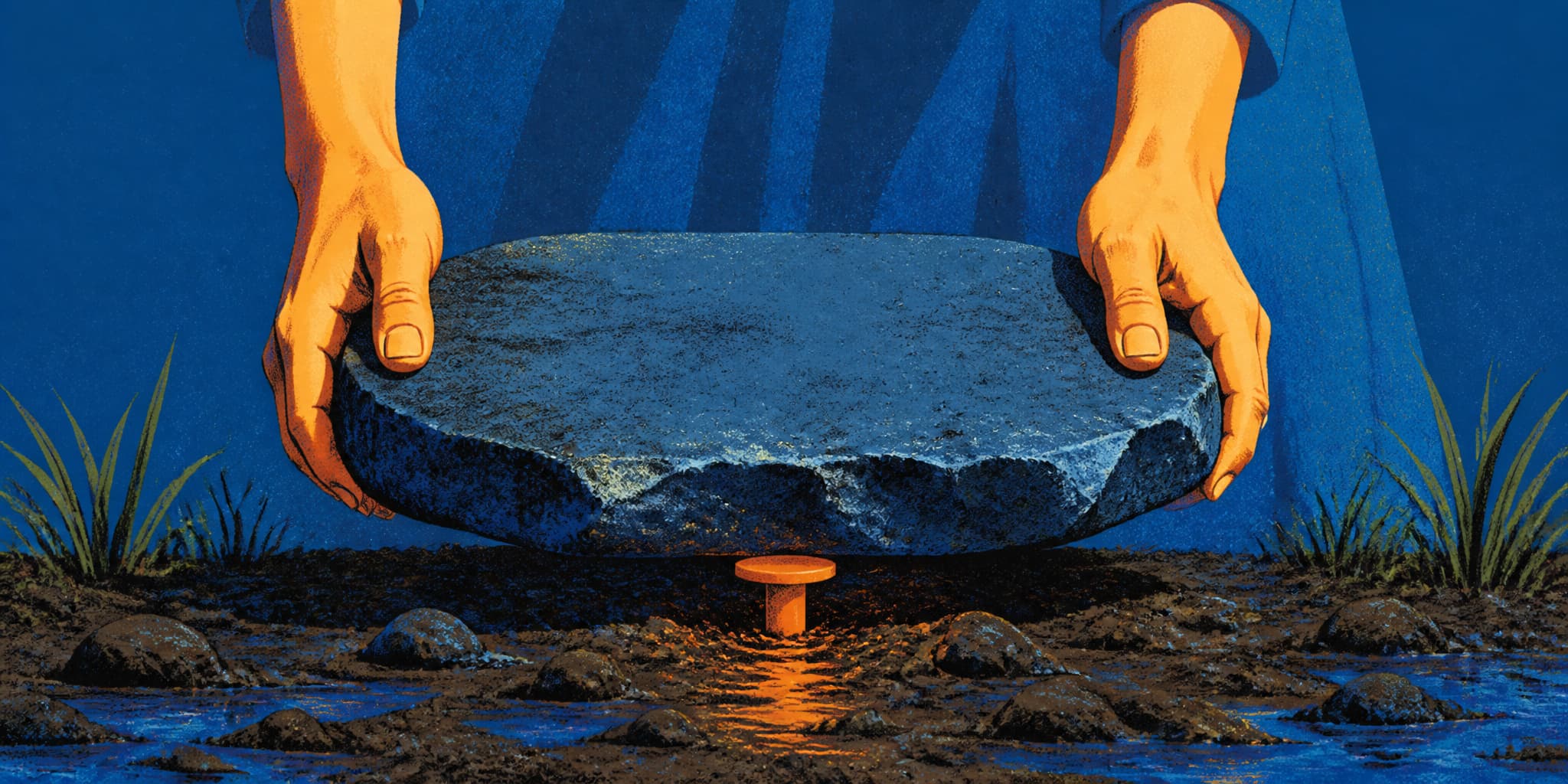
The orange cap held the afternoon light. You could see it from the ridge, from the logging track, from anywhere with altitude on the draw. Fern walked up to the spring head and looked at it for a while. Then she went to the talus edge, picked out a flat piece of basalt about the size of a dinner plate, carried it back and set it over the cap.
She drank from her bottle. She had filled it that morning from the upper channel where the flow came coldest, and it had the mineral edge the water always had, the taste of having moved a long way through basalt before it found the air. She had been drinking this water for three years.
She went down to the lower terrace and checked the beans. They were done. She had known they were done before she checked. She checked anyway, because that was the job. You check, you confirm, you adjust.
Della
The designation report came in on the morning uplink window, in a batch with a dozen other compact filings, between a fishway maintenance schedule for the Deschutes and the quarterly power allocation out of Bonneville. Cass sorted them against the dam assessment, which had been the standing order since the vote, and flagged the Grande Ronde thermal refuge designation to the top.
Della read it standing. The chairs had quit working for her back two years ago and she had quit explaining it. Cass slid her reading glasses across without being asked and Della took them without saying anything, and neither of them marked it.
The table was maple, salvaged out of the gymnasium in Wapato when the school was decommissioned. Free-throw lines and boundary markings ran under her elbows, faded to a pale blue that only showed at certain angles.
Eleven sites. Six in the upper Grande Ronde, three in the Wenaha drainage, two in the Wallowa system. The coldest just under thirteen degrees, the warmest sixteen. Flow measurements, habitat assessments, species-potential ratings, photographs keyed to coordinates. The resource division had done the kind of work you could put in front of a review panel and defend across two days of cross-examination.
She found the one she was looking for on the third page. Upper Grande Ronde, northeast-facing draw, spring-fed, fourteen point one, full-output allocation. The coordinates sat inside the polygon where the counter-map had said something persisted.
Della put the report down on the free-throw line and looked up at the wall map. Hand-drawn, redone weekly in colored pencil, the upper Grande Ronde hatched in two directions because it sat between the treaty nations' senior claims and Boone's corridor and belonged to neither. Cass had drawn it honestly.
"This is good," Della said.
Cass looked up. Twenty-three, her dead mother's mouth and her grandmother's hands, broad and blunt-fingered and built for grip. She had been recording proceedings since she was nineteen and she had the archivist's habit of waiting for the whole statement before she said anything back.
"Eleven documented cold-water refugia in the upper basin," Della said. "Thermally verified. Flow measured. By the compact's own surveyors, not by us, not by Reyes. That's the evidence the panel needs for passage. This is not counter-map data anymore."
"Alahmoot's going to say the mainstem cooks them before they ever reach a tributary. He said it in June and he'll say it again with the temperature record in his hand."
"Then he says it. Fourteen-degree water in August is holding water. Remnant runs sat out worse than this in pockets like that and came back when the river let them." Della turned the page and found the photo plate. Channel, terraces, a green so bright against the slope it looked misprinted. "He'll bring generation load and I'll bring eleven addresses where the fish can survive a summer. Let the panel weigh it."
Cass set down the stack of filings she was sorting and squared the edges. "The site at fourteen point one is inside the polygon Reyes submitted."
"The analysts narrowed the polygon. That's the work. Reyes handed them forty square miles and a sentence and they ran their overlays on it."
"Reyes stripped the point for a reason. She sat in this room and told you why."
"Reyes made a judgment about keeping data safe. The division made a judgment about making data useful. Both of them are rational, and only one of them gets read into the record at the hearing."
Cass looked at her with an expression Della had seen before, on a different face in the same house. Her daughter had worn it for about four years before the measuring became permanent and the distance stopped being something either of them stepped across.
"The surveyor's field notes mention an agricultural operation," Cass said. "Hand-dug irrigation channels. Terraced plantings. Occupant present at the monumenting visit."
"The protocol includes occupant coordination. It's in the filing, section four."
"Where practicable," Cass said.
Della didn't answer that. She took the glasses off and went back through the report marking pages for the panel submission, and the maple carried the paper and the silence the same way.
The uplink chimed the second window, forty minutes of connectivity before the satellite walked off the horizon. Cass turned to the terminal and began pulling the queue, sorting signal from noise by pattern, fast, the way her generation moved inside the stack. Della's generation had moved through weather like that. You read it constantly and adjusted without narrating it and never explained it to each other, because there was nothing in it to explain.
"Grandmother."
Della heard the word she used when there was nobody else in the room.
"The Pendleton node queried the spatial registry this morning. Corridor authority, standard access, they're a compact party and they have standing. They pulled the full designation package for the upper Grande Ronde." Cass kept her eyes on the screen. "All eleven sites, thermal data, coordinates, photographs. Six hours ago."
Della stood still.
Six hours. A rider out of Pendleton could be into the upper draws by dark. A drone could have already flown every one of the eleven and come back with imagery good enough to price them.
"Can we see who signed the query?"
"It's a node credential. Boone doesn't sign things."
Della squared the three filings on the table. Power allocation, fishway schedule, designation report, edges flush with the free-throw line.
"File the designation package with the dam review panel," she said. "All eleven sites, full thermal, habitat, flow. Cite the counter-map submission as originating evidence and note the division's independent verification underneath it. I want it in the record before the next session opens, not during."
"And the occupant at fourteen point one."
"The protocol includes occupant coordination," Della said.
Cass filed it. Her hands went across the terminal with the same economy the mallet had used on the rebar, doing the task she had been given, and when the window closed she wrote the transmission into the proceedings book by hand, the time and the recipient and the file number, the way she wrote down everything. She did not look up again.
Fern
She waited until the draw was in shadow.
Not dark. In August the sky held light past nine, a pale band over the western ridge that took another hour to bleed out. She waited until the air cooled enough that she could work without giving water back through her skin.
She started at the lower channel.
The pipe was PVC out of an abandoned ranch house two draws east, carried over the ridge in sections on her back, joined with solvent cement she had bought with three kilos of dried amaranth from a church circuit runner who looked at the amaranth like it was bullion and looked at her like she was out of her mind for trading it. She had laid it her first full summer, once she understood the spring's output well enough to split the flow without starving either terrace. The lower line fed the basin where the sorghum went in. With it she grew a surplus. Without it, the water stayed high in the draw and she grew what she ate.
She worked the first joint with a pry bar until the cement seal cracked, and the pipe came apart in two lengths of about a meter and a half. She stacked them against the terrace wall. Up at the split, the channel's pitch went higher and busier with the whole flow in it. The spring came out of the rock at the same rate it had come out all summer.
The second joint was buried. She had covered that run with soil and cobble against freeze damage and had to dig it back out before she could get the bar on it. Her hands found the pipe by feel, tracing its line through ground that was cool and damp eight inches down, which was the spring's real work and the reason anything grew in this draw at all. She dug with a hand trowel and piled the soil to one side, because she would want it. Not here. Somewhere.
The bar cracked the seal and the pipe came free. Four sections against the wall. The basin would get what fell on it directly, which in August was nothing, and the sorghum would follow the beans. A third of her calories for the year and all of her trade.
She sat on the wall and drank and listened to the spring, which had been the first thing she heard every morning for three years and the last thing she heard at night. It would keep running. Twice a year somebody would walk in and confirm that it was running and put the number in the registry.
She stood up and went for the pipe.
The secondary seep was two hundred meters south, around a basalt shoulder and down into a shallow ravine that faced more west than north. She had found it her first winter while she was walking out every water source inside a day's carry. Two liters a minute in the wet season, less than a trickle by now. It came through a crack in a ledge and ran maybe ten meters over rock before it sank back into the colluvium. No pool, no channel. A wet streak and a line of moss with monkey flower following the damp downslope.
She had never developed it. The spring gave her everything. The seep had been a note in her head under contingency, and now it was the only water she had that wasn't a coordinate.
The shoulder was bad footing in half-light. She had walked it plenty in daylight, but the scree shifted differently at night and juniper roots crossed at ankle height, and she went slow with three pipe sections on her shoulder and the bar through her belt. The stars were coming in clean, which meant tomorrow would be hot and dry, which meant the pipe needed to be in the ground before the sun cleared the ridge.
She came down the ravine one hand on the rock until she found the wet streak. The moss was cold. The flow was there, thinner than she remembered, but everything was thinner in August. She knelt and drank out of her palm.
It tasted wrong, or it tasted like different rock. Sharper, more mineral, a faint sulfur edge that meant it had come up through a layer the spring never touched. Amaranth would forgive that. Prickly pear would never notice. The beans would argue, but the beans were dead in the lower basin, so the comparison wasn't sulfur water against sweet water. It was sulfur water against nothing.
She set the first section against the ledge below the crack, angled it to take the flow where it ran strongest, and wedged it with two flat stones until the water hesitated at the mouth and then went in. A thin stream came out the far end and dropped into the colluvium. She ran the second and third sections downslope to a shallow depression, friction-fit, no cement, leaking at every joint. She'd need cement, which meant she'd need trade, which meant she needed the upper-terrace amaranth to come in, which meant four weeks of those plants living on whatever moisture the amended soil still held from the last irrigation she was legally entitled to make.
Four weeks was possible if the nights stayed cool and held down transpiration. A thunderstorm would buy her six. August storms happened. They weren't something you planned against.
She lined the depression with flat rock, a basin about a meter across, maybe twenty liters when it filled. Enough to hand-water a few rows if she carried it. The ravine floor was loose colluvium over bedrock, thin and stony, nothing like the deep black ground she had spent three years making two hundred meters north. She would have to build soil here from the beginning. Haul plant matter in, turn it, amend it, build it up season over season until it held water long enough for a root to use it. A year before anything meaningful grew. Two before it came near what she had in the draw.
The first draw had taken her longer than that, and she had done it without knowing yet where the water went.
She worked three hours. The stars turned and the temperature dropped and her hands cramped around rock and bar and pipe. By midnight the run was complete and the basin held water, dark and still, a few stars sitting on it. She put her hands in. Cold. Not spring cold, sixteen or seventeen at a guess, but cold enough to say the recharge path was long and the water was old.
Then she got up and looked at what she had built, and started taking it apart.
The pipe showed. Three lengths of white PVC down a bare rock face, and white on basalt would read from above as clearly as green on sage. She pulled the sections out and reseated them under the ledge overhang, tight against the rock, and lost a third of the catch to leakage and splash for it. She scraped duff and gravel over the run. She pulled the moss mat back across the crack until the wet streak disappeared under it and the water had to find its own way down to the pipe mouth in the dark.
No terraces here. No channels cut where a channel would throw a shadow. She would carry water by hand from the basin in jugs and grow in scattered patches that read as scrub, and she would put the amaranth in among the existing rabbitbrush instead of in rows, and she would accept the yield loss, and it would be, by every standard her hands knew, an ugly garden. She was good at building the other kind. That was how they had found her.
She picked up the bar and went back over the shoulder to the draw.
The flat rock was still sitting where she had put it over the orange cap. The rest of the distribution network was still in the ground, every feeder line off the upper channel, and all of it had to be out before February, when the crew came back and found a spring running free and undiverted into the ground exactly the way the protocol said it should.
She found the first joint by feel and leaned into the bar. The cement cracked, and the pipe came loose in her hands, and she moved down the line to the next one.
- Coral refuges under pressure: A 2026 study of eight Japanese coral sites found that higher-latitude communities once considered potential refuges experienced record marine heat stress during the 2024 heatwave, challenging the assumption that species can simply move poleward to survive.
- When disclosure changes buyers: An NBER working paper found that houses labeled "extreme" flood risk on national platforms sold at a 3.3% discount to buyers with lower incomes, suggesting that making risk visible can redistribute exposure rather than reduce it.
- Columbia Basin fish operations: A 2026 Corps navigation notice placed lower Snake reservoirs at minimum operating pools and required fish-passage spill, illustrating how the river is governed through layered, temporary operating states rather than any single permanent decision.
- Sensitive species data tradeoffs: GBIF's current best-practices guidance recommends preserving precise ecological records while publishing generalized versions, a framework that assumes a secure institutional custodian exists to hold the original — an assumption this chapter's world has outgrown.