The Chehalis Is Warming Into Good Bass Water. Who Gets to Call That a Loss?

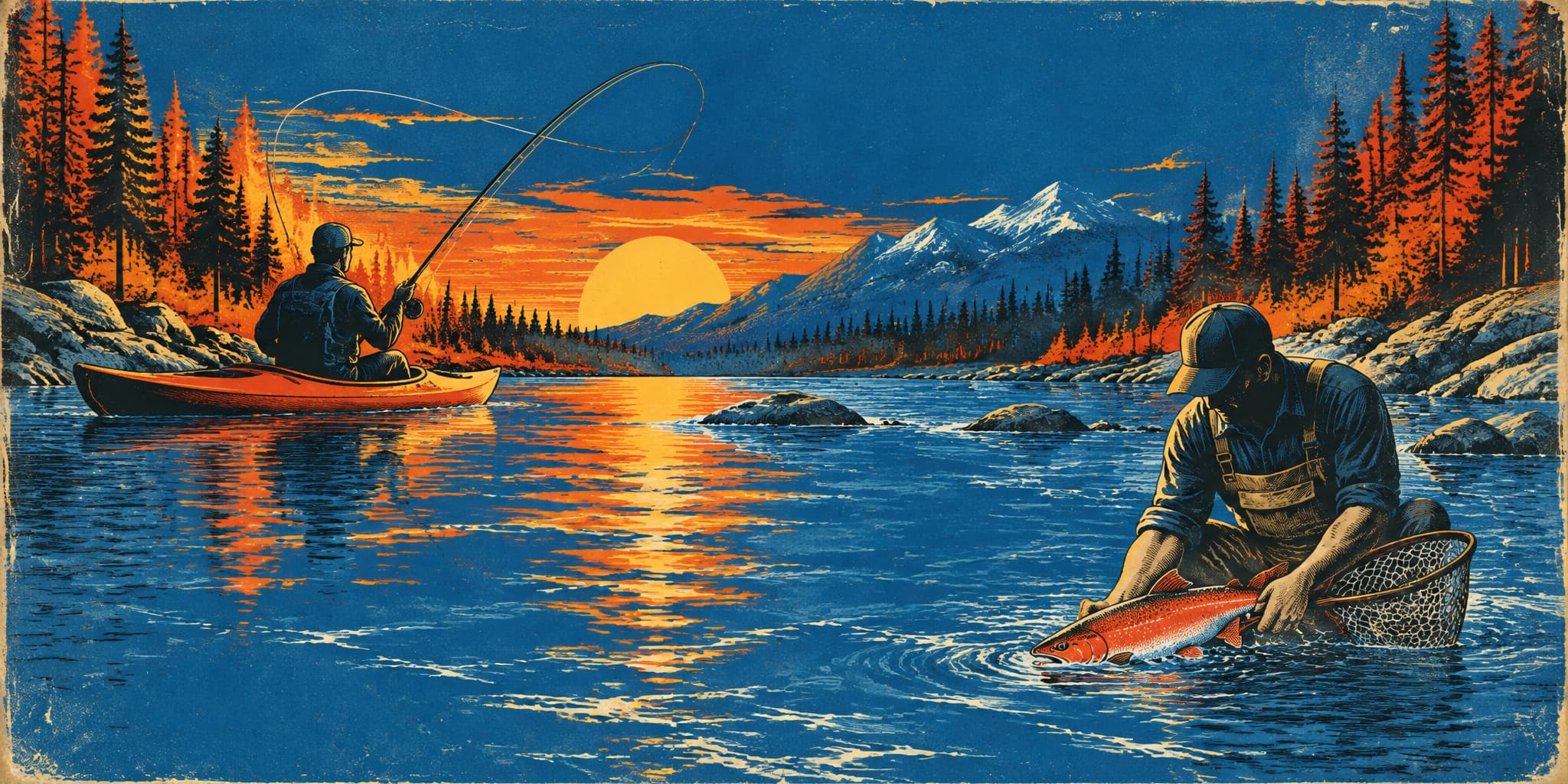
The Chehalis, a salmon river in southwest Washington, is warming, and a new study shows it becoming better habitat for smallmouth bass, a fish from eastern North America that eats young salmon. Survey crews caught about one bass every two and a half hours in 2007 and nearly ten an hour in 2023. The study didn't count salmon lost. But a low, warm summer that's hard on salmon, and on the tribes bound to protect them, is decent fishing for anglers who love bass. What's it like to share that river?
The Chehalis Is Warming Into Good Bass Water. Who Gets to Call That a Loss?
The Chehalis, a salmon river in southwest Washington, is warming, and a new study shows it becoming better habitat for smallmouth bass, a fish from eastern North America that eats young salmon. Survey crews caught about one bass every two and a half hours in 2007 and nearly ten an hour in 2023. The study didn't count salmon lost. But a low, warm summer that's hard on salmon, and on the tribes bound to protect them, is decent fishing for anglers who love bass. What's it like to share that river?
Research Summaries
Thwaites Glacier's grounding-zone melt doubles its modeled 2100 sea-level contribution (Poinelli et al., Nature Communications)
One glacier's share, about 30 mm, within the IPCC's likely global range of 0.44 to 0.76 m by 2100 under intermediate emissions.
NOAA projects 10 to 12 inches along U.S. coasts by 2050, and sinking land can push local rise higher.
Research Summaries
Failure to track a stable AMOC state under rapid climate change (van Westen, Börner and Dijkstra, Nature Climate Change)
Utrecht University places the critical rate near 0.3 °C of warming per decade, a pace the world is already approaching.
Weakening unfolds over years to decades. In the model, a very weak circulation lingers roughly 300 years, even when it eventually recovers.
Short Take

For three days, the street outside El Tucan Tacos and Beer has filled with seawater around midday. The restaurant sits beside a small harbor in San Rafael, just north of San Francisco, and lunch service has stopped. "Right now, we have no entrance for anyone to get in or a way for people to pick up food," employee Marilyn Garcia told KQED. The building itself is fine.
The extra water comes from Kelvin waves. These are very long, slow swells, part of this year's El Niño, and NOAA has tracked them moving up the coast. NOAA says they can raise the sea 6 to 12 inches, which does little on its own. Added to an ordinary high tide, that rise reaches El Tucan's door at lunchtime. City planner Kate Hagemann expects flooding like this "maybe 20 or 30 times this winter."