Flood Free Was a Name, Not a Condition

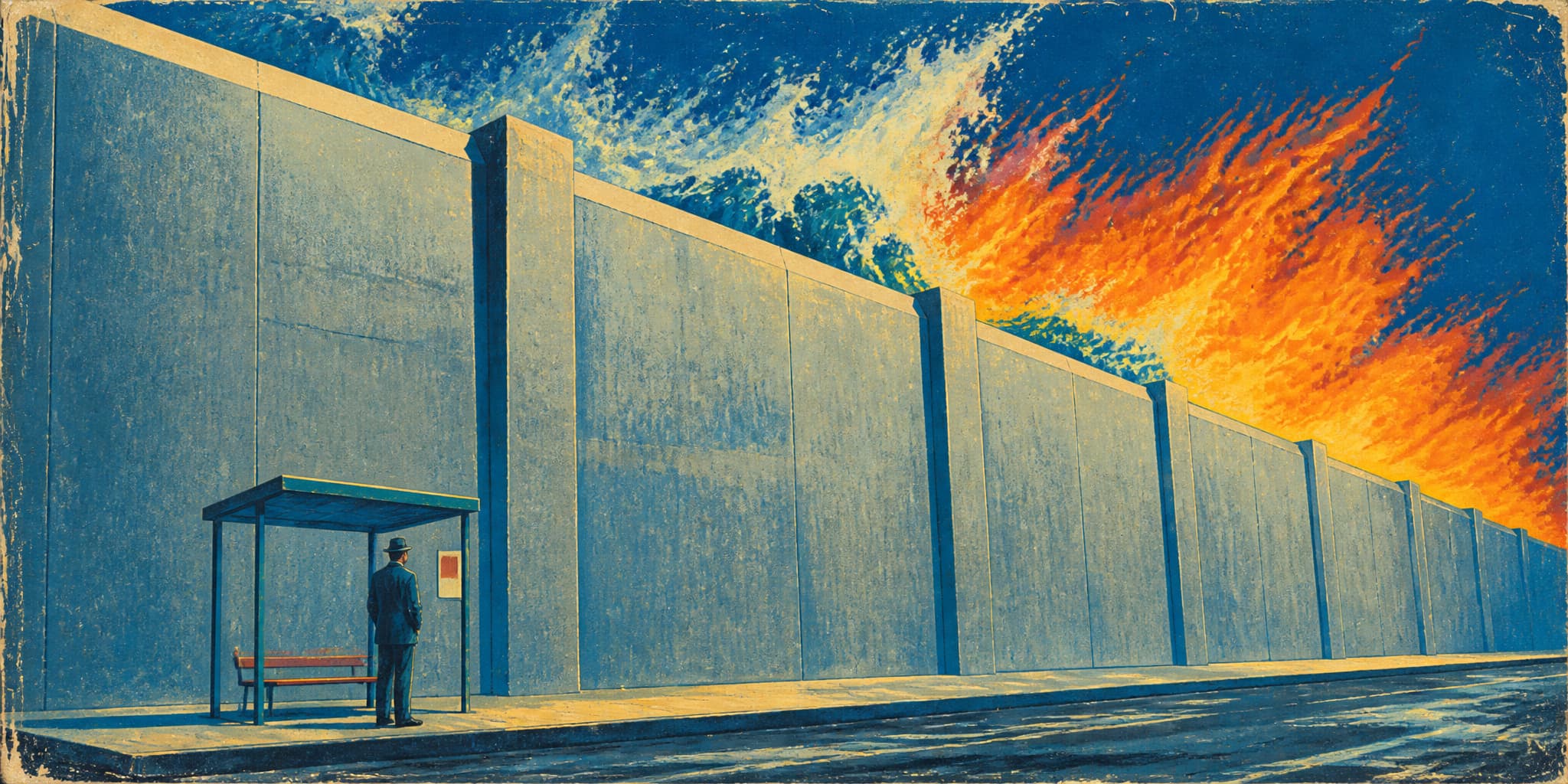
When the Army Corps finished Johnstown's channels in 1943, nobody in the city experienced the protection as a model or an appropriation. It was concrete a mill hand walked past on the way home, three rivers running between walls through the middle of town. The city took that engineering and turned it into a name for itself, Flood Free Johnstown, and sold the name to investors, to senators, to the AAA guidebook. In January 1977 a city of forty thousand carried sixty flood insurance policies. That July the water came down the hillsides, off the small streams, from the direction the walls did not face.
Flood Free Was a Name, Not a Condition
When the Army Corps finished Johnstown's channels in 1943, nobody in the city experienced the protection as a model or an appropriation. It was concrete a mill hand walked past on the way home, three rivers running between walls through the middle of town. The city took that engineering and turned it into a name for itself, Flood Free Johnstown, and sold the name to investors, to senators, to the AAA guidebook. In January 1977 a city of forty thousand carried sixty flood insurance policies. That July the water came down the hillsides, off the small streams, from the direction the walls did not face.
Design Parameters
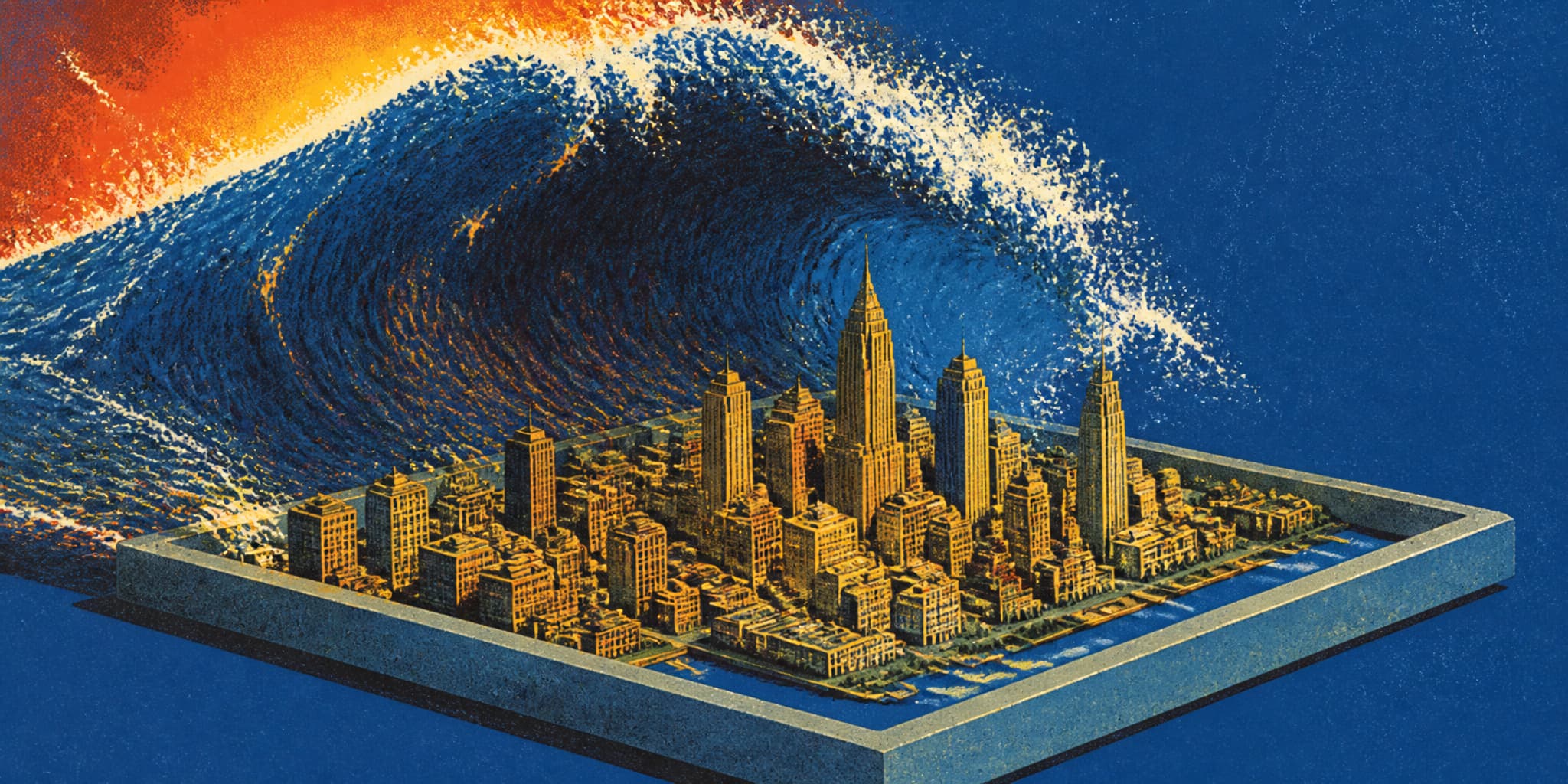
Between 1938 and 1943 the Army Corps of Engineers lined nine miles of river through downtown Johnstown, Pennsylvania with eight inches of concrete. Engineers in Vicksburg built a scale model first and ran the 1936 St. Patrick's Day flood through it until the new channel held. The design standard was the maximum flood of record — the biggest one anyone had measured. The Corps also priced a larger channel, sized for the worst storm the region could plausibly produce, and declined it.
1936 was slow water off a big basin, snowmelt and days of rain. On July 19, 1977, thunderstorm cells stalled over the hills and dropped up to twelve inches on steep little hollows the channel had never been asked about. One five-square-mile catchment shed water fifteen times faster per acre than the main river did. The concrete was rated for 81,500 cubic feet per second. It got 115,000.
Meteorologists put the region's physical ceiling far above that. 1977 spent under 40 percent of it.

Two Ways Out

Soldiers Grove Bought the Ground Before Anyone Promised to Pay for It
Under six hundred people, three dozen buildings on a short main street, and a levee that would have cost three and a half times the value of what it stood in front of. In January 1975 the village board asked the Army Corps of Engineers not to build it — then Soldiers Grove bought land and ran pipe out to it with its own money, three years before a federal dollar showed up, and told anyone building on that land that the sun had to do half the heating.
Valmeyer Voted on Its Own Future From Other People's Spare Rooms
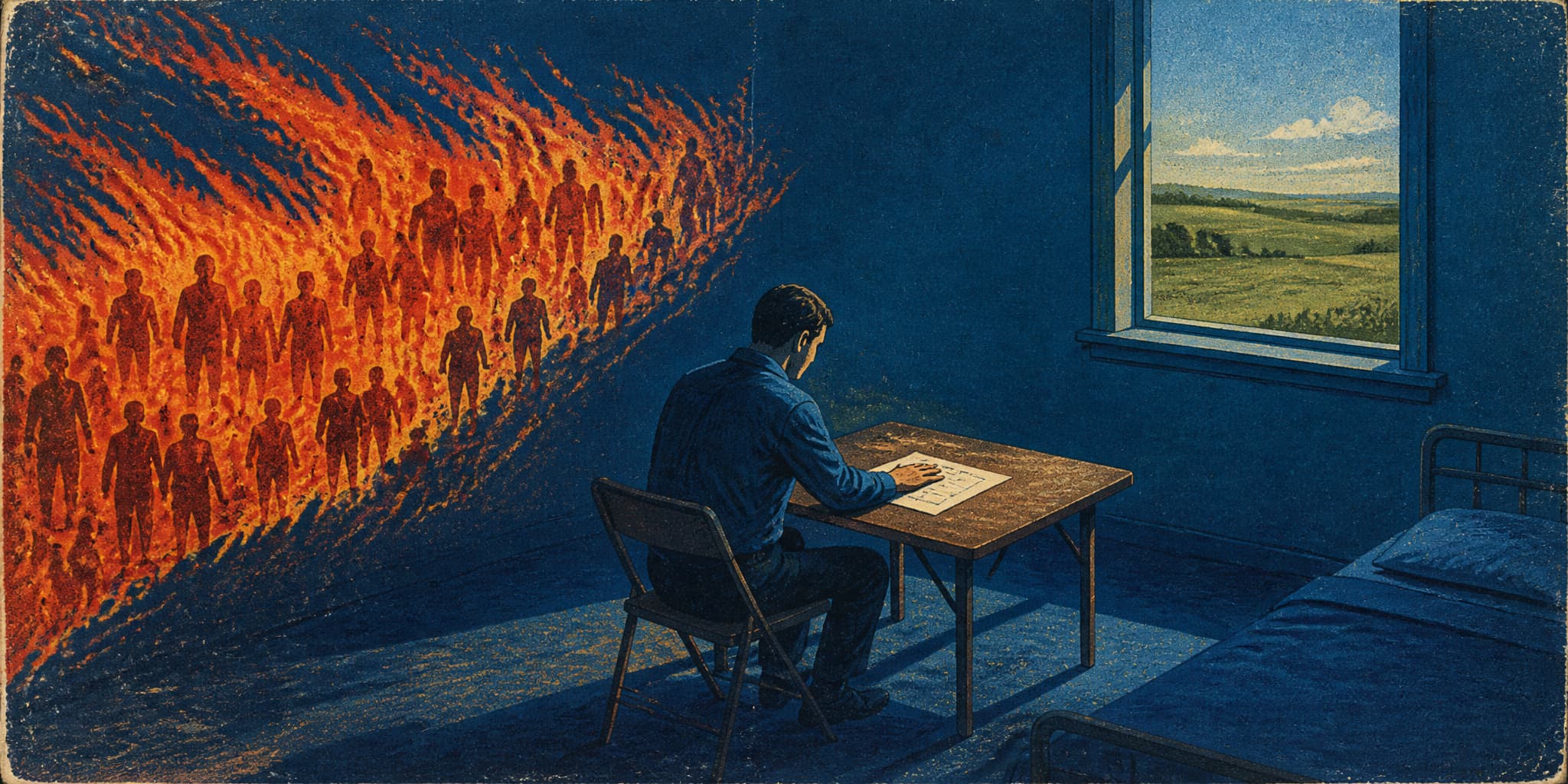
Sixty-six percent of 239 ballots, cast by people scattered across two states, staying with relatives or living in the FEMA trailer settlement they nicknamed FEMAville. In September 1993 Valmeyer, Illinois, voted to rebuild itself 400 feet above the Mississippi. Eighteen years after Soldiers Grove improvised its move with borrowed village money, there was a federal program to apply to. What that program bought is documented parcel by parcel. Who left instead is not documented at all.
Present Versions