
The Town That Moved Before It Had To

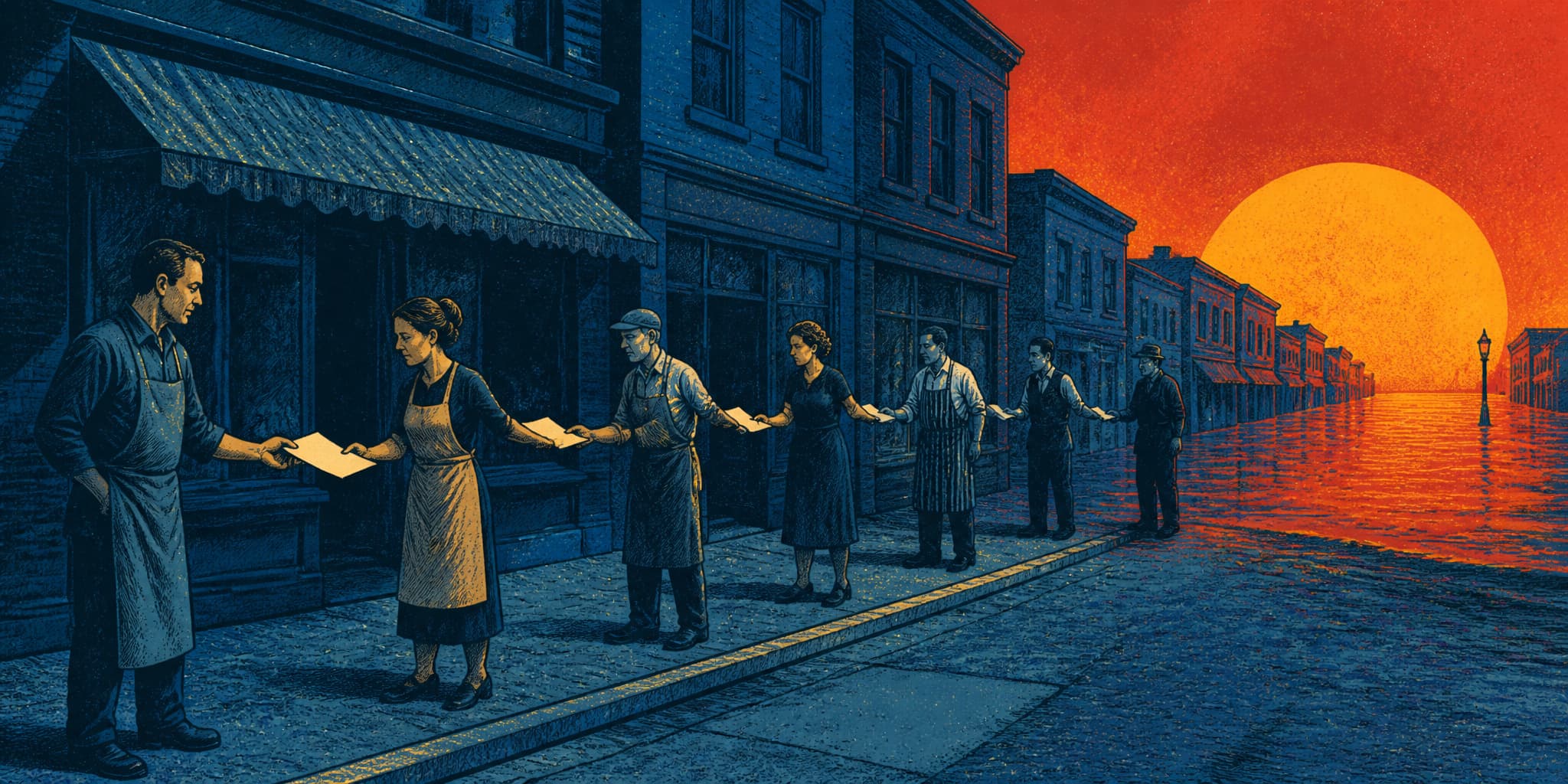
In 1975, the Army Corps proposed a $3.5 million levee to protect Soldiers Grove, Wisconsin, from the Kickapoo River. The buildings behind it were worth less than $1 million. The village collected $14,000 a year in taxes. A local publisher wrote a thirteen-page memo suggesting a different idea: move the commercial district to higher ground. Three years later the river put five feet of water through downtown — but by then the village had bought land, started utilities, and had a plan ready to show a U.S. senator. What made that possible, and why almost no American community has done it since, turns out to be a story about federal budgets as much as floodwater.
The Town That Moved Before It Had To
In 1975, the Army Corps proposed a $3.5 million levee to protect Soldiers Grove, Wisconsin, from the Kickapoo River. The buildings behind it were worth less than $1 million. The village collected $14,000 a year in taxes. A local publisher wrote a thirteen-page memo suggesting a different idea: move the commercial district to higher ground. Three years later the river put five feet of water through downtown — but by then the village had bought land, started utilities, and had a plan ready to show a U.S. senator. What made that possible, and why almost no American community has done it since, turns out to be a story about federal budgets as much as floodwater.
Anatomy of a Town
A town is a legal fiction sitting on top of a physical fact, and when you have to move one, you find out which is which in a hurry.
Soldiers Grove, Wisconsin, relocated its business district uphill in the early 1980s. Valmeyer, Illinois, rebuilt on a bluff after the '93 flood. Both kept their names, their charters, their governance. The post office reopened at the new address. All the paper moved fine.
Everything else was harder. Soldiers Grove extended utilities to the new site with village money before federal funds showed up. Valmeyer built a whole town on 500 acres of cornfield.
The part nobody talks about: roughly three-quarters of Valmeyer's pre-flood businesses never reopened at the new location. About a third of residents didn't come either. You can move a town's legal address. Moving the thing people actually mean when they say "town" is a different job entirely.

She Put a Deposit on Lot 214 in a Cornfield That Doesn't Have a Road Yet
CONTINUE READINGConsent and Consequence

Who Was In at Each Gate
Soldiers Grove, Wisconsin, and Valmeyer, Illinois, are the two U.S. towns that "voted to move." Underneath that sentence the documentary record shifts at every stage: petition signers who never built, lot sales that may have been expressions of interest, renters who appear nowhere, and a financing gap where mortgage balances and credit histories decided who could finish — a gap no public document tracked.

The Conditions Behind the Precedent
Both towns get cited whenever managed retreat needs a proof of concept. The conditions that made them work were specific: small populations, several federal funding streams at once, schools that held dispersed families together, new sites near existing infrastructure. The communities attempting relocation now face longer timelines, more complicated funding, and harder logistics. Isle de Jean Charles has been in process for a decade. Newtok took eighteen years.
Relocation Now