
Fourteen and a Half Miles

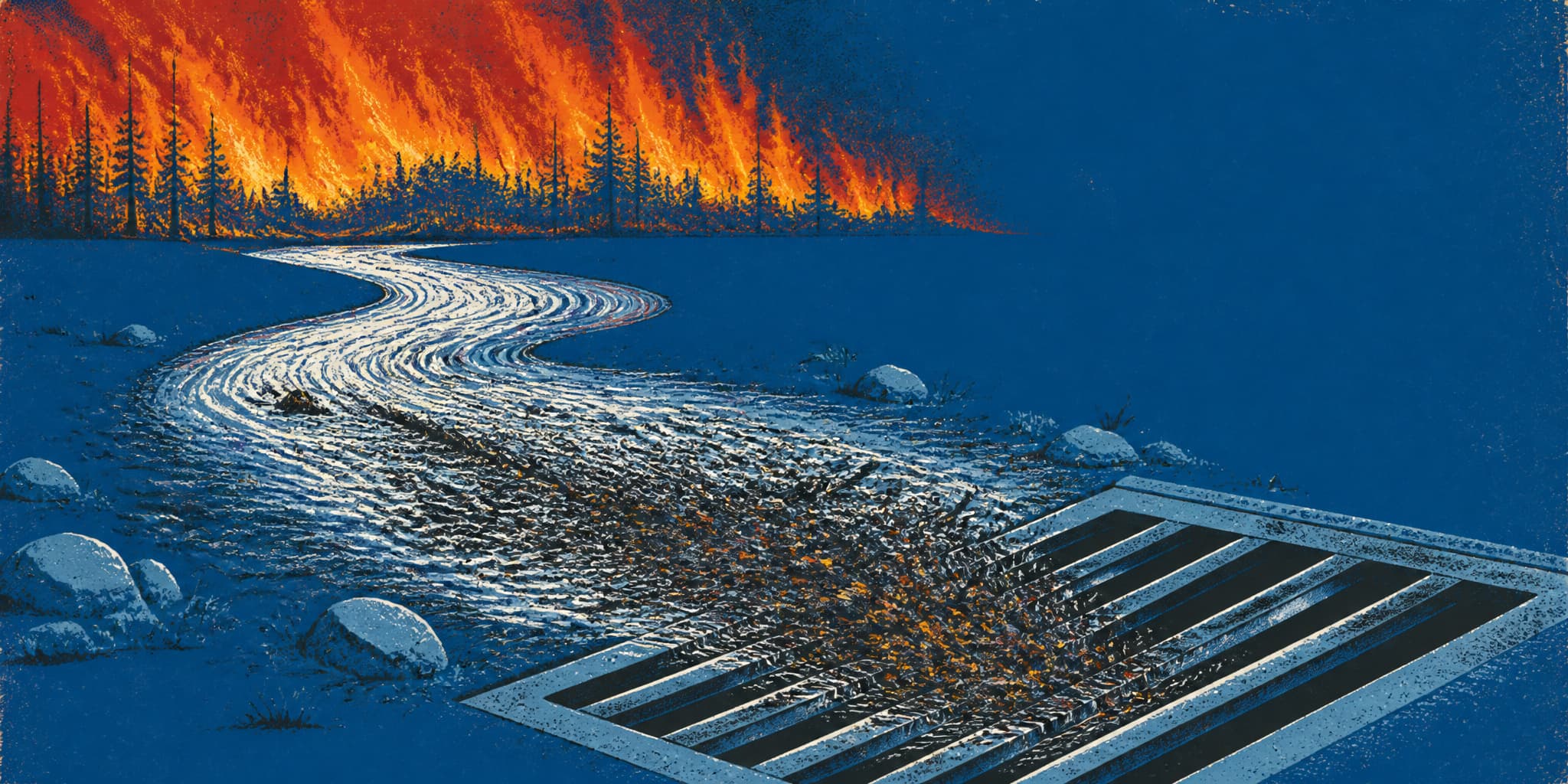
Walla Walla, Washington draws its drinking water from Mill Creek, whose watershed is currently on fire. The city has been under an emergency declaration since late August, and the water-quality tests keep coming back clean. Both things have been true for weeks. What holds them apart is a system: continuous turbidity monitoring, treatment chemistry with known limits, seven groundwater wells in varying states of readiness, and operator judgment about a situation the utility has said it hasn't managed before. This piece walks through what that system was built to handle, where its edges are, and what the first serious post-fire rainstorm will ask of a plant designed around a watershed that no longer exists in its previous form.
Fourteen and a Half Miles
Walla Walla, Washington draws its drinking water from Mill Creek, whose watershed is currently on fire. The city has been under an emergency declaration since late August, and the water-quality tests keep coming back clean. Both things have been true for weeks. What holds them apart is a system: continuous turbidity monitoring, treatment chemistry with known limits, seven groundwater wells in varying states of readiness, and operator judgment about a situation the utility has said it hasn't managed before. This piece walks through what that system was built to handle, where its edges are, and what the first serious post-fire rainstorm will ask of a plant designed around a watershed that no longer exists in its previous form.
What Houston's Cooling Ordinance Asks of the Tenant


Houston's new cooling ordinance requires landlords to provide refrigerated air in every habitable room of a rental dwelling. Enforcement is complaint-driven. The tenant identifies the violation, files the complaint, waits for the inspector, and lives with the heat through a cure period nobody has put a number on. This piece follows each step the enforcement chain assigns to the person it protects, and what each one requires in legal knowledge, available time, money, and willingness to be identified to the landlord, using the ordinance text, the city's published procedures, and national housing survey data.
What Houston's Cooling Ordinance Asks of the Tenant
Houston's new cooling ordinance requires landlords to provide refrigerated air in every habitable room of a rental dwelling. Enforcement is complaint-driven. The tenant identifies the violation, files the complaint, waits for the inspector, and lives with the heat through a cure period nobody has put a number on. This piece follows each step the enforcement chain assigns to the person it protects, and what each one requires in legal knowledge, available time, money, and willingness to be identified to the landlord, using the ordinance text, the city's published procedures, and national housing survey data.

The Cost of Watching

My mother kept a notebook by the kitchen phone with numbers for the county health line, the air district complaint hotline, the water utility's after-hours recording. She checked things. She cross-referenced. When something smelled wrong at the refinery near our neighborhood, she'd call, then call again when nobody followed up. That was the 1990s. Now I do the same thing on my phone, with apps.
You probably do some version of this too. Checking AirNow during fire season, or the heat forecast before your parents visit, or your utility's water advisory page after a boil notice. Then checking a second source because the first one didn't quite answer what you were actually asking. The EPA revised its PM2.5 breakpoints in 2024, which means the thresholds you'd memorized shifted underneath you.
Each check draws from the same hours and attention you need for work, your kids, the bills. Two-thirds of parents in a national study wanted to talk to their children about climate change; fewer than half had done it recently. The gap wasn't apathy. It was the weight of figuring out how.
Nobody pays you for any of this. Nobody tracks the hours.